

The first round feels safe.
That is the trap.
Fantasy managers spend the entire offseason trying to avoid bad picks, but the selections that hurt most are rarely obvious reaches in Round 8. They are the first-round picks that looked safe in August and quietly buried your roster by November.
That is why first-round analysis has to be different.
You are not just asking whether the player is good. Everyone in the first round is good. You are asking whether the player has enough ceiling, floor, and role certainty to justify the cost.
A player can be elite and still become a first-round trap if the market is already pricing in the bounce-back, the touchdown spike, the perfect workload, the improved offense, or the cleanest version of his role.
For 2026 fantasy football drafts, five names deserve a closer look:
CeeDee Lamb
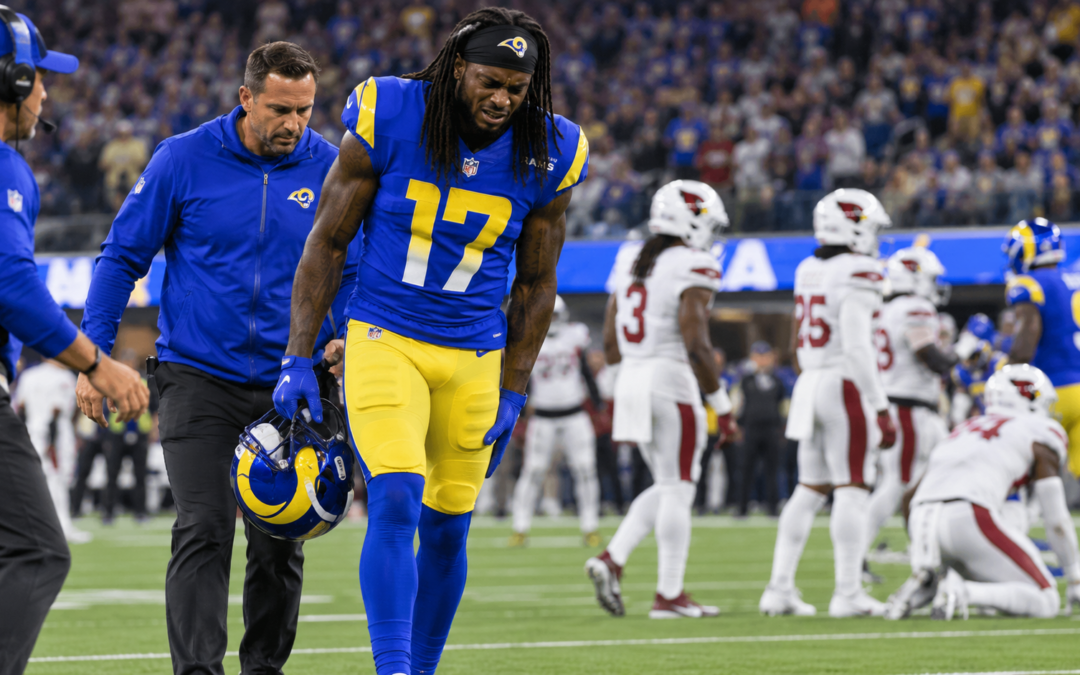
Justin Jefferson
Ashton Jeanty
James Cook
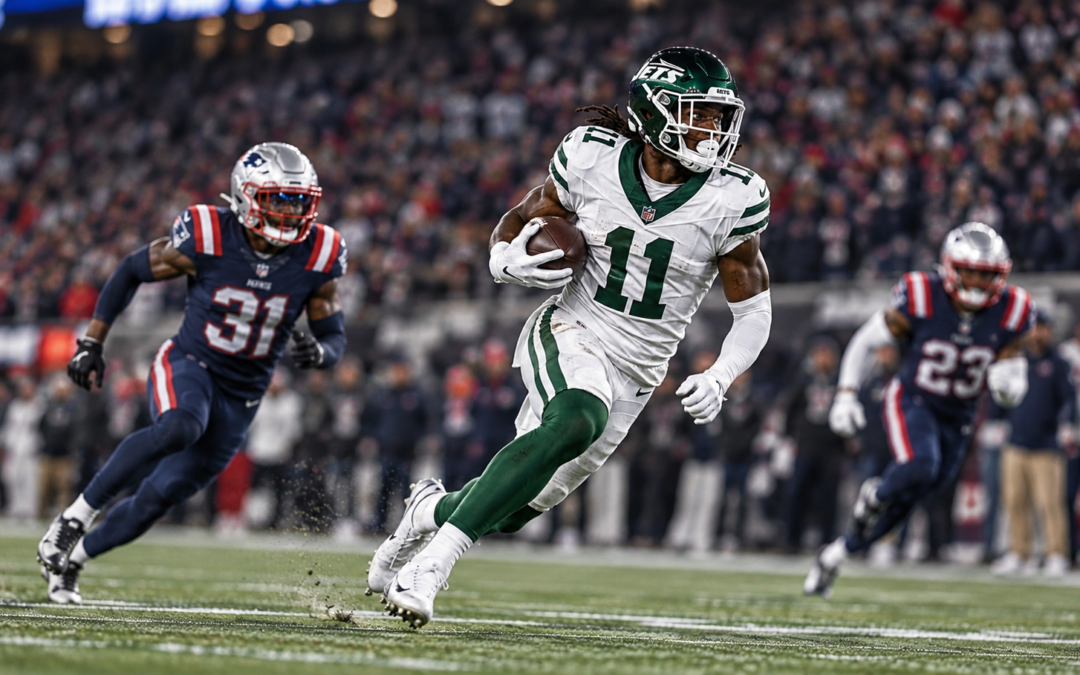
De’Von Achane
This does not mean they are automatic fades.
It means they are expensive enough that we need to be honest about what can go wrong.
What Makes a First-Round Pick a Trap?
A trap is a player whose cost leaves less margin for error than the market wants to admit.
First-round picks usually need at least one of three things: elite weekly ceiling, elite weekly floor, or elite role certainty. The true smash picks often give you two or three of those.
The riskier first-round picks usually look elite in one area but fragile in another. Maybe the talent is obvious, but the offense is shaky. Maybe the role is strong, but the efficiency is hard to repeat. Maybe the volume is there, but the touchdown projection is already aggressive.
That is where managers get into trouble.
They draft the reputation instead of the 2026 situation.
CeeDee Lamb: The Bounce-Back Pick Still Needs Alpha-Level Volume
CeeDee Lamb is one of the more interesting first-round debates of 2026 because the bull case is easy to understand.
He is still an elite wide receiver. He is still tied to Dak Prescott. He is still in a Dallas offense that should score points. And his 2025 season probably was not the best version of CeeDee Lamb.
The issue is that the market already knows that.
Lamb is not being drafted like a broken asset. He is being drafted like a first-round bounce-back candidate.
His 2025 season was still productive, but it was a step back from his peak. He missed three games with an ankle injury and finished with 75 catches, 1,077 yards, and three touchdowns on 117 targets. More importantly, his targets per game fell from 10.1 in 2024 to 8.4 in 2025, with George Pickens becoming a bigger part of the offense.
The question is not whether Lamb can be great.
Of course he can.
The better question is whether his target ceiling is still high enough to separate from the other receivers going in the same range.
If Lamb is no longer a 10-target-per-game player, he needs other things to break right. He needs better touchdown luck, full health, strong Dallas passing volume, and Pickens helping the offense without cutting too far into his ceiling.
That can happen.
But the first-round version of Lamb needs a real return to elite weekly volume.
Justin Jefferson: Elite Talent, Less Certain Offensive Environment
Justin Jefferson feels almost impossible to label as risky because the talent is not in question.
He is one of the best wide receivers in football. He earns targets at an elite rate. He has already produced with different quarterbacks.
The concern is the situation.
Jefferson is still being drafted as a first-round anchor, which means managers are expecting Minnesota’s passing game to rebound in a meaningful way. That is possible, but it is not guaranteed.
The key number from 2025 is not just Jefferson’s target share. It is the passing environment around him. He still earned a massive role, but Minnesota’s offense fell off badly through the air. After averaging 277 and 258 passing yards per game in the prior two seasons, the Vikings dropped to 189 passing yards per game in 2025.
That is the Jefferson debate.
The target earning is still elite. The player is still elite. But can the offense support a true first-round fantasy season?
If Kyler Murray stabilizes the offense and Kevin O’Connell gets the passing game back on track, Jefferson can absolutely return first-round value. But if the passing volume remains ordinary, or if Murray’s rushing changes the way targets are distributed near the margins, Jefferson’s ceiling may not be as automatic as his name suggests.
Jefferson’s floor as a real-life receiver is extremely high.
His floor as a first-round fantasy pick depends on the offense getting fixed.
And that is not a small assumption.
Ashton Jeanty: The Workload Is Real, But Is the Offense Good Enough?
Ashton Jeanty may be the toughest player in this group to evaluate.
The workload profile is exactly what fantasy managers want. He is young, he can handle feature-back usage, he can catch passes, and the Raiders should want to build their offense around him.
That is why the first-round price makes sense at first glance.
Jeanty averaged 14.3 fantasy points in PPR formats as a rookie, finished as the RB15, ranked second in rush share at 78%, ranked seventh in target share at 14%, and posted a strong utilization profile. That is a real fantasy role.
The concern is that first-round running backs need more than usage.
They need touchdown equity, offensive efficiency, and weekly ceiling. They need an offense that turns touches into difference-making fantasy weeks.
That is where the Raiders create uncertainty.
Jeanty may have one of the cleanest workloads in fantasy. But if the offense is average or below average, the touchdown ceiling may not match the first-round price.
That is how a strong pick becomes a trap. The player can be good, useful, and reliable while still not giving you enough difference-making production for where you drafted him.
At the 1/2 turn, Jeanty makes sense.
In the middle of the first round, I would need to feel much better about the Raiders creating enough scoring chances for him to truly separate.
James Cook: Paying for the Career Year
James Cook’s 2025 season was massive.
He led the NFL with 1,621 rushing yards, scored 12 rushing touchdowns, added receiving production, and finished as one of the best fantasy backs in the league. Buffalo also remained one of the strongest rushing environments in football.
The case is obvious. He is efficient, tied to Josh Allen, attached to a great offense, and just proved he can handle a much larger workload.
But when a running back comes off a career year, the next question has to be uncomfortable:
How much of that season is now baked into the price?
Cook handled 342 touches in 2025 after logging 239 the year before. He was excellent with that expanded role, but managers are now paying for the bigger workload, elite efficiency, strong offense, and touchdown production to all remain intact.
That can happen.
It is also a lot to ask.
Running backs coming off huge seasons are often priced as if the previous year is the new baseline. Sometimes it is. More often, it is closer to the ceiling than managers want to admit.
Cook can still be a strong fantasy starter and fall short of first-round value if the touchdowns dip, the receiving role is ordinary, or Buffalo spreads the offense slightly differently.
The concern is not the player.
The concern is paying for the cleanest possible version of his role.
De’Von Achane: League-Winning Ceiling, Fragile Environment
De’Von Achane might have the highest weekly ceiling of any player in this article.
He is explosive, catches passes, can score from anywhere, and can break fantasy football when the role is right. His 2025 production backed that up: 1,838 yards from scrimmage, 12 touchdowns, 305 touches, 67 receptions, and a league-leading 5.7 yards per carry.
That is ridiculous.
But Achane’s 2026 profile is not just about talent. It is about the offensive environment around him.
If Miami’s offense becomes less stable, some of Achane’s easy fantasy value could be at risk. Malik Willis’ rushing ability could reduce checkdowns, steal carries near the margins, and change the way the offense operates around the goal line.
Achane can beat those concerns.
The problem is that first-round picks need clean paths to elite production, and Achane’s path has more moving pieces than his highlights make it feel.
If Miami struggles to sustain drives, he may need huge efficiency to keep pace with his cost. If the easy receptions decline, the weekly floor becomes more fragile. If scoring chances fall, the touchdown ceiling becomes harder to reach.
At his best, Achane can win you a league.
At his price, he also asks you to accept real offensive uncertainty.
That is the profile that creates first-round volatility.
The StatChasers First-Round Trap Test
Before drafting any expensive player, ask five questions.
Is the player being priced off his median outcome or his ceiling?
Does he need a bounce-back that everyone already expects?
Is the role already elite, or are we assuming it becomes elite?
Can the offense support the ceiling?
What happens if one key assumption fails?
If lower touchdowns, worse quarterback play, reduced receiving work, target competition, or offensive decline can knock the player out of first-round value, the pick is riskier than it looks.
So Who Is the Biggest Trap?
The answer depends on format.
In full PPR, Jefferson and Lamb are easier to defend because target volume can stabilize wide receiver production. In half-PPR or best ball, Achane’s spike-week ceiling becomes more appealing, even if the offensive environment adds risk. Jeanty may be the cleanest workload bet, but the Raiders’ scoring environment matters. Cook has the strongest recent production case, but he may also be the player most likely to be drafted near the top of his range after a career year.
If I had to sort the group:
Safest relative to price: CeeDee Lamb
The Dallas passing environment and his track record make the bounce-back case easier to believe, even with target competition.
Highest ceiling: De’Von Achane
Nobody in this group can flip a matchup quite like him if the role and offense cooperate.
Cleanest workload: Ashton Jeanty
The usage is strong. The offensive ceiling is the question.
Most dependent on repeating a career year: James Cook
Excellent player, excellent offense, but the price is asking him to sustain a massive leap.
Best player, most situation-dependent fantasy case: Justin Jefferson
The talent is elite, but the first-round payoff depends heavily on Minnesota’s passing game rebounding.
The Final Verdict
The first round is not where fantasy leagues are automatically won.
It is where they can be quietly lost.
CeeDee Lamb, Justin Jefferson, Ashton Jeanty, James Cook, and De’Von Achane all have legitimate paths to paying off. That is why they are expensive.
But each one carries a specific first-round concern.
Lamb needs his target ceiling to bounce back with George Pickens involved. Jefferson needs Minnesota’s passing game to rebound. Jeanty needs the Raiders offense to create enough touchdown equity. Cook needs to sustain a career-year workload and efficiency profile. Achane needs his explosive talent to overcome a fragile offensive environment.
None of these players are bad picks.
But none should be drafted blindly.
The most dangerous thing you can do in Round 1 is confuse name value with safety.
Great players can still disappoint at the wrong price.
And the first-round trap is rarely obvious before the draft.
It usually looks like a player everyone agrees is good.
Related research
Start/sit calls for players in this article
- Should I start CeeDee Lamb?This week's start/sit callOpen
- Should I start Justin Jefferson?This week's start/sit callOpen
- Should I start Ashton Jeanty?This week's start/sit callOpen
- Should I start James Cook?This week's start/sit callOpen
- Should I start De’Von Achane?This week's start/sit callOpen
- Should I start Dak Prescott?This week's start/sit callOpen
Tools for this week
- Redraft rankings2026 redraft rankings across all positionsOpen
- Fantasy projectionsWeekly and rest-of-season projectionsOpen
- Strength of scheduleEasiest and hardest remaining schedules by positionOpen