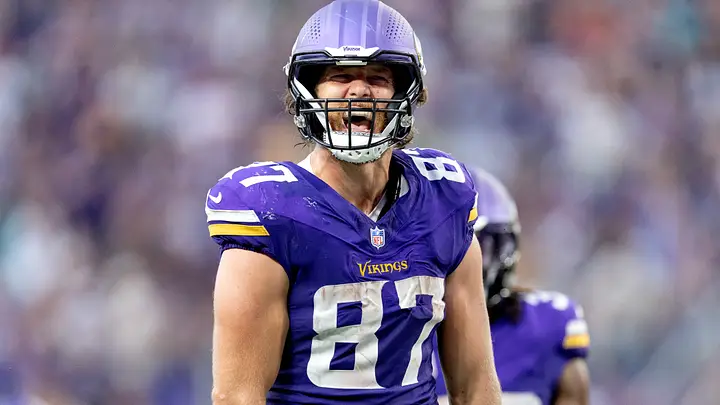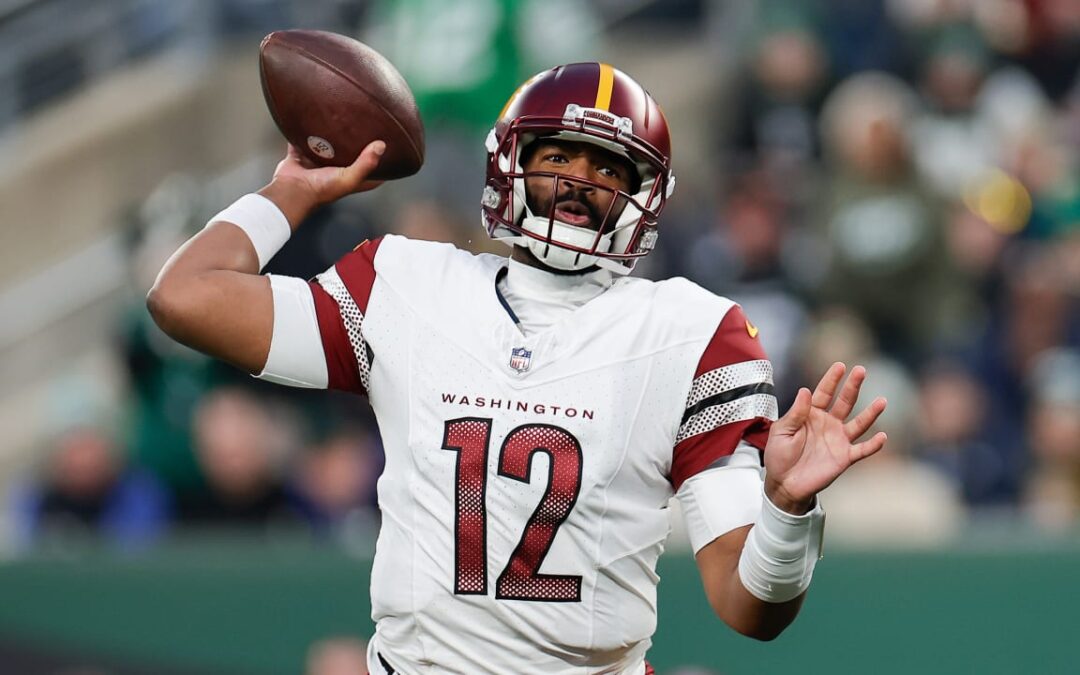

Everyone wants to find the next dynasty breakout.
The problem is that most managers wait until the breakout is obvious. By then, the player is producing, the depth chart has changed, the hype has started, and the discount is gone.
That is the real breakout trap.
In dynasty, simply being right about a player is not enough. The edge comes from finding players whose chances of breaking out are improving faster than their market price. Sometimes that starts with efficiency before volume. Sometimes it is a growing role, a teammate leaving, or a young player quietly earning more valuable touches. The path can look different, but the result is often the same: a player who was affordable suddenly becomes very expensive.
The goal is not to predict every breakout perfectly. It is to recognize when the odds are beginning to shift before the rest of your league fully catches up.
Most Breakouts Happen in Stages
Breakouts rarely appear out of nowhere. Usually, there are signs first.
The earliest stage is what I think of as the hidden signal. A player starts doing something that matters even if the fantasy production still looks ordinary. Maybe a receiver is earning targets at an unusual rate when he is actually on the field. Maybe a running back is creating explosive plays, forcing missed tackles, or earning passing-down work despite a limited touch count.
This is usually where the best buying opportunities exist because the box score has not forced everyone to care yet.
Then comes role pressure. Routes increase, snap share climbs, the coaching staff starts expanding the player’s package, or an established veteran leaves. The player may still not have the massive breakout game, but the evidence is becoming harder to ignore.
Personally, this is often my favorite stage to buy. You have more information than you did during the pure speculation phase, but there can still be a meaningful gap between what the player might become and what he currently costs.
The final stage is box-score confirmation. That is when everyone sees it. The player posts 100 yards, scores multiple touchdowns, strings together a few strong fantasy weeks, or becomes the main topic of an offseason hype cycle.
At that point, managers love to say they always believed.
Maybe they did. But now they are paying for it.
Efficiency Before Volume Is One of the Best Places to Look
One of the strongest breakout signals is a player already producing well before receiving a full workload.
For wide receivers, yards per route run can be useful because it tells us how much production a player creates relative to how often he is actually participating in passing plays. Target rate, first-read involvement, explosive-play rate, and yards after the catch can also help reveal players whose current production may be held back more by opportunity than ability.
The important part is not to fall in love with one efficiency number. Small samples can be misleading. A receiver can post a huge efficiency mark on a few deep catches, favorable coverages, or heavily schemed touches.
What becomes more interesting is when strong efficiency starts combining with a growing role. More routes, more targets, more stable usage, and more quarterback trust can be signs that a small role is beginning to push against the limits of the depth chart.
That is often where the buying window starts to close.
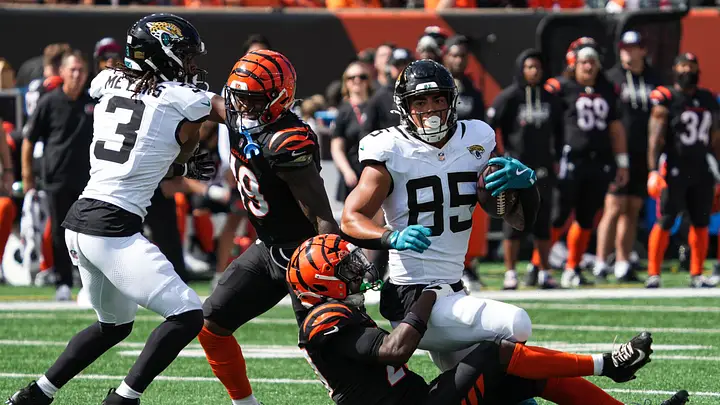
Parker Washington Shows How Quickly the Market Can Catch Up
Parker Washington is a good example of how a player can move from overlooked to expensive once enough evidence starts piling up.
The lesson is not that dynasty managers should blindly buy Parker Washington at any price. It is that the best opportunity usually came before everyone fully agreed on what they were seeing.
When a young receiver begins earning targets, producing efficiently, and handling a larger role, the market often waits for final confirmation. Managers want another good game. Then another. They want to see the depth chart change officially. They want analysts to agree.
That hesitation can create the opportunity.
Once the production becomes obvious, the conversation changes. ADP rises, calculators react, and the manager who might have sold a few months earlier suddenly wants to hold.
This is why being early matters. The easiest time to buy a breakout candidate is usually before the breakout becomes the consensus expectation.
Volume Can Tell You More Than the Final Stat Line
Dynasty managers love season totals because they are simple. A receiver had 900 yards. Another had 650. One running back scored 10 touchdowns. Another scored four.
But those totals can hide the exact changes we should care about.
A player can finish with disappointing production while his role improves underneath the surface. Targets per game can rise. Routes can increase. First-read opportunities can become more frequent. Red-zone usage can improve. A player may have been trending toward a breakout before an injury disrupted the season.
That is why I do not like evaluating young players only by where they finished in the year-end fantasy rankings.
The better question is whether the process underneath the final number improved.
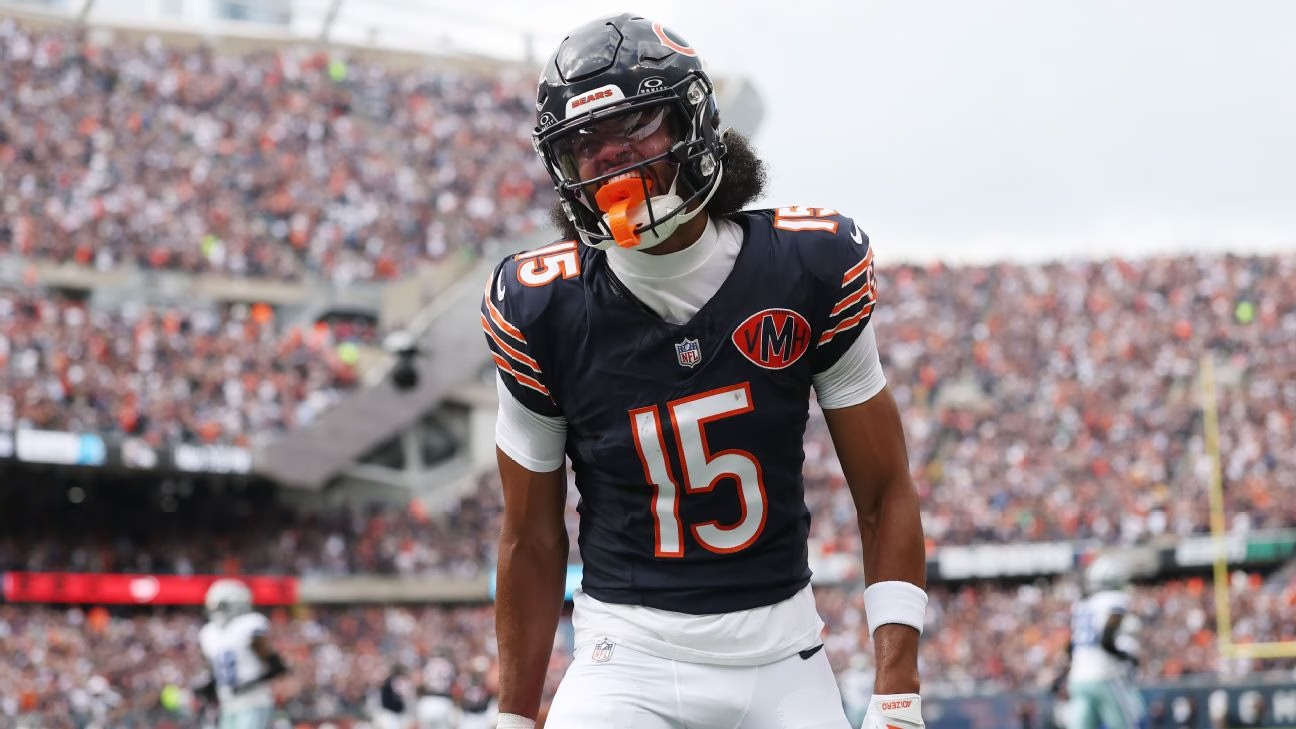
Rome Odunze Shows How an Injury Can Hide a Breakout
Rome Odunze’s final 2025 line (44 catches, 661 yards, and six touchdowns in 12 games) looks disappointing at first glance.
But the season tells a different story when you split it up.
Through his first seven games, Odunze had 31 catches for 473 yards and five touchdowns, a 67.6-yard-per-game pace that would have put him above 1,100 yards over 17 games.
Then a foot injury changed the trajectory of his season. His production fell sharply, and he eventually missed the final five regular-season games.
That is why context matters.
The final stat line can make it look like Odunze never took a second-year leap. In reality, the breakout may already have been underway before the injury slowed him down.
That does not guarantee a future elite season. But it does change the question from:
“Why believe in a 661-yard receiver?”
to:
“How much should an injury-altered finish change what we saw before it?”
Dynasty managers often wait for the 1,200-yard season before acknowledging a breakout. By then, the discount is usually gone.
“Backup” Can Be One of the Most Misleading Labels in Dynasty
Running backs create another version of the same problem.
A player is listed second on the depth chart, so dynasty managers immediately lower the ceiling in their minds. They see “RB2,” “committee back,” or “change-of-pace player” and assume the role defines the asset.
But a depth chart only tells you what is happening today. Dynasty is supposed to be forward-looking.
A talented player behind an established veteran can be one of the more asymmetric assets in the format. The limited current role can keep the acquisition cost under control, while the possibility of a larger future workload creates the upside.
The question should not always be whether the player is the starter right now. Sometimes the more important question is what happens to his value if the opportunity expands.
TreVeyon Henderson Shows Why Current Role and Future Ceiling Are Not the Same Thing
TreVeyon Henderson is a good example of why dynasty managers should be careful about treating a depth chart like a permanent ceiling.
Rhamondre Stevenson is still there, and Henderson has not simply taken over the New England backfield. That matters. This is not a breakout case built on pretending the current obstacle does not exist.
But it is also why Henderson is interesting.
His appeal comes from the possibility that the backfield does not stay exactly the same. The role could expand gradually, the split could move more heavily in his direction, or the coaching staff could simply become more comfortable putting more of the offense on his plate.
That makes Henderson a role-tension bet.
You are not necessarily betting that he needs to become a much better player. You are betting that the thing holding down his fantasy value (opportunity) may not be permanent.
The wrong question is:
“Why would I buy a backup running back?”
The better question is:
“What happens to his value if the workload starts shifting?”
That is the dynasty angle.
There is still risk. Stevenson could remain heavily involved, and Henderson could spend longer than expected in a frustrating committee. But that uncertainty is also what keeps the price from fully reflecting the ceiling.
Once the market becomes convinced the depth chart is changing, the breakout may already be priced in.
Henderson is not simply a bet on talent.
He is a bet that today’s role may be a temporary snapshot of a much more valuable one.
Limited Touches Do Not Automatically Mean Limited Talent
Blake Corum creates a similar conversation.
When a young running back sits behind a productive veteran, dynasty managers often get bored. They see a limited touch count and assume there is not much to chase.
I think that can be a mistake.
The more important question is what the player does with the opportunities he receives. Explosive-run rate, yards after contact, missed tackles, success rate, receiving work, and performance when the workload increases can tell us more than a raw season-long touch total.
That does not mean every efficient backup is a future star. The incumbent may remain better. The coaching staff may never expand the role.
But there is a meaningful difference between a backup who has shown nothing and a secondary back already producing evidence that more work could matter.
Those players should not be valued the same way.
Opportunity Can Change a Player’s Entire Range of Outcomes
Talent matters, but opportunity changes what becomes possible.
A young player can spend a year in a restricted role and then suddenly watch the situation open up because a teammate leaves, a coaching staff changes, an injury occurs, or the team simply decides to move in a different direction.
The market is usually quick to react once the news becomes official.
The better managers were often interested before that.
This does not mean blindly buying every backup and waiting for something to happen. It means looking for situations where a player has already shown enough talent that a role change would matter.
That is a much stronger bet than chasing opportunity with no evidence behind it.
Bhayshul Tuten Shows Both the Appeal and the Danger
Bhayshul Tuten is one of the clearest examples of how quickly a breakout candidate can go from cheap upside bet to expensive projection.
The appeal is obvious. Tuten ran a 4.32-second 40-yard dash at the 2025 NFL Combine, then flashed big-play and scoring upside as a rookie despite a limited role behind Travis Etienne.
He finished with:
- 83 carries
- 307 rushing yards
- 10 receptions
- 79 receiving yards
- 7 total touchdowns
The season totals were not huge, but the underlying case was more interesting. Tuten showed encouraging tackle-breaking ability, earned goal-line work, and produced 74 rushing yards and a touchdown on 15 carries in his biggest workload of the season.
Then the situation changed.
Etienne left Jacksonville in free agency, opening a much clearer path to touches. Tuten no longer needs an injury ahead of him just to matter.
That is where the breakout case gets exciting, and dangerous.
A few months ago, managers were buying an explosive 23-year-old backup with contingent upside. Now they are buying a possible starting running back.
Those are very different prices.
The bull case is easy to see: elite speed, seven touchdowns on limited usage, encouraging elusiveness, and a much clearer path to volume.
But the questions are still real. Tuten averaged just 3.7 yards per carry, caught only 10 passes, never started a game, and has yet to prove he can handle a true feature workload.
That is why he is such a good example of the breakout trap.
The player may be improving. The opportunity definitely improved.
The question is whether the dynasty price moved even faster.
A Likely Breakout Is Not Automatically a Good Buy
This is probably the biggest mistake managers make with breakout lists.
Imagine one player has a 55% chance of producing a meaningful breakout while another has only a 35% chance.
The first player sounds like the obvious target.
But what if he costs a future first-round pick while the second player costs a future third?
Now the decision looks completely different.
Dynasty is not simply about maximizing your chances of being right on one player. It is about balancing upside against acquisition cost.
A 35% breakout bet can be fantastic when the downside is cheap. A 70% breakout bet can still be a terrible investment if the market already charges you for nearly all of the ceiling.
That is why saying, “I think he is going to break out,” is incomplete analysis.
The next question should always be: What does he cost?
How I Actually Evaluate Breakout Candidates
I do not think another generic buy, sell, or hold list is enough. When I look at a potential breakout player, I care about four things: whether there is already a talent signal, whether the role is moving in the right direction, how much value survives if I am early, and whether the market has already figured it out.
The first part is the talent signal. For receivers, that can mean strong production per route, high target rates, first-read involvement, explosive receptions, or the ability to create after the catch. For running backs, it can show up through explosive runs, yards after contact, missed tackles, receiving efficiency, or production despite limited touches.
The question is simple: Is there evidence that this player may be better than his current role suggests?
Then I want to know where the role is going. Current usage matters, but direction can matter even more. A 45% snap share rising toward 60% may be more interesting than a 70% share falling toward 50%. A receiver earning more targets each month can be more attractive than one surviving on a large number of empty routes.
Next comes value insulation. If I am early, how badly can I get hurt? Younger players usually receive more chances, and meaningful draft capital can help preserve opportunities even when the first breakout attempt does not work immediately. A 22-year-old can disappoint and retain a market. A 29-year-old often cannot.
Finally, I look at the price. Has ADP already moved? Has the player become a trendy sleeper? Did the veteran ahead of him just get released? Is every analyst now making the same argument? Is my league mate already charging for the ceiling?
The best breakout candidate is not always the best breakout purchase.
Think About Where the Player Is in the Process
Rather than forcing every player into a simple Buy or Sell category, I think it is more useful to ask where he sits in the breakout process.
The best hunting ground is usually the hidden-signal stage. The underlying performance is improving, but the market has not fully reacted.
Then comes role tension. The player is beginning to push against his current workload, and the breakout case is becoming easier to believe. This is often the sweet spot because there is enough evidence to justify the bet without full confirmation already being priced in.
After that comes confirmation. The player has produced, and the argument is no longer whether he can break out. Now you are asking whether the market still underestimates how sustainable the production might be.
Finally, there is full hype. The ceiling dominates every conversation, ADP surges, calculators move, and every positive report becomes another reason managers use to justify a higher price.
This is where you can be completely right about the player and still make a terrible dynasty trade.
What Dynasty Managers Should Actually Do
The first thing is simple: buy the signal before the headline whenever possible.
Do not wait for the 150-yard game, the official depth-chart promotion, the veteran release, or unanimous analyst agreement. Once those things happen, everyone else receives the same information.
Look for the evidence that tends to appear first.
It is also important to understand whether you are betting on talent or opportunity. A player may be interesting because he is already producing efficiently in a limited role. Another may be interesting because 200 touches suddenly became available.
Those are not the same thesis.
One is a bet on the player being better than his current role. The other is a bet on volume.
The best situations often combine both, and those are usually the players who become expensive very quickly.
Most importantly, never ignore price. A breakout list should not simply tell you which players are good or which players could improve. It should help identify where the market may still be wrong.
That is a much higher standard.
And it is the entire point of dynasty market analysis.
The Bottom Line
The strongest takeaway from any 2026 breakout discussion should not be one individual player.
It should be learning to recognize the patterns before the rest of the market does.
An efficient young receiver may be showing that production is arriving before volume. A talented backup may be telling you that the current depth chart is hiding future upside. A secondary running back may be proving that limited touches do not automatically mean limited talent. A newly promoted player may have gained opportunity, but the buying price may have changed just as quickly.
That is the game.
Do not only ask who will break out in 2026.
Ask whose chances of breaking out have improved more than his dynasty price.
That is where the edge lives.
Because the worst time to discover a dynasty breakout is usually the same time everyone else does.
By then, you are not finding it.
You are paying for it.