
Late-round fantasy football picks are not supposed to feel comfortable.
That is the point.
If a player had a clean role, elite production, no competition, and a perfect offensive environment, he would not be a sleeper. He would already be expensive.
The best sleeper targets usually have one obvious flaw holding down the price. Maybe the depth chart is crowded. Maybe the player has not fully earned trust yet. Maybe the role depends on an injury. Maybe the quarterback is unproven. Maybe the market is tired of waiting.
That is where the opportunity lives.
The goal is not to draft random cheap players just because they are cheap. The goal is to find players whose path to fantasy relevance is more realistic than their current price suggests.
For 2026 fantasy football drafts, four sleepers stand out:
Jonah Coleman
Adonai Mitchell
Jordan Mason
Tyler Shough
These are not all the same type of sleeper.
Coleman is a touchdown and contingency bet. Mitchell is a target-earning bet. Mason is an efficiency and role-growth bet. Shough is a late quarterback bet with sneaky rushing and offensive environment upside.
That variety matters.
A good fantasy bench should not be filled with safe, low-ceiling players who need three things to go right just to become a weak flex. It should be filled with players who can actually change your season if the role opens.
That is what we are chasing here.
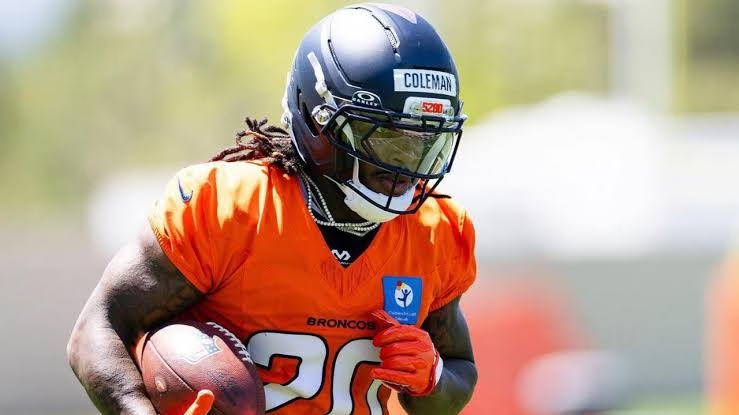
Jonah Coleman, RB, Denver Broncos
Jonah Coleman is the type of late-round running back fantasy managers should be circling.
The case is not that he has a locked-in Week 1 workload. He does not. The case is that Denver’s running back room may be more fragile than it looks, and Coleman has a realistic path to mattering if that room shifts.
The Broncos still have J.K. Dobbins and RJ Harvey, so Coleman is not walking into an empty depth chart. But Dobbins’ injury history is difficult to ignore. He has been efficient when healthy, but he is recovering from foot surgery after being limited to 10 games last season, and he has not played more than 15 games in a season since 2020.
That matters because Coleman’s path starts with uncertainty ahead of him.
Harvey also did not fully lock down the job when Dobbins missed time. Over the final seven regular-season games without Dobbins, Harvey struggled to separate himself, averaging just 3.4 yards per carry. He was not bad enough to write off, but he also was not good enough to make Coleman irrelevant.
Then Denver added Coleman in the fourth round.
Coleman brings a very specific fantasy angle: touchdowns. He scored 25 rushing touchdowns over his final two college seasons, giving him a plausible path to early goal-line work even if he does not immediately become the full-time back.
That is why this sleeper case makes sense.
Coleman does not need to beat out everyone on Day 1 to matter. He could earn short-yardage work. He could become the next man up if Dobbins misses time. He could push Harvey if Denver wants a more physical option. He could become a usable flex in 12-team leagues if the backfield thins out.
The key is price.
Coleman is not a player you draft as a weekly starter. He is a late-round bench bet on role expansion, touchdown access, and running back fragility.
If the Broncos’ backfield stays fully healthy and Harvey takes a step forward, Coleman may sit on your bench or hit waivers. But if Dobbins misses time again or Denver wants a stronger goal-line option, Coleman could become relevant quickly.
That is the kind of upside you want after the obvious starters are gone.
Adonai Mitchell, WR, New York Jets
Adonai Mitchell is one of the more interesting wide receiver sleepers because the hard part may already be there.
He earns targets.
That is not a small thing.
Fantasy managers love athletic profiles, depth-chart speculation, and camp buzz. But wide receivers cannot score fantasy points without targets. Mitchell has shown he can draw them at a high rate.
As a rookie, Mitchell was targeted on 27% of his routes, ranking near the top of the league among qualifying wide receivers. Last season, despite splitting time between the Colts and Jets, he again earned targets at an impressive rate.
That is the foundation of the sleeper case.
Mitchell has not failed because he cannot get open or command the ball. The issue has been everything around that: consistency, trust, role stability, and whether a coaching staff is willing to keep him on the field full time.
That risk is real.
But the Jets portion of his season changed the conversation.
After his midseason trade to New York, Mitchell ran a route on more than 80% of the Jets’ pass plays from Weeks 12 through 17. During that stretch, he averaged 8.2 targets per game, drew nearly a 25% target share, and became a useful fantasy option even in a rough offensive environment.
That is a real signal.
It also came without Garrett Wilson, so we should not blindly project the same target share forward. But it happened in an offense that was not exactly making life easy on him. Mitchell was producing useful fantasy numbers in a bad situation.
If the environment improves, the ceiling gets more interesting.
The 2026 setup is not perfectly clean. The Jets added more target competition, and Mitchell still has to prove he can be a reliable full-time player. But the quarterback environment should be better with Geno Smith, and Mitchell has continued to generate positive offseason buzz.
That makes him a classic late-round receiver bet.
He is not safe.
But he has one of the most important traits we should chase in sleeper wide receivers:
When he is on the field, the ball finds him.
That is the difference between a random late-round dart and a receiver with an actual path to fantasy relevance.
Mitchell is still only 23. He has shown target-earning ability across multiple seasons. He earned real routes late last year. If the rest of his game catches up to the target profile, he has a path to becoming the No. 2 option in the Jets’ passing game.
That is enough to make him a strong sleeper target.
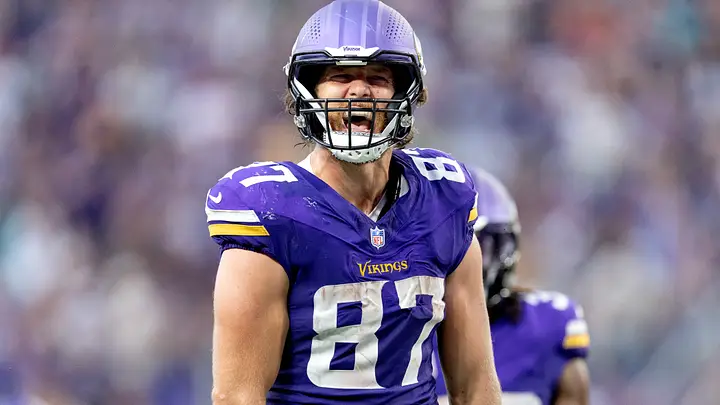
Jordan Mason, RB, Minnesota Vikings
Jordan Mason is not the flashiest sleeper.
He may be one of the most practical.
The case is built on three things: he was more efficient than Aaron Jones last season, Minnesota’s offense has room to rebound, and the new run scheme fits Mason’s strengths.
That is a strong combination for a running back being drafted outside the premium RB range.
Mason played behind Jones for much of 2025, but the efficiency gap was hard to ignore. Mason averaged 4.8 yards per carry compared to Jones at 4.2. He was better after contact, forced missed tackles at a higher rate, and graded out as the more effective runner by several rushing measures.
Jones is also entering his age-31 season, and his underlying rushing profile slipped last year. That does not mean he is finished, but it does create a realistic opening for Mason to earn more work.
The Vikings’ offense also has rebound potential.
Minnesota struggled badly last season while cycling through quarterbacks, finishing near the bottom of the league in both points and yards. That matters because running back sleepers are not just about individual talent. They need offensive conditions.
If the Vikings are bad again, Mason’s role can grow and still produce uneven fantasy results. But if the offense bounces back, the backfield becomes far more valuable.
The final piece is scheme.
Minnesota is expected to use more outside-zone concepts, and that fits Mason extremely well. He has been highly efficient on outside-zone runs throughout his career, and he spent his first three NFL seasons in San Francisco’s version of that system.
That makes this more than a generic “backup could get more work” argument.
Mason has already been more efficient than the veteran ahead of him. The offense has bounce-back potential. The run scheme matches what he does best.
He may not be a league-winning pick by himself, but he is exactly the kind of mid-to-late running back who can outperform cost if the role shifts in his direction.
That is what we want from a sleeper running back.
Not guaranteed volume.
A realistic path to more volume.
Tyler Shough, QB, New Orleans Saints
Tyler Shough is the quarterback sleeper on this list, and the case is better than the name value suggests.
Most fantasy managers will not be excited to draft Shough.
That is fine.
Sleepers are not supposed to be exciting to everyone.
Shough made only nine starts as a rookie, but the fantasy returns were quietly useful. He produced like a viable fantasy quarterback during that stretch while flashing enough passing efficiency and rushing ability to make the profile interesting.
The passing numbers were stronger than many managers probably realize. Shough ranked well in completion rate, adjusted accuracy, yards per attempt, and overall passing efficiency compared to other quarterbacks with meaningful volume.
Those are not elite numbers, but they are encouraging for a rookie with limited starts and an imperfect supporting cast.
The rushing is where the fantasy ceiling becomes more interesting.
Shough was not just scrambling randomly. New Orleans was willing to use his legs intentionally, including designed runs and valuable rushing opportunities near the goal line.
That matters for fantasy.
A quarterback does not need to be Lamar Jackson to gain a meaningful edge from rushing. Designed runs, short-yardage opportunities, and occasional goal-line usage can turn a cheap quarterback into a weekly streamer or matchup-based starter.
The offensive environment also helps.
New Orleans plays fast and gives its quarterbacks plenty of opportunities. More plays create more chances for yards, touchdowns, and fantasy production. That is exactly what we want from a late quarterback target.
The supporting cast also looks better. The Saints added Travis Etienne, improved the offensive line, and invested heavily in receiver help. Even if the group is not perfect right away, the overall environment should give Shough more help than he had as a rookie.
That is the full sleeper case.
Shough was useful in limited rookie starts. He showed enough passing efficiency. He added designed rushing usage. He plays in a fast-paced offense. And his supporting cast looks better than it did last season.
Do not draft Shough as your only quarterback plan in a shallow league.
Draft him as a cheap upside quarterback who can become more useful than the market expects.
Which Sleeper Fits Your Draft Build?
These four players are not interchangeable.
Jonah Coleman is the touchdown and injury-contingency bet. He needs the Broncos’ backfield to open, but he has a plausible short-yardage role and a path to flex value if Dobbins misses time again.
Adonai Mitchell is the target-earning bet. He still needs to earn trust and secure a consistent role, but the target-per-route profile says there is real receiving upside if he stays on the field.
Jordan Mason is the role-growth bet. He was more efficient than Aaron Jones, fits the new run scheme, and could benefit if Minnesota’s offense rebounds.
Tyler Shough is the late quarterback bet. He has enough passing efficiency, rushing usage, and offensive environment upside to be more than a throwaway QB2.
The right pick depends on what your roster needs.
If you need running back upside late, Coleman and Mason are the targets. If you need a late receiver who can actually earn volume, Mitchell is the target. If you wait at quarterback or play in best ball, Shough belongs on the list.
The StatChasers Sleeper Test
Before drafting any sleeper, ask four questions.
First, what is the actual path?
A sleeper needs a realistic route to fantasy value. Coleman needs goal-line work or a Dobbins injury. Mitchell needs a consistent route share. Mason needs a bigger workload. Shough needs Year 2 growth in a fast offense.
If you cannot explain the path, you are just drafting a name.
Second, is there a real signal?
Do not chase empty camp blurbs. Look for actual evidence. Coleman has touchdown production and a fragile depth chart ahead of him. Mitchell earns targets at a high rate. Mason was more efficient than Jones by several rushing metrics. Shough produced useful fantasy numbers in limited rookie starts.
Those are real signals.
Third, is the cost still cheap enough?
A sleeper stops being a sleeper when the market prices in the breakout. That is especially important late in draft season, when preseason buzz can move ADP quickly.
Fourth, can the player help you win if you are right?
This is the biggest one.
A safe 10th-round player who never cracks your lineup is not helping you. A late pick who can become a flex, spot starter, or trade asset can matter.
That is the type of sleeper worth chasing.
The Final Verdict
Late-round fantasy football picks should not be used on players who simply feel safe.
They should be used on players who can become more valuable quickly.
Jonah Coleman has a path through touchdowns and Denver’s fragile running back room. Adonai Mitchell has target-earning ability that could finally matter if the Jets give him a full-time role. Jordan Mason has the efficiency profile, scheme fit, and offensive rebound case to beat his current draft cost. Tyler Shough has enough passing efficiency, rushing usage, and offensive pace to become a useful late quarterback.
None of these players are perfect.
That is why they are affordable.
But each one has a real fantasy argument supported by more than hope.
That is what matters.
Do not draft sleepers because they are trendy.
Draft sleepers because the path, price, and upside actually line up.
That is how late-round picks become league-winning advantages.