
Preseason football is dangerous for fantasy managers. Not because it does not matter. Because it is incredibly easy to overreact to the wrong things.
A backup receiver catches a touchdown against third-string defenders. A rookie running back breaks one long run. A quarterback completes a few passes in a vanilla offense. A tight end plays late into the second quarter.
Suddenly, everyone wants to move rankings. That is how bad draft decisions happen.
The goal after Preseason Week 1 is not to chase every box score. The goal is to separate real fantasy football signals from noise.
The useful information usually comes from who played with the starters, who rested with the starters, who stayed in after the starters left, who handled valuable situations, which roles looked different than expected, and which injuries actually change the draft calculus.
That is the lens we should use.
After Week 1 of the 2026 NFL preseason, several players gave fantasy managers something worth thinking about. Some are rising. Some are falling. Some are just reminders that preseason box scores need context.
Here are the fantasy football takeaways that actually matter.
Jeremiyah Love Looked the Part, But the Injury Complicates Everything
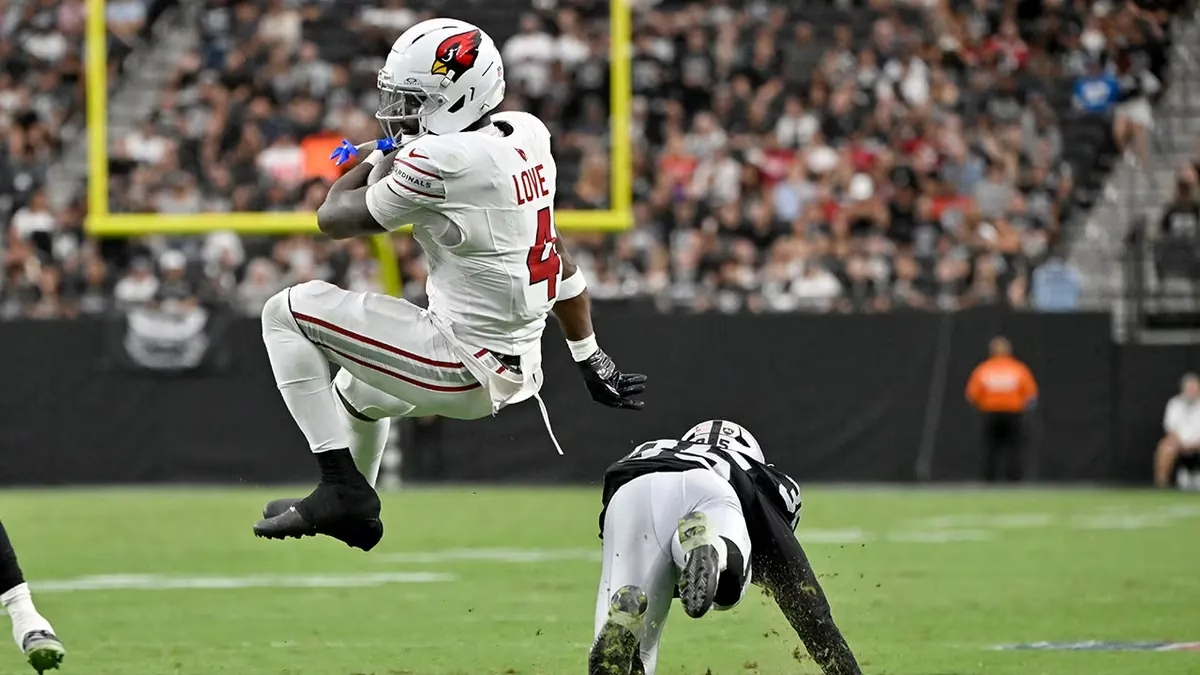
Jeremiyah Love was one of the biggest stories of Preseason Week 1.
The good part was obvious. Love looked explosive, physical, and ready for NFL work. He rushed 11 times for 58 yards and added three catches for 14 yards in his preseason debut.
That is exactly the type of usage fantasy managers wanted to see from a rookie already being drafted aggressively.
The usage may have mattered even more than the production. Love played heavily with Arizona’s first-team offense, started despite Tyler Allgeier being listed first on the unofficial depth chart, and handled the kind of early-drive workload that suggested he was more than just a committee piece.
That is a real signal. Then came the problem.
Love suffered a high-ankle sprain, and Arizona is hoping he can be ready for Week 1. Even if he avoids a long absence, that type of injury can linger and affect performance early in the season.
That makes Love one of the toughest draft decisions on the board.
The talent looks real. The role looks strong. The injury introduces short-term risk.
That does not mean he should fall off draft boards. If anything, the preseason usage confirmed why he was being drafted as a premium running back in the first place.
But fantasy managers need to adjust expectations. Love still has RB1 upside if the ankle cooperates. The real question is whether you are comfortable spending a late second or early third-round pick on a player who may not be fully himself right away.
That is the decision.
Matthew Golden May Have a Bigger Role Than Jayden Reed Managers Wanted
The Packers’ wide receiver room gave us one of the most important usage clues of Week 1.
Jordan Love only played nine snaps, so we are working with a small sample. But the alignment mattered.
Green Bay used Christian Watson and Matthew Golden outside, with Jayden Reed in the slot. On the two plays where the Packers used two-receiver sets, Golden stayed on the field while Reed came off.
That is not a box-score takeaway. That is a role takeaway. Reed can still be a fantasy factor. He is talented, efficient, and should be involved when the Packers are in three-receiver sets.
But if Golden is the preferred receiver in heavier personnel, Reed’s snap ceiling may be lower than managers hoped.
That matters because Green Bay’s offense may not give one receiver a true alpha workload. If snaps and routes are spread across Watson, Golden, Reed, and Tucker Kraft, weekly consistency becomes harder to project.
Golden gets a small boost because starting in heavier sets gives him a clearer path to full-time snaps.
Reed gets a caution flag because he may still be more slot-dependent than fantasy managers want.
This is exactly the type of preseason signal that matters. Not because one drive proves everything. Because usage tells us what the coaching staff may be thinking.
De’Zhaun Stribling Forced His Way Onto the Late-Round Radar
De’Zhaun Stribling was one of the standout wide receivers of the week.
The rookie posted seven catches for roughly 62 yards on eight targets in San Francisco’s preseason matchup against Tennessee.
That does not automatically make him a must-draft player.
The 49ers did not play their offensive starters, and high preseason target volume can sometimes be manufactured just to evaluate a rookie. But the performance still matters.
Stribling is 6-foot-2, 207 pounds, and ran a 4.36-second 40-yard dash at the NFL Scouting Combine. That size-speed combination gives him a profile worth tracking, especially if injuries or depth-chart movement create more opportunity.
The right takeaway is simple. Stribling is not a player to chase aggressively. He is a late-round upside swing. If his price remains cheap, he belongs on draft boards. If the preseason hype pushes him too high, the edge disappears.
The right move is not panic-buying the box score. It is recognizing that he may have earned more chances.
DJ Moore Gave Us a Real Reason to Be Excited
DJ Moore’s first preseason action was short, but it was loud.
He caught three of four targets for 61 yards on just 10 snaps, including a 32-yard catch-and-run where most of the yardage came after the catch.
That is not enough to completely change his projection. But it is enough to reinforce the upside.
Moore has always been a player who can create after the catch. If Buffalo is serious about making him a featured piece with Josh Allen, the ceiling is obvious.
The key question is target concentration.
If Moore is Allen’s clear alpha, his current draft cost could look cheap quickly. If Buffalo spreads the ball around and Moore becomes one of several weekly options, the price is more appropriate.
Preseason Week 1 did not answer that completely. But it did give fantasy managers a reminder that Moore’s upside is not dead.
In the right role, he can still matter a lot.
Cam Ward Had a Rough Opener, But This Is Not the Time to Panic
Cam Ward’s preseason opener was not encouraging.
He completed 5-of-12 passes for 57 yards with no touchdowns or interceptions against San Francisco’s backups. He also failed to connect with Carnell Tate on three targets, including one near the goal line.
That is not what fantasy managers wanted to see from a second-year quarterback being drafted as a breakout candidate.
But we also need to avoid overreacting.
It was one preseason game. The Titans were not showing their full offense. Quarterback evaluation in August can swing too far in both directions.
The actionable takeaway is more about format.
Ward probably does not need to be drafted in normal-sized one-quarterback leagues right now. The upside case is still there, but after this opener, he belongs more in the late-round Superflex stash bucket than the priority breakout quarterback bucket.
The market should not completely abandon him. It should ask for a cheaper price.
Isaiah Likely’s Usage Was a Problem
Isaiah Likely was one of the more concerning fantasy players of Week 1.
The issue was not production. It was playing time.
Likely played only six of 14 snaps with the Giants’ starters against Minnesota, and the tight end usage looked more rotational than fantasy managers wanted.
His snaps came mostly in passing situations, while other tight ends handled more of the heavier-personnel work. That suggests Likely could remain in a receiving-role committee rather than becoming the full-time tight end managers were hoping for.
That matters a lot because tight ends need routes.
A talented receiving tight end can still be useful in a limited role, but fantasy breakouts usually require consistent route participation. If Likely is playing the receiving role in a committee, he can have spike weeks. If he is not on the field enough, he becomes difficult to trust as a weekly starter.
This is one of the clearer Week 1 downgrades.
Likely does not need to be erased from draft boards. But he should not be drafted like a locked-in breakout tight end unless the usage changes.
Breece Hall’s Workload Was More Encouraging Than the Offseason Narrative
Breece Hall gave fantasy managers a useful role signal.
The Jets’ lead back played 10 of 11 snaps on New York’s opening drive. He carried the ball four times and, more importantly, stayed on the field for third-down work.
That matters because Hall’s fantasy ceiling depends on passing-game usage.
If he is only an early-down runner, he is still good. If he is also playing on third downs, the ceiling changes.
This was a positive signal, but not a blank check.
Hall still needs the Jets’ offense to create enough scoring chances. He still needs the team to follow through with this role in real games. And Isaiah Davis did not play, so we do not know exactly how the full backfield will look when everyone is active.
But this was better than the offseason fear.
Hall looks like a player whose role may be moving in the right direction. That is worth paying attention to.
The Chargers Backfield Looks Clearer Than Expected
The Chargers gave us a useful depth-chart clue.
Omarion Hampton and Keaton Mitchell rested. Kimani Vidal played.
That suggests Mitchell is currently ahead of Vidal in the pecking order behind Hampton.
This matters because Mike McDaniel has already warned that his running back usage could frustrate fantasy managers. In that type of offense, the backup role matters.
Hampton remains the starter. Mitchell looks like the preferred late-round upside back. Vidal looks more like a waiver-watch player unless his role changes.
That does not mean Mitchell is suddenly a must-draft player in every league. But if you are looking for a late-round running back tied to a creative offense, he makes more sense now than he did before Week 1.
Pat Bryant May Be Denver’s WR3
Denver’s wide receiver rotation offered another useful role clue.
Jaylen Waddle did not play, but Pat Bryant worked with Courtland Sutton in two-receiver sets while Marvin Mims was also out. When the starters left, Bryant left with them, while Troy Franklin continued playing.
That is worth noting.
It does not mean Bryant is a priority pick in shallow leagues. Denver still has Waddle and Sutton ahead of him, and Sean Payton has historically used deeper receiver rotations.
But in deeper drafts, best ball, and dynasty formats, Bryant is now more interesting.
The key is whether Denver’s offense can support three relevant wide receivers. If Bo Nix takes a step forward and the Broncos become more explosive, Bryant could matter sooner than expected.
At minimum, he is ahead of Troy Franklin in the preseason signal department. That is useful.
KC Concepcion Is Pushing for a Real Browns Role
Cleveland’s rookie receivers were heavily involved.
KC Concepcion and Denzel Boston both played with the starters in three-receiver sets alongside Jerry Jeudy. Concepcion finished with three catches for 27 yards and added a 14-yard touchdown run. Boston had one catch for 15 yards, while Jeudy caught two passes for 18 yards.
That is a meaningful role signal.
Jeudy may still technically be the veteran No. 1, but the Browns’ rookie wideouts appear to be pushing for real playing time.
Concepcion is the more interesting redraft name right now because he combined receiving usage with designed rushing work. That tells us Cleveland may want to manufacture touches for him.
Manufactured touches are not everything, but they matter for late-round receivers. They create easier paths to early-season involvement before a player becomes a full route-running staple.
Concepcion should move up draft boards. Boston is still worth monitoring. Jeudy becomes more fragile if the rookies continue gaining ground.
The Washington Backfield Is Still a Mess
Sometimes preseason gives clarity. Sometimes it confirms chaos.
Washington’s backfield did the second thing.
Kaytron Allen posted 85 yards and a touchdown on 23 carries, while Robert Henry added 75 yards on 12 carries and scored on a 22-yard run. Jacory Croskey-Merritt and Rachaad White are already part of the conversation, making the room even more crowded.
That is not a backfield to attack aggressively in redraft unless the price is cheap.
The issue is not talent. The issue is uncertainty.
If four backs can plausibly matter, fantasy managers need either a clear discount or a clear role. Right now, Washington has neither.
In best ball, taking a cheap swing is fine. In managed redraft leagues, this looks like a backfield where the wrong pick could clog your bench for weeks.
Until we get more clarity, this is a spot to be careful.
Emmett Johnson Is a Deep Sleeper to Track
Emmett Johnson had one of the more interesting under-the-radar performances of Week 1.
He carried 12 times for 59 yards and had a 4-yard touchdown wiped out by a holding penalty.
That is the right type of late-round profile.
Johnson is not someone you need to force into every draft. But he is exactly the type of player to track.
A productive preseason runner behind an injury-prone starter can become relevant quickly if the depth chart shifts.
In shallow leagues, keep him on the watch list. In deeper leagues, he is worth considering as a final bench stash. In dynasty, he should already be rostered in most serious formats.
MarShawn Lloyd Looks Like Josh Jacobs’ Clear Backup
The Packers rested Josh Jacobs, and MarShawn Lloyd played all nine snaps with the starters.
That is a clean signal.
Lloyd has dealt with several injuries since entering the league, but his Week 1 usage suggests he is clearly the No. 2 back behind Jacobs.
This is exactly the kind of preseason takeaway that matters for handcuff drafting.
Lloyd may not have much standalone value if Jacobs is healthy. But if Jacobs misses time, Lloyd looks like the direct next man up.
That makes him a useful bench target for managers drafting Jacobs and a strong late-round contingency bet in deeper formats.
Do not overrate the four carries for 13 yards. The box score was not the point.
The role was.
Kyle Pitts Quietly Got a Positive Signal
Kyle Pitts only played a tiny sample, but it was a good one.
Pitts played every snap with the starters across Atlanta’s opening drive, with Charlie Woerner only appearing in heavier personnel.
For Pitts, that matters.
The fantasy community has been burned so many times that nobody wants to get excited again. That is understandable. But tight end fantasy production starts with routes and playing time.
If Pitts is treated like a full-time starter and not a situational piece, he has a better chance to finally deliver consistent fantasy value.
This does not erase years of frustration. It does not make him a must-draft player at any price.
But it is a quiet positive. And with Pitts, quiet positives still matter.
Ja’Kobi Lane Is Gaining Momentum
Ja’Kobi Lane was already getting training camp buzz, and Week 1 made the drumbeat louder.
Lane caught three passes for 38 yards and a touchdown against Philadelphia, and he appears to be pushing for Baltimore’s No. 3 wide receiver job.
That is useful context.
Baltimore’s offense may not produce a high-volume WR3, so we should not overreact. But cheap receivers who are gaining role momentum deserve attention.
Lane is especially interesting in deeper best ball formats where one or two spike weeks can matter.
He is still more of a final-round dart than a core target. But he is a better dart after Week 1.
Preseason Week 1 Winners and Losers
Biggest Risers
Jeremiyah Love looked like a true feature-back talent before the ankle injury.
Matthew Golden may have a clearer full-time role than expected.
De’Zhaun Stribling earned late-round attention with a strong debut.
DJ Moore flashed immediate chemistry with Josh Allen.
Breece Hall showed encouraging third-down usage.
Pat Bryant appears to be ahead of Troy Franklin.
KC Concepcion looks like a rookie the Browns want involved.
MarShawn Lloyd appears to be the clear backup to Josh Jacobs.
Biggest Fallers
Isaiah Likely played fewer starter snaps than expected.
Jayden Reed may still be capped by slot-heavy usage.
Cam Ward had a rough opener and remains more Superflex stash than 1QB draft target.
Kimani Vidal appears behind Keaton Mitchell.
Tony Pollard may face more Tyjae Spears competition than expected.
Oronde Gadsden playing while Chargers starter-level tight ends rested is a troubling usage clue.
The StatChasers Rule for Preseason Takeaways
Do not chase preseason production blindly. Chase preseason information.
The difference matters.
A touchdown is not always meaningful. A 60-yard stat line is not always meaningful. A quarterback completing passes against backups is not always meaningful.
But usage is meaningful.
Starter treatment is meaningful. Personnel grouping is meaningful. Third-down snaps are meaningful. Who leaves the game with the starters is meaningful. Who stays in after the starters leave is meaningful.
That is where fantasy managers can find an edge before ADP adjusts.
The goal is not to rewrite your rankings every time a player scores in August. The goal is to notice when a player’s role looks different than the market expected.
That is how you beat draft rooms.
The Final Verdict
Preseason Week 1 did not answer everything. It never does.
But it gave fantasy managers plenty of useful signals.
Jeremiyah Love looked like the real deal before the ankle injury complicated his short-term outlook. Matthew Golden may be gaining the kind of snap role that makes him more interesting than Jayden Reed in certain formats. De’Zhaun Stribling and Ja’Kobi Lane put themselves on the late-round radar. DJ Moore gave managers a reason to believe in the Buffalo upside. Breece Hall’s role looked better than expected. The Chargers backfield looks more favorable for Keaton Mitchell than Kimani Vidal.
On the other side, Isaiah Likely’s usage was a warning sign. Cam Ward reminded us that breakout quarterbacks still carry real risk. And the Washington backfield remains a mess.
That is preseason football.
Some signals are real. Some are noise. The edge comes from knowing the difference.
Do not draft the box score.
Draft the role.
That is how you turn preseason information into a fantasy football advantage.
Do not draft the box score.
Draft the role.
That is how you turn preseason information into a fantasy football advantage.