
AFC West · 2026 Season
Denver Broncos
Denver Broncos fantasy football hub
Denver Broncos












Denver Broncos Fantasy Football Outlook & Stats 2026
Denver allowed twenty-three sacks, fewest in the NFL, and ran the fifth-fastest offence in the league — protection and volume, which is the combination that makes everyone here startable. Bo Nix threw for 3,931 yards with twenty-five touchdowns and ran in five more. Jaylen Waddle arrives from Miami into a receiving corps that already had three players above 100 targets.
- Head coach
- Sean Payton (fourth season)
- Arrivals
- Jaylen Waddle
- Sacks allowed
- 23 1st in the NFL
- Scoring
- 23.6 pts/g 14th in the NFL
- TD split
- 25 pass / 18 rush
Core fantasy pieces
Thirty total touchdowns behind the best pass protection in football.
- 3,931 pass yds
- 25 TD, 11 INT
- 356 rush yds, 5 TD
Twenty-five passing scores and five on the ground, across all seventeen games, on an offence that ran 64.2 plays a game and gave up fewer sacks than anyone. That is the whole profile: volume, protection, and enough rushing to hold a floor when the passing goes quiet. The 63.4% completion rate and eleven interceptions say he is not yet efficient — he does not need to be at this pace.
124 targets and seven touchdowns — the established first read, for now.
- 74 rec, 1,017 yds
- 124 targets
- 7 TD
A thousand yards at 13.7 a catch with seven scores is a complete WR2 season and the target share was the largest on the roster. The reason to hesitate is arithmetic rather than talent: Waddle's arrival puts a fourth genuine pass-catcher into a room where Sutton, Franklin and Engram already took 304 targets between them. Somebody's volume comes down and Sutton has the most to lose.
910 yards on a dysfunctional Miami offence, now attached to a functional one.
- 64 rec, 910 yds
- 100 targets
- 6 TD
One hundred targets and 14.2 a catch, produced on a team that finished 25th in passing yards with an unsettled quarterback — the context he is leaving is the entire argument for him. Denver throws more, protects better and scores more often. The caution is the same one that applies to every Bronco receiver: this is now a four-way split, and he is the one who has to learn the offence.

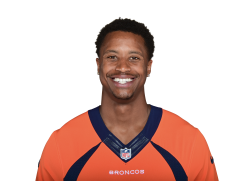
A split backfield and a crowded middle
Twelve touchdowns on 193 touches, at 3.7 yards a carry.
- 540 rush yds
- 47 rec, 356 yds
- 12 total TD
The efficiency is poor and almost irrelevant: he caught 47 passes on 58 targets and scored twelve times, which is a role built out of the passing game and the goal line rather than out of yardage. That is a genuinely valuable fantasy shape, especially in PPR. It is also the most fragile — twelve scores on 193 touches is a rate that regresses, and Dobbins ran for 5.0 a carry alongside him.
5.0 yards a carry in ten games, and none of the touchdown work.
- 772 rush yds
- 5.0 yds/carry
- 4 TD
Seven hundred and seventy-two yards in ten appearances is a 77-yard-a-game rate that only two or three backs beat, and behind this line it is believable. He does nothing in the passing game — eleven catches — and Harvey took the scores. Health is the recurring story and it is why he is priced as a committee back rather than the more productive runner he plainly was.
Did more per snap than anyone in this room and got the fewest of them.
- 31 rec, 378 yds
- 49 targets
- 8 RZ targets
Thirty-one catches on forty-nine targets is a nothing line until you notice what it was made of: a 57% success rate, positive EPA on a rookie's snaps, and eight red-zone looks with four inside the ten on an offence that scored twenty-five times through the air. The role is the problem rather than the player — Waddle's arrival puts him third or fourth in line and Denver already had three receivers above a hundred targets. He is the cheapest way to own a red-zone role in a good offence, and it takes an injury in front of him to matter.
Seventy-six targets and one touchdown.
- 50 rec, 461 yds
- 76 targets
- 1 TD
Fifty catches gives him a PPR pulse and 9.2 yards a reception with a single touchdown gives him nothing else. Denver reached the end zone plenty; it simply never looked for him there. In a room about to add Waddle to three existing 100-target receivers, the case for a tight end with this scoring rate gets harder rather than easier.


Bottom lineThe offensive line is the asset here — nobody protected better, and everything Bo Nix does is downstream of it. The receiving corps is now four deep and somebody's targets are about to disappear, so buy Nix and Harvey's role rather than guessing which receiver survives the split.
Usage & Opportunity Report
Updated through Week 4 · refreshed every Tuesday
Fantasy production follows opportunity, not the other way around — so this report tracks who's on the field and who the ball is going to, before the box score catches up. The essentials: target share (share of team pass attempts), snap share, and red-zone touches. The premium layer, in each player's expandable profile: first-read share (how often the play is designed for him), air-yards share (30%+ is the alpha-receiver threshold), and expected fantasy points (xFP) vs. fantasy points over expected (FPOE) — xFP is stable, repeatable volume; FPOE is efficiency that regresses. Route share (the % of dropbacks a player runs a route on — the stat that matters most for tight ends), targets per route run (TPRR) and yards per route run (YPRR — the best receiver efficiency stat there is) join the profiles when the league's route data is published. Since 2017, receivers at a 20%+ target share average 15.3 fantasy points per game; the 10–20% group averages 9.8. That cliff is why this table exists.
- Pass rate over expected−1.5%16thThrows about as much as situations call for — the target tree, not the play-calling, decides who eats
- Red-zone pass rate63%7thThrows inside the 20 — Sutton's 3 end-zone targets lead the team
- Neutral pace32.8s12th fastestSeconds per play in neutral situations
- Plays per game54.030thOffensive plays a game — fewer snaps to go around, so shares matter more
- Team xFP / game82.622ndTotal expected fantasy points this offense creates
The Target Tree
All 93 Broncos pass attempts through Week 4
- Jaylen Waddle 21.5%
- Courtland Sutton 17.2%
- RJ Harvey 11.8%
- Pat Bryant 9.7%
- Evan Engram 8.6%
- Adkins/Badie/Franklin 14.0%
- Everyone else 10.8%
- No target (throwaways, spikes, batted) 6.5%
The Backfield Split
Who owns which situations — the RB stat that actually predicts the box score.
- J.K. Dobbins 42.4%
- RJ Harvey 29.3%
- Jonah Coleman 17.4%
- Other backs 10.9%
Share of the backs' carries + targets in each situation. Snap-by-snap splits need the league's participation data, which is published after the season.
- 13.0Dobbins weighted opps/game — RB37 in the NFL
- 7Dobbins high-value touches (in-10 carries + targets)
- 13.5Harvey weighted opps/game
- −5.1Dobbins wOpp/g vs. last season — a smaller role than last season
Why Dobbins's reception count stays capped: RJ Harvey owns 55% of the backfield's targets. Dobbins's 6-catch pace isn't a talent question — the passing-down role belongs to Harvey. Green flag for his rushing floor, hard ceiling on his PPR upside.
The Harvey math if Dobbins misses time: Harvey backs up the early-down and red-zone roles (the valuable ones). A Dobbins absence projects Harvey to ~48% of weighted opportunities — about 18.8 a game, an RB2 by volume — and why he's a STASH, not a cut.
Run Direction — carries & yards per carry by gap
- 4.714 attLeft end
- 4.25 attLeft tackle
- 3.531 attMiddle
- 3.65 attRight tackle
- 4.37 attRight end
Designed runs only; "Middle" includes runs behind either guard.
The left side is the run game's engine: 4.7 yards per carry off left end and 4.2 behind left tackle — 31% of all designed runs go that way. Interior volume (31 attempts) does the clock work at 3.5; the left edge does the damage. When the line's left side sits out practice, that's a usage note, not just an injury note.
Where Nix Attacks
Share of pass attempts & yards per attempt by field zone — through Week 4
- 4%13.5 YPADeep left
- 1%49.0 YPADeep middle
- 3%9.7 YPADeep right
Line of scrimmage · deep = 20+ air yards
- 43%6.2 YPAShort left
- 10%3.3 YPAShort middle
- 39%5.4 YPAShort right
The short left is the efficiency engine (6.2 YPA). Nix keeps 91% of his throws under 20 air yards, with the deep left his most explosive zone (13.5 YPA on 4 attempts). Gold = highest-YPA high-volume zone.
| Profile | Player | Opportunity (WOPR) | Target share | Snap share | RZ touches | Read |
|---|---|---|---|---|---|---|
| Jaylen WaddleWR1WR27 in target share, NFL | 0.64elite | 21.5%+9.9 vs W1 | 69%steady | 10 · 1 · 0 | Set & forget | |
The alpha profile, fully formed. A 45.3% air-yards share clears the 30% alpha threshold, a 25% first-read share says the offense is designed through him, and a 12.4-yard aDOT sits in the sweet spot — deep enough for ceiling, not so deep it gets volatile. He's −1.5 a game against expected: the volume is there and the box score hasn't caught up — a buy signal, not a warning. Bars show percentile vs. all NFL WRs. | ||||||
| J.K. DobbinsRB1, 51% of RB touchesRB37 in weighted opps/game, NFL | —touch share 51% | 2.2%+5.9 vs W1 | 42%+6 vs W1 | 6 ▲0 · 3 · 3 — leads team | Flex | |
A shared backfield. 41% of the weighted opportunities means another back takes a real cut every week, so his floor rises and falls with game script. He's −6.0 a game against expected: the volume is there and the box score hasn't caught up — a buy signal, not a warning. Bars show percentile vs. all NFL RBs. | ||||||
| Courtland SuttonWR2WR44 in target share, NFL | 0.46strong — elite at 0.60 | 17.2%+2.7 vs W1 | 79%+11 vs W1 | 5 ▲1 · 1 · 3 | Starter | |
A starter's share without the alpha tag. A 17.2% target share and 10.1 expected points a game, with a 25% first-read share; a 28.3% air-yards share decides how much of that turns into yards. He's −4.7 a game against expected: the volume is there and the box score hasn't caught up — a buy signal, not a warning. Bars show percentile vs. all NFL WRs. | ||||||
| Pat BryantWR3WR77 in target share, NFL | 0.21below startable | 9.7%−15.5 vs W1 | 66%+11 vs W1 | 1 ▲0 · 0 · 1 | Volatile | |
The ceiling problem in two numbers: a 9% air-yards share and a 5.4 aDOT. His targets travel nowhere, so even a healthy target share converts to modest yardage. He's scoring +2.7 points a game over expected — some of that is efficiency that regresses, but the 5.4 xFP floor holds. Bars show percentile vs. all NFL WRs. | ||||||
| Evan EngramTE1TE33 in target share, NFL | 0.18below startable | 8.6%−12.0 vs W1 | 58%steady | 11 · 0 · 0 | Volatile | |
The ceiling problem in two numbers: a 6.6% air-yards share and a 4.5 aDOT. His targets travel nowhere, so even a healthy target share converts to modest yardage. He's scoring +1.6 points a game over expected — some of that is efficiency that regresses, but the 4 xFP floor holds. Bars show percentile vs. all NFL TEs. | ||||||
| Jonah ColemanRB3 · handcuff, 19% of RB touchesRB55 in weighted opps/game, NFL | —touch share 19% | 3.2%+9.7 vs W1 | 16%+34 vs W1 | 3 ▲0 · 3 · – | Stash | |
Contingent value, quantified. The 19% touch share is standalone-flex-in-a-pinch at best; the real number is what it becomes if Dobbins misses time — see The Backfield Split above. Bars show percentile vs. all NFL RBs. | ||||||
| RJ HarveyRB2 · handcuff, 21% of RB touchesRB34 in weighted opps/game, NFL | —touch share 21% | 11.8%+6.3 vs W1 | 28%−15 vs W1 | 2 ▲0 · – · 2 | Stash | |
Contingent value, quantified. The 21% touch share is standalone-flex-in-a-pinch at best; the real number is what it becomes if Dobbins misses time — see The Backfield Split above. Bars show percentile vs. all NFL RBs. | ||||||
| Bo NixQB1QB15 in xFP/game, NFL | —every dropback | —the passer | 100%steady | 3 ▲1 · 0 · 2 | Starter | |
A pocket passer's profile. 2 green-zone carries and a 1% scramble rate: his points have to come through the air, so his weekly range follows the pass volume (QB15 in expected points). He's −2.2 a game against expected: the volume is there and the box score hasn't caught up — a buy signal, not a warning. Bars show percentile vs. all NFL QBs. | ||||||
How to read this table
- Set & forget 20%+ target share or locked bell-cow role — start everywhere
- Starter 17–19% target share or a lead back's full workload — weekly lineup play
- Flex 15–16% share or a committee lead — matchup-dependent
- Volatile under 15% — deep leagues only
- Stash the role behind the role
- WOPR: 1.5 × target share + 0.7 × air-yards share
- + button: opens the full advanced profile — first-read share, air-yards share, xFP/FPOE — with percentile bars vs. the league
Buy low
J.K. Dobbins
The role is arriving before the box score does. Trade for him this week — not after the two-touchdown game makes it obvious to your league.
- +6snap share pts since W1
- +5.9target share pts since W1
Usage trends are one of the core inputs behind our player pricing — Redraft Command re-runs every player's value as these shares move, so a riser like Dobbins gets repriced before your leaguemates notice.
Data: nflverse play-by-play · nflverse snap counts (PFR) · FTN Data charting via nflverse (first-read share) · ffopportunity expected points (xFP). Regular season, through Week 4.
Coaching Profile & Tendencies
Play-calling tendencies carry over from season to season when the play-caller stays the same — and become unreliable the moment he changes. That's the whole reason this module exists: before you trust any Broncos projection, you need to know whose fingerprints are on the offense and how stable they are. For the Broncos the answer is: new fingerprints. Davis Webb is calling this offense for the first time in 2026, though from the same scheme family as his predecessor — so the 2026 sample, not last year's, is the signal.
Offensive coordinator · First season as caller here · Primary play-caller
Davis Webb
Sean Payton tree — Webb's entire coaching career has been spent in Payton's Denver offense
Sean Payton announced at the 2026 NFL Combine that Webb would become Denver's primary offensive play-caller — an unusual handoff after Payton called plays himself for most of his head-coaching career. Payton remains heavily involved in the offense and said he may still call some plays.
- NFL backup QB (Giants, Jets, Bills)2017-22
- Broncos quarterbacks coach2023-24
- Broncos pass game coordinator / QB coach2025
- Broncos offensive coordinator & play-caller2026
Tendency reliability
New play-caller, but from the same scheme family as Sean Payton — some carryover is real, but treat 2025 numbers as context, not baseline.
Play-caller ledgerWebb — 3 of 3 games in 2026 · first season
| Tendency | 2025 (prev. staff) | 2026 (Webb) | Change | NFL avg. |
|---|---|---|---|---|
| Pass rate (all downs) | 62.5% | 61% | −1.5 | 60% |
| Pass rate over expectedsituation-adjusted | +1.6% | −1.5% | −3.1 | 0% |
| Neutral pacesec/play, neutral game state | 32.3s | 32.8s | slower | 33s |
| Early-down pass rate1st & 2nd down | 56.4% | 55.6% | −0.8 | 55% |
| No-huddle rate | 13% | 6.2% | −6.8 | 6% |
| Play-action rateshare of dropbacks, FTN charting | 24% | 23.2% | −0.8 | 24% |
| Motion at snapFTN charting | 46.3% | 58% | +11.7 | 58% |
| Shotgun rate | 65.5% | 67.3% | +1.8 | 59% |
| Red-zone pass rate | 59% | 63% | +4 — 7th in NFL | 56% |
| 4th-down go rateopponent territory, 2 yds or less | 100% | — | — | 75% |
58motion
More motion at the snap.
Motion at the snap rose from 46.3% to 58% of charted plays. Motion buys free releases and defined reads — it tends to concentrate targets on the players the scheme is built around.
6.2no-huddle
The huddle is back.
No-huddle rate fell from 13% to 6.2%. A more deliberate operation usually means fewer total snaps — a quiet tax on everyone's volume.
63red-zone pass %
The red zone opened up.
Red-zone pass rate rose from 59% to 63%. More of this team's touchdowns will arrive through the air — receiver TD equity up, goal-line back TD equity down.
Offensive coordinator · Delegation watch
Davis Webb
Primary play-caller — see the card above
The call sheet runs through the coordinator here: Davis Webb has the play-calling duties while head coach Sean Payton runs the game. The profile on this page is his.
Defensive coordinator
Vance Joseph
Aggressive 3-4 pressure defense featuring mugged fronts, double-A-gap looks, simulated pressures and coverage disguise. Joseph still blitzes at an above-average rate, but Denver increasingly generates pressure with four; the Broncos recorded 68 sacks in 2025
Through Week 4 the defense allows 0.05 EPA per play (21st in the NFL). A middle-of-the-pack unit so far — game script here is week-to-week, so check the spread before leaning on it.
Staff continuity
New install
Webb's first season calling the Broncos offense
First-year installs carry the highest tendency risk in football: terminology, staff and quarterback relationships are all new at once. Weight what this staff is doing now over anything carried forward from 2025.
Career dossier
| Stop | Offense | The fingerprint he left |
|---|---|---|
| Broncos · OC2026 | 20 ppgthrough Week 4, 22nd in NFL | The current stop: RBs took 24% of targets (league 18%) in 2026; the lead back handled 41% of backfield weighted opportunities. |
| Positional fantasy finishes under Webb | QB | RB1 | WR1 | TE1 |
|---|---|---|---|---|
| Broncos · 2026pace through Week 4 | QB21 · Nix | RB37 | WR38 | TE26 |
Webb has no prior NFL play-calling seasons, so read the history as background and the 2026 pace row as the live read. Positional finishes are season-long PPR ranks from nflverse scoring data.
How he distributes the ball
Target split by position this season — Webb has no earlier NFL play-calling seasons to average in.
Filled bar = Webb offenses · thin marker = league average
The lean: running backs run 6 points above league average under Webb (24% vs 18%). Position splits this stable are scheme, and scheme is what carries week to week.
How he manages a backfield
Lead back's share of backfield weighted opportunities, by season (* = previous staff).
Starred seasons were a previous staff's — context, not this caller's record. The trend is a spread: the lead back's share of backfield weighted opportunities (carries + 2×targets) has drifted down. Committee risk is real here — price the backs on efficiency, not assumed volume.
Play-calling by score state
Pass rate when leading, close, and trailing, 2026 through Week 4.
A 47-point pass-rate swing between leading and trailing. Ahead, the backfield eats; behind, the targets spike — check the spread before you set a flex. Through Week 4 some of these buckets are thin (play counts shown), so treat the splits as early reads.
The fantasy bottom line: a new play-caller means 2025 data is context at best — what you can bank on is what Webb is showing now: shotgun rate above league average (67.3% vs 59%), and red-zone pass rate above league average (63% vs 56%). The target tree leans RB, and the lead back holds 41% of the backfield's weighted opportunities. Every number on this page is computed from nflverse play-by-play and FTN charting — when it changes, the page changes.
Broncos Team Stats 2026
2026 regular season to date.
Points/G (Points scored per game)
20.0
22nd of 32 — Middle tier down 8 places from last season
Pass Yds/G (Net passing yards per game)
194.0
23rd of 32 — Middle tier down 12 places from last season
Rush Yds/G (Rushing yards per game)
81.0
31st of 32 — Bottom tier down 15 places from last season
Total Yds/G (Total net yards per game)
275.0
29th of 32 — Bottom tier down 19 places from last season
Offense & Defense
2026 regular season to date · 3 games.
Ranked against all 32 teams. On defense 1st means fewest allowed, not most.
Offense
What they did
- Points/G — Points scored per game20.022nd of 32 — Middle tier down 8 places from last season
- Total Yds/G — Total net yards gained per game275.029th of 32 — Bottom tier down 19 places from last season
- Yds/Play — Net yards gained per offensive play4.9723rd of 32 — Middle tier down 8 places from last season
- Pass Yds/G — Net passing yards gained per game194.023rd of 32 — Middle tier down 12 places from last season
- Rush Yds/G — Rushing yards gained per game81.031st of 32 — Bottom tier down 15 places from last season
- Yds/Pass Att — Yards gained per pass attempt6.5024th of 32 — Middle tier up 4 places from last season
- Yds/Carry — Yards gained per rushing attempt3.60T-26th of 32 — Bottom tier down 11 places from last season
- Passer Rtg — Passer rating produced by this offense80.327th of 32 — Bottom tier down 4 places from last season
- 3rd Down — Third downs converted36.1%23rd of 32 — Middle tier down 12 places from last season
Defense
What they allowed
- Points/G — Points allowed per game23.317th of 32 — Middle tier down 14 places from last season
- Total Yds/G — Total net yards allowed per game380.729th of 32 — Bottom tier down 27 places from last season
- Yds/Play — Net yards allowed per play5.6021st of 32 — Middle tier down 20 places from last season
- Pass Yds/G — Net passing yards allowed per game237.025th of 32 — Bottom tier down 18 places from last season
- Rush Yds/G — Rushing yards allowed per game143.730th of 32 — Bottom tier down 28 places from last season
- Yds/Pass Att — Yards allowed per pass attempt6.8713th of 32 — Middle tier down 11 places from last season
- Yds/Carry — Yards allowed per rushing attempt5.0730th of 32 — Bottom tier down 27 places from last season
- Passer Rtg — Passer rating allowed to opposing quarterbacks74.33rd of 32 — Top tier up 3 places from last season
- 3rd Down — Third downs allowed to convert47.8%27th of 32 — Bottom tier down 25 places from last season
Situational & Ball Security
Third and fourth down, the pass rush at both ends of it, and what each side does with the football.
4th Down (Fourth downs converted)
0.0%
T-27th of 32 — Bottom tier down 5 places from last season
1st Downs/G (First downs gained per game)
17.0
T-25th of 32 — Bottom tier down 11 places from last season
Sacks Allowed (Sacks given up by this offense)
5
T-7th of 32 — Top tier down 6 places from last season
Sacks (Sacks recorded by this defense)
8
T-9th of 32 — Middle tier down 8 places from last season
Takeaways (Turnovers forced by this defense)
4
T-11th of 32 — Middle tier up 15 places from last season
Giveaways (Turnovers committed by this offense)
4
T-16th of 32 — Middle tier down 5 places from last season
TO Margin (Turnover differential for the season)
0
T-16th of 32 — Middle tier up 3 places from last season
Penalty Yds/G (Penalty yards conceded per game)
47.7
9th of 32 — Middle tier up 23 places from last season
Volume & Play Mix
Opportunity, not quality: how many snaps there are to go round and how they are divided. Ranks here are most to least, with no better end.
Plays/G (Offensive plays run per game)
55.3
30th of 32
Pass Att/G (Pass attempts per game)
31.0
18th of 32
Carries/G (Rushing attempts per game)
22.7
T-26th of 32
Pass TD (Passing touchdowns scored)
4
T-18th of 32 — Middle tier
Rush TD (Rushing touchdowns scored)
2
T-13th of 32 — Middle tier
Opp Plays/G (Plays this defense faces per game)
68.0
2nd of 32
Own play mix
Pass 59.0%Run 41.0%
How this offense splits its snaps.
Play mix faced
Pass 58.3%Run 41.7%
How opponents attack this defense.
Season History
Every season back to 2022, each number ranked against the 32 teams of that year.
| Season | Pts/G — Points scored per game | Yds/G — Total net yards gained per game | Yds/Play — Net yards gained per offensive play | Pts All — Points allowed per game | Yds All — Total net yards allowed per game | TO +/- — Turnover differential for the season |
|---|---|---|---|---|---|---|
| 2026Current3 games | 20.022nd of 32 | 275.029th of 32 | 4.9723rd of 32 | 23.317th of 32 | 380.729th of 32 | 0T-16th of 32 |
| 202517 games | 23.614th of 32 | 342.6 — best of the last 5 seasons10th of 32 | 5.33 — best of the last 5 seasons15th of 32 | 18.3 — best of the last 5 seasons3rd of 32 | 278.2 — best of the last 5 seasons2nd of 32 | -3T-19th of 32 |
| 202417 games | 25.0 — best of the last 5 seasons10th of 32 | 324.619th of 32 | 5.2319th of 32 | 18.3 — best of the last 5 seasons3rd of 32 | 317.17th of 32 | +6 — best of the last 5 seasonsT-10th of 32 |
| 202317 games | 21.019th of 32 | 298.426th of 32 | 4.9925th of 32 | 24.327th of 32 | 370.829th of 32 | +410th of 32 |
| 202217 games | 16.932nd of 32 | 325.121st of 32 | 5.1323rd of 32 | 21.1T-14th of 32 | 320.07th of 32 | -1T-16th of 32 |
Latest Broncos News


Considered OK despite boot
Read report
Team-high 46 rec yards in comeback win
Read report
Doesn't do much with 17 carries
Read report
Seven targets, two carries in Week 3
Read report


View 50 more Broncos stories
Three totals TDs in second-half comeback
Read report
Cleared to return vs. Rams
Read report
Getting evaluated for concussion
Read report
Lands on injured reserve
Read report
Won't play this week
Read report
Present for practice
Read report
Sits out another practice
Read report
Upgrades to full practice
Read report
DNP on Wednesday
Read report
Practices in limited capacity
Read report
Limited Wednesday
Read report
On track to practice in Week 3
Read report
Making progress in recovery
Read report
On mend from ankle sprain
Read report
Looking good after hamstring scare
Read report
Hoping to play Week 3
Read report
Plays expanded role in win
Read report
Leads comeback victory Sunday
Read report
Does little with three catches
Read report
Breakout performance in Week 2 win
Read report






Broncos Fantasy Depth Chart
Offensive skill positions only. Order as listed on the team's depth chart.
QB2 players listed

RB4 players listed
WR4 players listed
TE2 players listed

2026 Broncos Schedule
Next game
Week 4Away at 49ersSan Francisco 49ers
- Week 5DivAway
 at ChargersLos Angeles Chargers
 - Week 6Home
 vs SeahawksSeattle Seahawks
- W1at
 Kansas City ChiefsSep 14Lost 10 to 31View matchup
 - W2vs
 Jacksonville JaguarsSep 20Won 20 to 13View matchup
 - W3vs
 Los Angeles RamsSep 27Won 30 to 26View matchup
 - W4atSan Francisco 49ersOct 44:25 PM ETView matchup
- W5atLos Angeles ChargersOct 114:05 PM ETView matchup
- W6vsSeattle SeahawksOct 158:15 PM ETView matchup
- W7at
 Arizona CardinalsOct 254:05 PM ETView matchup
 - W8vsKansas City ChiefsNov 14:25 PM ETView matchup
- W9at
 Carolina PanthersNov 81:00 PM ETView matchup
 - W10Bye week
- W11vs
 Las Vegas RaidersNov 224:25 PM ETView matchup
 - W12at
 Pittsburgh SteelersNov 273:00 PM ETView matchup
 - W13vs
 Miami DolphinsDec 64:05 PM ETView matchup
 - W14at
 New York JetsDec 131:00 PM ETView matchup
 - W15atLas Vegas RaidersDec 204:25 PM ETView matchup
- W16vs
 Buffalo BillsDec 254:30 PM ETView matchup
 - W17at
 New England PatriotsJan 3TBDView matchup
 - W18vsLos Angeles ChargersJan 10TBDView matchup
Explore StatChasers
- Fantasy Football ToolsThe #1 ranked fantasy football toolset.Open
- Advanced Player StatsDeeper numbers on every player in the league.Open
- Strength of ScheduleMatchup difficulty by fantasy position, including the playoff weeks.Open
- Fantasy Points AllowedHow Denver's defense performs against QB, RB, WR and TE.Open
Common questions
Who are the best Denver Broncos players to draft in fantasy football in 2026?
Bo Nix and Courtland Sutton are the top fantasy options for the Broncos in 2026. Bo Nix projects as a top-eight QB1. Courtland Sutton projects as a WR2.
Is Bo Nix a QB1 in fantasy football in 2026?
Yes. In 2026, Nix projects as a top-eight QB1. Thirty total touchdowns behind the best pass protection in football.
What is Courtland Sutton's fantasy outlook with the Broncos?
In 2026, Sutton projects as a WR2. 124 targets and seven touchdowns — the established first read, for now.
Who is the Denver Broncos starting running back in 2026?
RJ Harvey leads the Broncos backfield in 2026 and projects as a touchdown-heavy RB2. J.K. Dobbins is the other half of the backfield, an efficient RB3.
Is J.K. Dobbins worth drafting in fantasy football in 2026?
Behind RJ Harvey, Dobbins projects as an efficient RB3. 5.0 yards a carry in ten games, and none of the touchdown work.
Who is the Broncos WR2 behind Courtland Sutton?
Behind Courtland Sutton, Jaylen Waddle projects as a WR3 with upside. 910 yards on a dysfunctional Miami offence, now attached to a functional one.
Is Evan Engram a good fantasy tight end in 2026?
In 2026, Engram projects as a streaming TE. Seventy-six targets and one touchdown.
Who is the Denver Broncos fantasy football sleeper for 2026?
Pat Bryant is the Broncos sleeper to watch in 2026. Did more per snap than anyone in this room and got the fewest of them.
Is the Denver Broncos offense good for fantasy football in 2026?
Bo Nix and Courtland Sutton headline the Broncos in 2026. The offensive line is the asset here — nobody protected better, and everything Bo Nix does is downstream of it. The receiving corps is now four deep and somebody's targets are about to disappear, so buy Nix and Harvey's role rather than guessing which receiver survives the split.
Common questions
Who leads the Denver Broncos in target share?
Jaylen Waddle leads the Denver Broncos with a 21.5% target share through Week 4, up 9.9 points since Week 1. Courtland Sutton is second at 17.2%.
Common questions
How does Davis Webb's play-calling affect Broncos fantasy players?
Davis Webb is a first-year play-caller for the Broncos, so last season's tendencies carry little predictive weight. Through Week 4 2026, the offense shows shotgun rate above league average (67.3% vs 59%) and red-zone pass rate above league average (63% vs 56%). The lead back handles 41% of backfield weighted opportunities, and the target split leans toward running backs (24% vs a 18% league average). All numbers are derived from nflverse play-by-play data.
Common questions
2026 regular season to date · 3 games.
How many points per game are the Denver Broncos averaging in 2026?
The Broncos are averaging 20.0 points per game through 3 games of the 2026 season, 22nd in the NFL. They scored 23.6 per game in 2025. Only 3 games have been played, so these figures and ranks will still move a lot.
How many yards per game are the Broncos averaging in 2026?
Denver is averaging 275.0 total yards per game through 3 games of the 2026 season, 29th in the NFL — 194.0 passing and 81.0 rushing.
How does the Broncos offense rank in the NFL in 2026?
Through 3 games of the 2026 season, the Broncos offense ranks 22nd in points per game (20.0) and 23rd in yards per play (4.97). Only 3 games have been played, so these figures and ranks will still move a lot.
How good is the Broncos defense in 2026?
Denver has allowed 23.3 points and 380.7 total yards per game through 3 games of the 2026 season. That is the 17th-fewest points allowed in the NFL. Opponents are averaging 5.60 yards a play, the 21st-fewest allowed. Only 3 games have been played, so these figures and ranks will still move a lot.
Are the Broncos better at passing or running the ball in 2026?
Denver has averaged 194.0 passing yards and 81.0 rushing yards per game through 3 games of the 2026 season. That is 6.50 yards per pass attempt compared with 3.60 per carry.
How often do the Broncos pass the ball?
59.0% of Denver's offensive plays have been passes and 41.0% runs through 3 games of the 2026 season. They run 55.3 plays a game, the 30th-most in the league.
What is the Denver Broncos turnover margin in 2026?
The Broncos have a 0 turnover margin through 3 games of the 2026 season. They have committed 4 giveaways and forced 4 takeaways.
How do the 2026 Broncos compare with the 2025 team?
Denver is averaging 20.0 points and 275.0 total yards per game through 3 games of the 2026 season. In 2025 the Broncos averaged 23.6 points and 342.6 total yards. Only 3 games have been played, so these figures and ranks will still move a lot.
Common questions
Who is the Denver Broncos starting quarterback?
Bo Nix is the Broncos' starting quarterback. Jarrett Stidham is listed behind Bo Nix on the fantasy depth chart.
Who is the Denver Broncos starting running back?
J.K. Dobbins leads the Broncos running back depth chart, followed by RJ Harvey and Tyler Badie. Jonah Coleman is on injured reserve.
Who is the Broncos WR1?
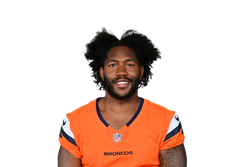
Jaylen Waddle is listed as the Broncos' WR1 on the current fantasy depth chart. Courtland Sutton, Pat Bryant and Troy Franklin follow Jaylen Waddle in the wide receiver rotation.
What is the Denver Broncos wide receiver depth chart?
Denver's fantasy wide receiver depth chart currently lists Jaylen Waddle as WR1, Courtland Sutton as WR2, Pat Bryant as WR3 and Troy Franklin as WR4.
Who is the Denver Broncos starting tight end?
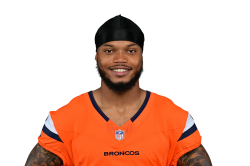
Evan Engram is the Broncos' starting tight end, with Adam Trautman listed behind Evan Engram at TE2.
Who is the Denver Broncos backup quarterback?
Jarrett Stidham is the backup quarterback behind Bo Nix on the current Broncos fantasy depth chart.
How often is the Broncos depth chart updated?
The Broncos fantasy depth chart is updated as roster moves, injuries and role changes affect the team's offensive hierarchy.
Common questions
Who do the Denver Broncos play next?
The Broncos' next game is Week 4 against the San Francisco 49ers at Levi's Stadium. Kickoff is scheduled for Sunday, October 4 at 4:25 PM ET. The game is on CBS.
What is the Denver Broncos schedule for 2026?
The Broncos play 17 regular-season games in 2026, opening in Week 1 against the Kansas City Chiefs at Arrowhead Stadium and finishing in Week 18 against the Los Angeles Chargers at Empower Field at Mile High. Every week's date, opponent, venue, network and result is listed in the schedule above.
When is the Denver Broncos bye week in 2026?
The Broncos are on bye in Week 10 of the 2026 season, between their Week 9 game against the Carolina Panthers and their Week 11 game against the Las Vegas Raiders. The bye is listed in the schedule above as its own week, with no fixture against it.
How many home games do the Denver Broncos have in 2026?
Denver has 8 home games in 2026, all of them at Empower Field at Mile High. Each one is marked HOME in the schedule above.
Who do the Broncos play in the AFC West?
The Broncos play 6 division games in 2026, home and away against the Kansas City Chiefs, Los Angeles Chargers and Las Vegas Raiders. Division games are marked DIV in the schedule above.
When do the Broncos play the Chiefs?
Denver lost to the Kansas City Chiefs 10-31 in Week 1 at Arrowhead Stadium. They meet again in Week 8 at Empower Field at Mile High on Sunday, November 1 at 4:25 PM ET.
When do the Broncos play the Chargers?
The Broncos face the Los Angeles Chargers in Week 5 at SoFi Stadium on Sunday, October 11 at 4:05 PM ET and Week 18 at Empower Field at Mile High on Sunday, January 10.
When do the Broncos play the Raiders?
The Broncos face the Las Vegas Raiders in Week 11 at Empower Field at Mile High on Sunday, November 22 at 4:25 PM ET and Week 15 at Allegiant Stadium on Sunday, December 20 at 4:25 PM ET.
What channel are Denver Broncos games on in 2026?
2026 Broncos games are scheduled on CBS, Prime Video, ESPN, NBC, FOX and Netflix. CBS carries the most with 9 games. The network for each week is shown in the schedule above; 2 games have no broadcast window assigned yet and show none.
Where can I see Denver Broncos scores and results?
Every completed game shows its final score in the schedule above, and upcoming games show the date, venue and network instead. The Broncos are 2-1 through 3 games in 2026, most recently beat the Los Angeles Rams 30-26 in Week 3.