AFC North · 2026 Season
Cleveland Browns
Cleveland Browns fantasy football hub
Cleveland Browns










New play-caller: Todd Monken is calling plays for the first season here, so last year's tendencies are an unreliable guide — see the Coaching tab before trusting season-over-season projections.
Cleveland Browns Fantasy Football Outlook & Stats 2026
Cleveland scored 16.4 points a game, threw for 184.8, gave up fifty-one sacks and put eighteen passes into the wrong hands. Todd Monken inherits that and a quarterback room where Shedeur Sanders and Dillon Gabriel split seventeen starts without either settling it, with Deshaun Watson back in the competition after a season without a snap. The one genuinely good thing that happened was a rookie tight end leading the team in targets, catches, yards and touchdowns.
- Head coach
- Todd Monken (first season)
- Scoring
- 16.4 pts/g 31st in the NFL
- Passing
- 184.8 yds/g 31st in the NFL
- Third down
- 33.6% 29th in the NFL
- Sacks allowed
- 51 26th in the NFL
- Interceptions
- 18
The reasons to look here at all
Led the team in targets, receptions, yards and touchdowns — as a rookie tight end.
- 72 rec, 731 yds
- 107 targets
- 6 TD
One hundred and seven targets is a number a tight end reaches only when he is the first read, and he reached it on the 31st-ranked passing offence in his first season. Seventy-two catches and six scores from that role is the kind of usage that survives a coaching change, because it was earned rather than schemed. The 10.2 yards a reception is the honest limit — this is volume in a bad offence, not a seam threat in a good one — but the volume is what the position pays for.
230 carries and seven scores, at 3.6 a carry behind a line that allowed fifty-one sacks.
- 827 rush yds
- 3.6 yds/carry
- 7 TD
The workload is unambiguous and the efficiency is alarming: 3.6 a carry over 230 attempts is bottom-of-the-league running, and it happened on an offence that gave defences no reason to respect the pass. Seven touchdowns on a team that scored 16.4 a game says the goal-line work is his, which is the entire fantasy case. If Monken's arrival moves the passing game at all, Judkins is the player it helps most.
A first-round receiver walking into a room with no established first read.
- 1st-round rookie
- 919 college yds
- 9 college TD
Nine hundred and nineteen yards and nine scores in his last college season, with erratic quarterback play behind them — the separation after the catch is the skill, and it is the one that survives a bad passing offence. Jerry Jeudy and fellow rookie Denzel Boston are the competition for the targets a 31st-ranked passing game has to give, and the college drops are a real caveat rather than a footnote. Nobody available this late has a clearer path to a starter's workload, which is the whole reason to spend the pick.
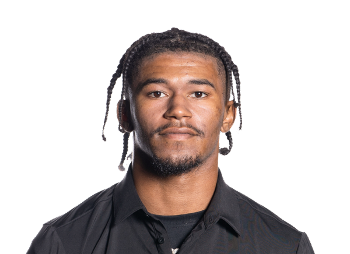
Speculative at best
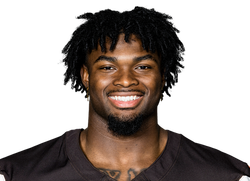
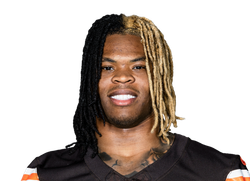
A 68.1 rating in eight starts, with the legs that make it interesting anyway.
- 1,400 pass yds
- 7 TD, 10 INT
- 169 rush yds
Seven touchdowns against ten interceptions at 56.6% completion is not an NFL starter's line, and Dillon Gabriel's 80.8 rating in ten games means the job is not his by default. The reason to keep the name is 8.0 yards a carry on 21 attempts — a rushing element that would raise his floor considerably if the job and the confidence to run ever arrive together. Superflex only, and only late.
In an open competition for a job neither of the other two won.
- No 2025 snaps
- 1,148 yds in 2024
- 5 TD, 3 INT
He has not played since 2024, when seven starts produced 1,148 yards, five touchdowns and a finish outside the top thirty at the position. The rushing element that once carried his fantasy value went with the injuries — 148 yards on 31 carries in that sample. The only case is the one the depth chart makes: Sanders and Gabriel split seventeen starts without settling anything, so the job is genuinely open and he is in the room for it.
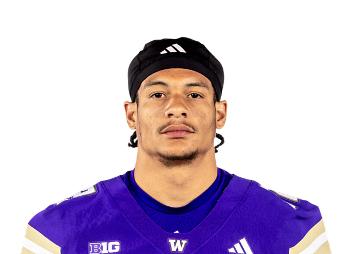
A 39th overall pick walking into the one receiver room with nothing settled in it.
- 39th overall pick
- 6-4, 215
- Washington
He led Washington in receiving yards on a contested-catch and ball-skills profile rather than a speed one — he did not run at the combine, and the tape does not ask him to separate. The room he joins is the least established in the division, which is the argument for him and the warning at the same time: nobody here has a hold on targets because nobody here has earned one. Draft him last in deep leagues and let the snap counts speak first.
Forty targets is a defined passing-down role behind an inefficient starter.
- 33 rec, 271 yds
- 40 targets
- 2.7 yds/carry
Thirty-three catches on forty targets is genuine third-down usage, and it matters more than his 2.7 yards a carry suggests — in an offence that trails as often as this one, the receiving back is on the field for the snaps that produce points. He is the handcuff to a 230-carry back whose efficiency invites a committee. In PPR he has standalone weeks; anywhere else he does not.
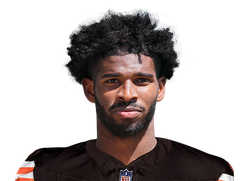

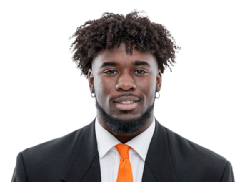
Bottom lineHarold Fannin is a genuine asset who happens to play here, and he is the only player on this roster you should draft at his market price rather than below it. Everything else is a wager on Todd Monken fixing the 31st-ranked passing game in one offseason with a quarterback room that has answered nothing.
Usage & Opportunity Report
Updated through Week 4 · refreshed every Tuesday
Fantasy production follows opportunity, not the other way around — so this report tracks who's on the field and who the ball is going to, before the box score catches up. The essentials: target share (share of team pass attempts), snap share, and red-zone touches. The premium layer, in each player's expandable profile: first-read share (how often the play is designed for him), air-yards share (30%+ is the alpha-receiver threshold), and expected fantasy points (xFP) vs. fantasy points over expected (FPOE) — xFP is stable, repeatable volume; FPOE is efficiency that regresses. Route share (the % of dropbacks a player runs a route on — the stat that matters most for tight ends), targets per route run (TPRR) and yards per route run (YPRR — the best receiver efficiency stat there is) join the profiles when the league's route data is published. Since 2017, receivers at a 20%+ target share average 15.3 fantasy points per game; the 10–20% group averages 9.8. That cliff is why this table exists.
- Pass rate over expected+1.0%9thThrows about as much as situations call for — the target tree, not the play-calling, decides who eats
- Red-zone pass rate60%9thThrows inside the 20 — Fannin's 3 end-zone targets lead the team
- Neutral pace31.7s5th fastestSeconds per play in neutral situations — a fast offense means more snaps for every starter
- Plays per game55.827thOffensive plays a game — fewer snaps to go around, so shares matter more
- Team xFP / game70.529thTotal expected fantasy points this offense creates — a thin pie, so only the top shares pay
The Target Tree
All 116 Browns pass attempts through Week 4
- KC Concepcion 24.1%
- Harold Fannin 19.8%
- Denzel Boston 19.0%
- Quinshon Judkins 13.8%
- Raheim Sanders 9.5%
- Jeudy/Whiteheart/Bond 11.2%
- Everyone else 1.7%
- No target (throwaways, spikes, batted) 0.9%
The Backfield Split
Who owns which situations — the RB stat that actually predicts the box score.
- Quinshon Judkins 74.0%
- Raheim Sanders 22.8%
- Jaleel McLaughlin 3.3%
Share of the backs' carries + targets in each situation. Snap-by-snap splits need the league's participation data, which is published after the season.
- 22.8Judkins weighted opps/game — RB14 in the NFL
- 20Judkins high-value touches (in-10 carries + targets)
- 7.0Sanders weighted opps/game
- +1.2Judkins wOpp/g vs. last season — the same role as last season
Why Judkins's reception count stays capped: Raheim Sanders owns 58% of the backs' third-down work. Judkins's 64-catch pace isn't a talent question — the passing-down role belongs to Sanders. Green flag for his rushing floor, hard ceiling on his PPR upside.
The Sanders math if Judkins misses time: Sanders is next in line by weighted opportunities. A Judkins absence projects Sanders to ~79% of weighted opportunities — about 24.5 a game, a top-12 weekly RB by volume — and why he's a STASH, not a cut.
Run Direction — carries & yards per carry by gap
- 0.914 attLeft end
- 3.07 attLeft tackle
- 2.947 attMiddle
- 3.98 attRight tackle
- 10.37 attRight end
Designed runs only; "Middle" includes runs behind either guard.
The right side is the run game's engine: 10.3 yards per carry off right end and 3.9 behind right tackle — 18% of all designed runs go that way. Interior volume (47 attempts) does the clock work at 2.9; the right edge does the damage. When the line's right side sits out practice, that's a usage note, not just an injury note.
Where Watson Attacks
Share of pass attempts & yards per attempt by field zone — through Week 4
- 3%20.3 YPADeep left
- 3%11.5 YPADeep middle
- 2%12.5 YPADeep right
Line of scrimmage · deep = 20+ air yards
- 46%6.5 YPAShort left
- 16%9.3 YPAShort middle
- 30%5.5 YPAShort right
The short middle is the efficiency engine (9.3 YPA). Watson keeps 91% of his throws under 20 air yards, with the deep left his most explosive zone (20.3 YPA on 4 attempts). Gold = highest-YPA high-volume zone.
| Profile | Player | Opportunity (WOPR) | Target share | Snap share | RZ touches | Read |
|---|---|---|---|---|---|---|
| Quinshon JudkinsRB1, 80% of RB touchesRB14 in weighted opps/game, NFL | —touch share 80% | 13.8%+12.1 vs W1 | 62%steady | 12 ▲1 · 4 · 5 — leads team | Set & forget | |
The locked-in workhorse. A 100% share of the backs' red-zone work is the RB stat that tracks fantasy points best, and 4 green-zone carries put him at the goal line. He's −2.4 a game against expected: the volume is there and the box score hasn't caught up — a buy signal, not a warning. Bars show percentile vs. all NFL RBs. | ||||||
| KC ConcepcionWR1WR13 in target share, NFL | 0.52strong — elite at 0.60 | 24.1%steady | 79%+23 vs W1 | 3 ▲2 · 0 · 1 | Set & forget | |
Volume you can set in the lineup. A 24.1% target share and 10.9 expected points a game, with a 32.7% first-read share; a 22.8% air-yards share decides how much of that turns into yards. He's −3.3 a game against expected: the volume is there and the box score hasn't caught up — a buy signal, not a warning. Bars show percentile vs. all NFL WRs. | ||||||
| Denzel BostonWR2WR35 in target share, NFL | 0.64elite | 19.0%+3.0 vs W1 | 92%steady | 31 · 1 · 0 | Starter | |
A starter's share without the alpha tag. A 19% target share and 9.7 expected points a game, with a 23.6% first-read share; a 50.5% air-yards share decides how much of that turns into yards. He's scoring +4.1 points a game over expected — some of that is efficiency that regresses, but the 9.7 xFP floor holds. Bars show percentile vs. all NFL WRs. | ||||||
| Harold FanninTE1TE6 in target share, NFL | 0.43strong for TE | 19.8%steady | 86%+7 vs W1 | 3 ▲0 · 2 · 1 | Starter | |
The ceiling problem in two numbers: a 18.4% air-yards share and a 6.1 aDOT. His targets travel nowhere, so even a healthy target share converts to modest yardage. He's scoring +3.4 points a game over expected — some of that is efficiency that regresses, but the 9.1 xFP floor holds. Bars show percentile vs. all NFL TEs. | ||||||
| Raheim SandersRB2 · handcuff, 17% of RB touchesRB59 in weighted opps/game, NFL | —touch share 17% | 9.5%−7.5 vs W1 | 33%steady | 00 · 0 · 0 | Stash | |
Contingent value, quantified. The 17% touch share is standalone-flex-in-a-pinch at best; the real number is what it becomes if Judkins misses time — see The Backfield Split above. Bars show percentile vs. all NFL RBs. | ||||||
| Deshaun WatsonQB1QB24 in xFP/game, NFL | —every dropback | —the passer | 100%steady | 50 · 3 · 0 | Volatile | |
A pocket passer's profile. 2 green-zone carries and a 9.4% scramble rate: his points have to come through the air, so his weekly range follows the pass volume (QB24 in expected points). Production is running +1.0 over expected, so this is volume, not a hot streak. Bars show percentile vs. all NFL QBs. | ||||||
How to read this table
- Set & forget 20%+ target share or locked bell-cow role — start everywhere
- Starter 17–19% target share or a lead back's full workload — weekly lineup play
- Flex 15–16% share or a committee lead — matchup-dependent
- Volatile under 15% — deep leagues only
- Stash the role behind the role
- WOPR: 1.5 × target share + 0.7 × air-yards share
- + button: opens the full advanced profile — first-read share, air-yards share, xFP/FPOE — with percentile bars vs. the league
Buy low
KC Concepcion
The volume is there and the points aren't — yet. 10.9 expected points a game against 7.6 actual is the gap that closes on its own. Trade for him before it does.
- 10.9xFP per game
- −3.3points vs. expected per game
Usage trends are one of the core inputs behind our player pricing — Redraft Command re-runs every player's value as these shares move, so a riser like Concepcion gets repriced before your leaguemates notice.
Data: nflverse play-by-play · nflverse snap counts (PFR) · FTN Data charting via nflverse (first-read share) · ffopportunity expected points (xFP). Regular season, through Week 4.
Coaching Profile & Tendencies
Play-calling tendencies carry over from season to season when the play-caller stays the same — and become unreliable the moment he changes. That's the whole reason this module exists: before you trust any Browns projection, you need to know whose fingerprints are on the offense and how stable they are. For the Browns the answer is: new fingerprints. Todd Monken is calling this offense for the first time in 2026 — so the 2026 sample, not last year's, is the signal.
Head coach · First season as caller here · Primary play-caller
Todd Monken
Spread/Air Raid-influenced offensive background, adapted through Georgia and Baltimore into a multiple NFL system
Monken calls Cleveland's offensive plays as head coach after three seasons as Baltimore's offensive coordinator/play-caller. Travis Switzer serves as OC in a supporting role after working as Baltimore's run-game coordinator from 2023–25.
- Southern Miss head coach — called plays 2013-14, delegated to OC Chip Lindsey in 20152013-15
- Buccaneers OC — called the NFL's No. 1 passing offense in 20182016-18
- Georgia OC & play-caller, back-to-back national titles2020-22
- Ravens OC & play-caller2023-25
- Browns head coach & offensive play-caller2026
Tendency reliability
New play-caller (Kevin Stefanski (Wks 1-9), then Tommy Rees from Week 10 called plays here in 2025). Last season's tendencies describe a different coach's offense — project from this season's sample, small as it is.
Play-caller ledgerMonken — 4 of 4 games in 2026 · first season
| Tendency | 2025 (prev. staff) | 2026 (Monken) | Change | NFL avg. |
|---|---|---|---|---|
| Pass rate (all downs) | 62.4% | 63% | +0.6 | 60% |
| Pass rate over expectedsituation-adjusted | −3.7% | +1.0% | +4.7 | 0% |
| Neutral pacesec/play, neutral game state | 34.1s | 31.7s | faster | 33s |
| Early-down pass rate1st & 2nd down | 56.8% | 57.3% | +0.5 | 55% |
| No-huddle rate | 9% | 1.8% | −7.2 | 6% |
| Play-action rateshare of dropbacks, FTN charting | 21.9% | 17.1% | −4.8 | 24% |
| Motion at snapFTN charting | 49.4% | 50.9% | +1.5 | 58% |
| Shotgun rate | 67.6% | 73.5% | +5.9 — 1st in NFL | 59% |
| Red-zone pass rate | 55% | 60% | +5 | 56% |
| 4th-down go rateopponent territory, 2 yds or less | 80% | 67% | −13 | 75% |
674th-down go
Fourth downs get kicked.
The go rate on short 4th downs fell from 80% to 67%. Drives that stall now end in kicks — fewer extra possessions-worth of touchdown equity.
1.8no-huddle
The huddle is back.
No-huddle rate fell from 9% to 1.8%. A more deliberate operation usually means fewer total snaps — a quiet tax on everyone's volume.
73.5shotgun
More shotgun.
Shotgun rate rose from 67.6% to 73.5% — a more spread, dropback-first identity, which usually travels with more targets for backs and slots.
Offensive coordinator
Travis Switzer
Spent nine seasons on Baltimore's staff, including 2023–25 as run-game coordinator, when the Ravens led the NFL in rushing yards per game and yards per carry. Cleveland is his first OC job, and no primary play-calling experience is documented
Has not been a primary NFL play-caller, so there is no competing track record to muddy the read: the tendencies on this page are Monken's.
Defensive coordinator
Mike Rutenberg
Attacking four-down front retaining core Jim Schwartz principles while adding more secondary disguise, coverage variation and pressure multiplicity; Rutenberg is a first-time NFL defensive coordinator
Through Week 4 the defense allows 0.02 EPA per play (18th in the NFL). A middle-of-the-pack unit so far — game script here is week-to-week, so check the spread before leaning on it.
Staff continuity
New install
Monken's first season calling the Browns offense
First-year installs carry the highest tendency risk in football: terminology, staff and quarterback relationships are all new at once. Weight what this staff is doing now over anything carried forward from 2025.
Career dossier
| Stop | Offense | The fingerprint he left |
|---|---|---|
| Buccaneers · OC2018 | 24.8 ppgbest finish 12th in NFL | The Buccaneers years: WRs took 68% of targets (league 59%) in 2018; the lead back handled 62% of backfield weighted opportunities. |
| Ravens · OC2023-25 | 27.9 ppgbest finish 3rd in NFL | The Ravens years: WRs took 52% of targets (league 58%) in 2025; the lead back handled 65% of backfield weighted opportunities. |
| Browns · HC2026 | 20.3 ppgthrough Week 4, 21st in NFL | The current stop: WRs took 52% of targets (league 59%) in 2026; the lead back handled 73% of backfield weighted opportunities. |
| Positional fantasy finishes under Monken | QB | RB1 | WR1 | TE1 |
|---|---|---|---|---|
| Buccaneers 2018OC | QB22 · Winston | RB31 | WR9 · Evans | TE14 · Howard |
| Ravens 2023OC | QB4 · Jackson | RB25 | WR30 | TE15 · Andrews |
| Ravens 2024OC | QB1 · Jackson | RB4 · Henry | WR25 | TE6 · Andrews |
| Ravens 2025OC | QB20 · Jackson | RB8 · Henry | WR7 · Flowers | TE16 · Andrews |
| Browns · 2026pace through Week 4 | QB5 · Watson | RB14 · Judkins | WR8 · Boston | TE2 · Fannin |
Monken has 4 prior play-calling seasons in this table, so read the history as background and the 2026 pace row as the live read. Positional finishes are season-long PPR ranks from nflverse scoring data.
How he distributes the ball
Target split by position across Monken's play-calling seasons since 2016, vs. league average.
Filled bar = Monken offenses · thin marker = league average
The lean: tight ends run 3 points above league average under Monken (25% vs 22%). Position splits this stable are scheme, and scheme is what carries week to week.
How he manages a backfield
Lead back's share of backfield weighted opportunities, by season called.
No clean trend: the lead back's share of backfield weighted opportunities (carries + 2×targets) has moved around season to season. Treat the current split as the read and revisit it weekly.
Play-calling by score state
Pass rate when leading, close, and trailing, 2026 through Week 4.
A 17-point pass-rate swing between leading and trailing. Ahead, the backfield eats; behind, the targets spike — check the spread before you set a flex. Play counts are shown so you can weigh each bucket's sample.
The fantasy bottom line: a new play-caller means 2025 data is context at best — what you can bank on is what Monken is showing now: shotgun rate above league average (73.5% vs 59%), and 4th-down go rate below league average (67% vs 75%). The target tree leans TE, and the lead back holds 73% of the backfield's weighted opportunities. Every number on this page is computed from nflverse play-by-play and FTN charting — when it changes, the page changes.
Browns Team Stats 2026
2026 regular season to date.
Points/G (Points scored per game)
20.3
21st of 32 — Middle tier up 10 places from last season
Pass Yds/G (Net passing yards per game)
198.8
19th of 32 — Middle tier up 12 places from last season
Rush Yds/G (Rushing yards per game)
93.8
25th of 32 — Bottom tier up 2 places from last season
Total Yds/G (Total net yards per game)
292.5
26th of 32 — Bottom tier up 4 places from last season
Offense & Defense
2026 regular season to date · 4 games.
Ranked against all 32 teams. On defense 1st means fewest allowed, not most.
Offense
What they did
- Points/G — Points scored per game20.321st of 32 — Middle tier up 10 places from last season
- Total Yds/G — Total net yards gained per game292.526th of 32 — Bottom tier up 4 places from last season
- Yds/Play — Net yards gained per offensive play5.1119th of 32 — Middle tier up 13 places from last season
- Pass Yds/G — Net passing yards gained per game198.819th of 32 — Middle tier up 12 places from last season
- Rush Yds/G — Rushing yards gained per game93.825th of 32 — Bottom tier up 2 places from last season
- Yds/Pass Att — Yards gained per pass attempt7.40T-10th of 32 — Middle tier up 22 places from last season
- Yds/Carry — Yards gained per rushing attempt3.70T-24th of 32 — Middle tier up 4 places from last season
- Passer Rtg — Passer rating produced by this offense101.012th of 32 — Middle tier up 20 places from last season
- 3rd Down — Third downs converted32.6%27th of 32 — Bottom tier up 2 places from last season
Defense
What they allowed
- Points/G — Points allowed per game23.818th of 32 — Middle tier down 4 places from last season
- Total Yds/G — Total net yards allowed per game348.522nd of 32 — Middle tier down 18 places from last season
- Yds/Play — Net yards allowed per play5.4518th of 32 — Middle tier down 14 places from last season
- Pass Yds/G — Net passing yards allowed per game235.323rd of 32 — Middle tier down 20 places from last season
- Rush Yds/G — Rushing yards allowed per game113.319th of 32 — Middle tier down 3 places from last season
- Yds/Pass Att — Yards allowed per pass attempt7.0116th of 32 — Middle tier down 6 places from last season
- Yds/Carry — Yards allowed per rushing attempt4.5824th of 32 — Middle tier down 14 places from last season
- Passer Rtg — Passer rating allowed to opposing quarterbacks90.515th of 32 — Middle tier
- 3rd Down — Third downs allowed to convert37.0%11th of 32 — Middle tier down 4 places from last season
Situational & Ball Security
Third and fourth down, the pass rush at both ends of it, and what each side does with the football.
4th Down (Fourth downs converted)
50.0%
T-14th of 32 — Middle tier up 16 places from last season
1st Downs/G (First downs gained per game)
17.0
T-25th of 32 — Bottom tier up 5 places from last season
Sacks Allowed (Sacks given up by this offense)
11
30th of 32 — Bottom tier down 4 places from last season
Sacks (Sacks recorded by this defense)
12
T-2nd of 32 — Top tier up 1 place from last season
Takeaways (Turnovers forced by this defense)
4
T-11th of 32 — Middle tier up 11 places from last season
Giveaways (Turnovers committed by this offense)
5
T-22nd of 32 — Middle tier up 8 places from last season
TO Margin (Turnover differential for the season)
-1
T-21st of 32 — Middle tier up 6 places from last season
Penalty Yds/G (Penalty yards conceded per game)
74.3
29th of 32 — Bottom tier down 15 places from last season
Volume & Play Mix
Opportunity, not quality: how many snaps there are to go round and how they are divided. Ranks here are most to least, with no better end.
Plays/G (Offensive plays run per game)
57.3
27th of 32
Pass Att/G (Pass attempts per game)
29.0
23rd of 32
Carries/G (Rushing attempts per game)
25.5
22nd of 32
Pass TD (Passing touchdowns scored)
6
T-12th of 32 — Middle tier
Rush TD (Rushing touchdowns scored)
2
T-13th of 32 — Middle tier
Opp Plays/G (Plays this defense faces per game)
64.0
T-12th of 32
Own play mix
Pass 55.5%Run 44.5%
How this offense splits its snaps.
Play mix faced
Pass 61.3%Run 38.7%
How opponents attack this defense.
Season History
Every season back to 2022, each number ranked against the 32 teams of that year.
| Season | Pts/G — Points scored per game | Yds/G — Total net yards gained per game | Yds/Play — Net yards gained per offensive play | Pts All — Points allowed per game | Yds All — Total net yards allowed per game | TO +/- — Turnover differential for the season |
|---|---|---|---|---|---|---|
| 2026Current4 games | 20.321st of 32 | 292.526th of 32 | 5.1119th of 32 | 23.818th of 32 | 348.522nd of 32 | -1 — best of the last 5 seasonsT-21st of 32 |
| 202517 games | 16.431st of 32 | 262.130th of 32 | 4.3332nd of 32 | 22.314th of 32 | 283.64th of 32 | -7T-27th of 32 |
| 202417 games | 15.232nd of 32 | 300.828th of 32 | 4.5731st of 32 | 25.6T-27th of 32 | 342.119th of 32 | -2232nd of 32 |
| 202317 games | 23.3 — best of the last 5 seasonsT-10th of 32 | 335.916th of 32 | 4.8128th of 32 | 21.3 — best of the last 5 seasonsT-13th of 32 | 270.2 — best of the last 5 seasons1st of 32 | -9T-25th of 32 |
| 202217 games | 21.218th of 32 | 349.1 — best of the last 5 seasons14th of 32 | 5.32 — best of the last 5 seasons18th of 32 | 22.420th of 32 | 331.214th of 32 | -1 — best of the last 5 seasonsT-16th of 32 |
Latest Browns News


Remains productive in Week 4 win
Read report
Continues thriving in Week 4 win
Read report
Salvages night with TD
Read report
Continues ascent with third straight win
Read report


View 50 more Browns stories
Game Highlights: Browns vs. Steelers
Read report
Records two catches in Week 3 win
Read report
Game Highlights: Browns vs. Panthers
Read report
Back at practice Friday
Read report
Where Nick Chubb ranks in Browns' history
Read report
Nick Chubb retires as a Cleveland Brown
Read report
Browns hold 3rd annual Jr. Browns Bowl
Read report


Browns Fantasy Depth Chart
Offensive skill positions only. Order as listed on the team's depth chart.
QB3 players listed
 Deshaun Watson
- Dillon Gabriel
- Taylen Green

RB4 players listed
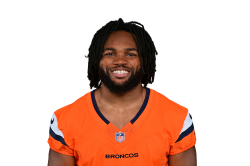
WR4 players listed
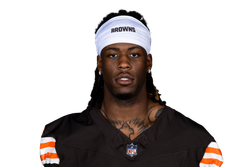
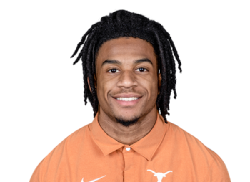
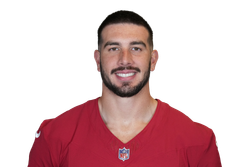
TE2 players listed
2026 Browns Schedule
Next game
Week 5Away at JetsNew York Jets
- Week 6DivHome
 vs RavensBaltimore Ravens
 - Week 7Away
 at TitansTennessee Titans
- W1at
 Jacksonville JaguarsSep 13Lost 10 to 34View matchup
 - W2at
 Tampa Bay BuccaneersSep 20Won 23 to 19View matchup
 - W3vs
 Carolina PanthersSep 27Won 21 to 18View matchup
 - W4vs
 Pittsburgh SteelersOct 1Won 27 to 24View matchup
 - W5atNew York JetsOct 111:00 PM ETView matchup
- W6vsBaltimore RavensOct 181:00 PM ETView matchup
- W7atTennessee TitansOct 251:00 PM ETView matchup
- W8atPittsburgh SteelersNov 11:00 PM ETView matchup
- W9at
 New Orleans SaintsNov 81:00 PM ETView matchup
 - W10vs
 Houston TexansNov 151:00 PM ETView matchup
 - W11Bye week
- W12vs
 Las Vegas RaidersNov 291:00 PM ETView matchup
 - W13vs
 Cincinnati BengalsDec 61:00 PM ETView matchup
 - W14vs
 Atlanta FalconsDec 131:00 PM ETView matchup
 - W15at
 New York GiantsDec 201:00 PM ETView matchup
 - W16atBaltimore RavensDec 271:00 PM ETView matchup
- W17vs
 Indianapolis ColtsJan 31:00 PM ETView matchup
 - W18atCincinnati BengalsJan 10TBDView matchup
Explore StatChasers
- Fantasy Football ToolsThe #1 ranked fantasy football toolset.Open
- Advanced Player StatsDeeper numbers on every player in the league.Open
- Strength of ScheduleMatchup difficulty by fantasy position, including the playoff weeks.Open
- Fantasy Points AllowedHow Cleveland's defense performs against QB, RB, WR and TE.Open
Common questions
Who are the best Cleveland Browns players to draft in fantasy football in 2026?
Harold Fannin and Quinshon Judkins are the top fantasy options for the Browns in 2026. Harold Fannin projects as a top-eight TE. Quinshon Judkins projects as a touchdown-reliant RB2.
What is Shedeur Sanders's fantasy outlook in 2026?
In 2026, Sanders projects as a superflex dart. A 68.1 rating in eight starts, with the legs that make it interesting anyway.
What is KC Concepcion's fantasy outlook with the Browns?
In 2026, Concepcion projects as a rookie WR3 with starter upside. A first-round receiver walking into a room with no established first read.
Who is the Cleveland Browns starting running back in 2026?
Quinshon Judkins leads the Browns backfield in 2026 and projects as a touchdown-reliant RB2. Dylan Sampson is the other half of the backfield, a PPR handcuff.
Is Dylan Sampson worth drafting in fantasy football in 2026?
Behind Quinshon Judkins, Sampson projects as a PPR handcuff. Forty targets is a defined passing-down role behind an inefficient starter.
Who is the Browns WR2 behind KC Concepcion?
Behind KC Concepcion, Denzel Boston projects as a rookie dart. A 39th overall pick walking into the one receiver room with nothing settled in it.
Is Harold Fannin a good fantasy tight end in 2026?
In 2026, Fannin projects as a top-eight TE. Led the team in targets, receptions, yards and touchdowns — as a rookie tight end.
Is the Cleveland Browns offense good for fantasy football in 2026?
Harold Fannin and Quinshon Judkins headline the Browns in 2026. Harold Fannin is a genuine asset who happens to play here, and he is the only player on this roster you should draft at his market price rather than below it. Everything else is a wager on Todd Monken fixing the 31st-ranked passing game in one offseason with a quarterback room that has answered nothing.
Common questions
Who leads the Cleveland Browns in target share?
KC Concepcion leads the Cleveland Browns with a 24.1% target share through Week 4, holding steady since Week 1. Harold Fannin is second at 19.8%.
Common questions
How does Todd Monken's play-calling affect Browns fantasy players?
Todd Monken is a first-year play-caller for the Browns, so last season's tendencies carry little predictive weight. Through Week 4 2026, the offense shows shotgun rate above league average (73.5% vs 59%) and 4th-down go rate below league average (67% vs 75%). The lead back handles 73% of backfield weighted opportunities, and the target split leans toward tight ends (25% vs a 22% league average). All numbers are derived from nflverse play-by-play data.
Common questions
2026 regular season to date · 4 games.
How many points per game are the Cleveland Browns averaging in 2026?
The Browns are averaging 20.3 points per game through 4 games of the 2026 season, 21st in the NFL. They scored 16.4 per game in 2025.
How many yards per game are the Browns averaging in 2026?
Cleveland is averaging 292.5 total yards per game through 4 games of the 2026 season, 26th in the NFL — 198.8 passing and 93.8 rushing.
How does the Browns offense rank in the NFL in 2026?
Through 4 games of the 2026 season, the Browns offense ranks 21st in points per game (20.3) and 19th in yards per play (5.11).
How good is the Browns defense in 2026?
Cleveland has allowed 23.8 points and 348.5 total yards per game through 4 games of the 2026 season. That is the 18th-fewest points allowed in the NFL. Opponents are averaging 5.45 yards a play, the 18th-fewest allowed.
Are the Browns better at passing or running the ball in 2026?
Cleveland has averaged 198.8 passing yards and 93.8 rushing yards per game through 4 games of the 2026 season. That is 7.40 yards per pass attempt compared with 3.70 per carry.
How often do the Browns pass the ball?
55.5% of Cleveland's offensive plays have been passes and 44.5% runs through 4 games of the 2026 season. They run 57.3 plays a game, the 27th-most in the league.
What is the Cleveland Browns turnover margin in 2026?
The Browns have a -1 turnover margin through 4 games of the 2026 season. They have committed 5 giveaways and forced 4 takeaways.
How do the 2026 Browns compare with the 2025 team?
Cleveland is averaging 20.3 points and 292.5 total yards per game through 4 games of the 2026 season. In 2025 the Browns averaged 16.4 points and 262.1 total yards. The 2026 season is still in progress, so that gap is a running one.
Common questions
Who is the Cleveland Browns starting quarterback?
Deshaun Watson is the Browns' starting quarterback. Dillon Gabriel is listed behind Deshaun Watson on the fantasy depth chart. Taylen Green is out.
Who is the Cleveland Browns starting running back?
Quinshon Judkins leads the Browns running back depth chart, followed by Raheim Sanders and Jaleel McLaughlin. Dylan Sampson is on injured reserve.
Who is the Browns WR1?
Denzel Boston is listed as the Browns' WR1 on the current fantasy depth chart. KC Concepcion, Jerry Jeudy and Isaiah Bond follow Denzel Boston in the wide receiver rotation.
What is the Cleveland Browns wide receiver depth chart?
Cleveland's fantasy wide receiver depth chart currently lists Denzel Boston as WR1, KC Concepcion as WR2, Jerry Jeudy as WR3 and Isaiah Bond as WR4.
Who is the Cleveland Browns starting tight end?
Harold Fannin is the Browns' starting tight end, with Blake Whiteheart listed behind Harold Fannin at TE2.
Who is the Cleveland Browns backup quarterback?
Dillon Gabriel is the backup quarterback behind Deshaun Watson on the current Browns fantasy depth chart.
How often is the Browns depth chart updated?
The Browns fantasy depth chart is updated as roster moves, injuries and role changes affect the team's offensive hierarchy.
Common questions
Who do the Cleveland Browns play next?
The Browns' next game is Week 5 against the New York Jets at MetLife Stadium. Kickoff is scheduled for Sunday, October 11 at 1:00 PM ET. The game is on CBS.
What is the Cleveland Browns schedule for 2026?
The Browns play 17 regular-season games in 2026, opening in Week 1 against the Jacksonville Jaguars at EverBank Stadium and finishing in Week 18 against the Cincinnati Bengals at Paycor Stadium. Every week's date, opponent, venue, network and result is listed in the schedule above.
When is the Cleveland Browns bye week in 2026?
The Browns are on bye in Week 11 of the 2026 season, between their Week 10 game against the Houston Texans and their Week 12 game against the Las Vegas Raiders. The bye is listed in the schedule above as its own week, with no fixture against it.
How many home games do the Cleveland Browns have in 2026?
Cleveland has 8 home games in 2026, all of them at Huntington Bank Field. Each one is marked HOME in the schedule above.
Who do the Browns play in the AFC North?
The Browns play 6 division games in 2026, home and away against the Pittsburgh Steelers, Baltimore Ravens and Cincinnati Bengals. Division games are marked DIV in the schedule above.
When do the Browns play the Steelers?
Cleveland beat the Pittsburgh Steelers 27-24 in Week 4 at Huntington Bank Field. They meet again in Week 8 at Acrisure Stadium on Sunday, November 1 at 1:00 PM ET.
When do the Browns play the Ravens?
The Browns face the Baltimore Ravens in Week 6 at Huntington Bank Field on Sunday, October 18 at 1:00 PM ET and Week 16 at M&T Bank Stadium on Sunday, December 27 at 1:00 PM ET.
When do the Browns play the Bengals?
The Browns face the Cincinnati Bengals in Week 13 at Huntington Bank Field on Sunday, December 6 at 1:00 PM ET and Week 18 at Paycor Stadium on Sunday, January 10.
What channel are Cleveland Browns games on in 2026?
2026 Browns games are scheduled on CBS, FOX and Prime Video. CBS carries the most with 10 games. The network for each week is shown in the schedule above; 1 game has no broadcast window assigned yet and shows none.
Where can I see Cleveland Browns scores and results?
Every completed game shows its final score in the schedule above, and upcoming games show the date, venue and network instead. The Browns are 3-1 through 4 games in 2026, most recently beat the Pittsburgh Steelers 27-24 in Week 4.