NFC North · 2026 Season
Green Bay Packers
Green Bay Packers fantasy football hub
Green Bay Packers














Green Bay Packers Fantasy Football Outlook & Stats 2026
Green Bay converted 48.8% of its third downs, second-best in the league, and still scored only 23.0 points a game because it ran the 23rd-fastest offence. Jordan Love threw twenty-three touchdowns against six interceptions at a 101.2 rating. The receiving corps is the story and the warning: Christian Watson, Tucker Kraft and Jayden Reed played ten, eight and seven games.
- Head coach
- Matt LaFleur (eighth season)
- Arrivals
- Jonnu Smith, Tyrod Taylor
- Third down
- 48.8% 2nd in the NFL
- Scoring
- 23.0 pts/g 16th in the NFL
- Sacks allowed
- 29 7th in the NFL
Core fantasy pieces
Thirteen rushing scores on 929 yards — the touchdown share is the whole asset.
- 929 rush yds
- 13 rush TD
- 36 rec, 282 yds
Two hundred and thirty-four carries at 4.0 is unremarkable running and thirteen touchdowns is a top-two figure at the position, which tells you exactly how Green Bay uses him: this offence converts third downs better than anyone and hands him the ball when the field is short. Thirty-six receptions add a PPR floor. The risk is that a 4.0-yard-per-carry back living on scores has a bad month whenever the drives stop ending in the end zone.
A 101.2 rating and twenty-three touchdowns, on an offence that runs 59.4 plays a game.
- 3,381 pass yds
- 23 TD, 6 INT
- 15 games
Sixty-six percent completion at a 101.2 rating with six interceptions is genuinely good quarterbacking, and the pace is why it does not translate into a top-five fantasy season. Two hundred and twenty-five passing yards a start with 199 rushing yards all year leaves a thin floor. He is the quarterback you start in a good matchup rather than the one you draft to stop thinking about the position.
17.5 yards a catch and six touchdowns in ten games.
- 35 rec, 611 yds
- 55 targets
- 6 TD
Sixty-one yards a game and a touchdown every other week is WR2 production at a rate nobody else in this receiving corps approached. He has now failed to reach twelve games in consecutive seasons, and 55 targets is a small enough base that a quiet week is a zero. Draft him as the highest-ceiling receiver here and never as somebody you rely on.
Six touchdowns and 489 yards in eight games — a full-season TE1 pace.
- 32 rec, 489 yds
- 44 targets
- 6 TD
Sixty-one yards a game at 15.3 a reception, with six scores in half a season, is the most productive per-game tight end line in this division. Eight games is the entire question and Jonnu Smith's arrival is a mild complication rather than a real one. If he plays fifteen games he is a top-five tight end; the market will price him closer to tenth, which is the opportunity.
Secondary options
Forty-four targets and no touchdowns, in an offence that needed him to produce.
- 29 rec, 361 yds
- 44 targets
- 0 TD
Twenty-nine receptions for 361 yards with zero scores is a disappointing season given how much time Watson and Reed missed — the opportunity was there and he did not take it. Green Bay manufactured ten carries for him, which says the staff wanted him involved. He is a bet on year-two development in a receiving corps where availability keeps creating vacancies.
Twenty-two targets in seven games, and an 86% catch rate on them.
- 19 rec, 207 yds
- 22 targets
- 7 games
Nineteen catches on 22 targets is efficient work in a role that barely existed before the season ended for him. The per-game usage was well below what he has commanded previously, so this is a bet on health restoring a role rather than on the role itself. Cheap enough to be worth it in a deep league and nowhere near reliable enough to start.
Fifty-four targets at 5.8 yards a catch — volume without yardage.
- 38 rec, 222 yds
- 54 targets
- 3 total TD
Thirty-eight receptions producing 222 yards is one of the lowest yards-per-catch figures any regular pass-catcher posted, and Green Bay added him to a room where Kraft is the clear starter when upright. Nine carries and a rushing touchdown suggest he will be used as a gadget piece. He matters only in the weeks Kraft is unavailable.
Bottom lineAn efficient offence that does not run enough plays to make anyone a weekly must-start except Josh Jacobs, and his value rests on thirteen touchdowns rather than on 4.0 yards a carry. Tucker Kraft is the buy here — a top-five tight-end rate that the market will discount because of eight games.
Usage & Opportunity Report
Updated through Week 4 · refreshed every Tuesday
Fantasy production follows opportunity, not the other way around — so this report tracks who's on the field and who the ball is going to, before the box score catches up. The essentials: target share (share of team pass attempts), snap share, and red-zone touches. The premium layer, in each player's expandable profile: first-read share (how often the play is designed for him), air-yards share (30%+ is the alpha-receiver threshold), and expected fantasy points (xFP) vs. fantasy points over expected (FPOE) — xFP is stable, repeatable volume; FPOE is efficiency that regresses. Route share (the % of dropbacks a player runs a route on — the stat that matters most for tight ends), targets per route run (TPRR) and yards per route run (YPRR — the best receiver efficiency stat there is) join the profiles when the league's route data is published. Since 2017, receivers at a 20%+ target share average 15.3 fantasy points per game; the 10–20% group averages 9.8. That cliff is why this table exists.
- Pass rate over expected+2.5%6thThrows about as much as situations call for — the target tree, not the play-calling, decides who eats
- Red-zone pass rate62%8thThrows inside the 20 — Watson's 4 end-zone targets lead the team
- Neutral pace32.1s8th fastestSeconds per play in neutral situations — a fast offense means more snaps for every starter
- Plays per game60.015thOffensive plays a game — league-average volume, so shares decide it
- Team xFP / game95.09thTotal expected fantasy points this offense creates
The Target Tree
All 124 Packers pass attempts through Week 4
- Matthew Golden 24.2%
- Christian Watson 23.4%
- Tucker Kraft 13.7%
- Skyy Moore 8.9%
- Jayden Reed 6.5%
- Lloyd/Smith/Brooks 12.9%
- Everyone else 7.3%
- No target (throwaways, spikes, batted) 3.2%
The Backfield Split
Who owns which situations — the RB stat that actually predicts the box score.
- MarShawn Lloyd 48.6%
- Chris Brooks 26.4%
- Kaleb Johnson 25.0%
Share of the backs' carries + targets in each situation. Snap-by-snap splits need the league's participation data, which is published after the season.
- 11.7Lloyd weighted opps/game — RB42 in the NFL
- 9Lloyd high-value touches (in-10 carries + targets)
- 6.3Brooks weighted opps/game
Why Lloyd's floor holds in PPR: He keeps 46% of the backfield's targets as well as the early downs, so his catches don't depend on game script — a 23-catch pace. Trailing by 7+, he still gets 33% of the backs' work — no one takes the hurry-up snaps from him.
The Brooks math if Lloyd misses time: Brooks backs up the early-down and red-zone roles (the valuable ones). A Lloyd absence projects Brooks to ~47% of weighted opportunities — about 12.7 a game, flex volume at best.
Run Direction — carries & yards per carry by gap
- 4.97 attLeft end
- 3.89 attLeft tackle
- 2.824 attMiddle
- 2.45 attRight tackle
- 0.02 attRight end
Designed runs only; "Middle" includes runs behind either guard.
The left side is the run game's engine: 4.9 yards per carry off left end and 3.8 behind left tackle — 34% of all designed runs go that way. Interior volume (24 attempts) does the clock work at 2.8; the left edge does the damage. When the line's left side sits out practice, that's a usage note, not just an injury note.
Where Love Attacks
Share of pass attempts & yards per attempt by field zone — through Week 4
- 3%15.5 YPADeep left
- 2%21.0 YPADeep middle
- 8%4.5 YPADeep right · Golden
Line of scrimmage · deep = 20+ air yards
- 28%6.8 YPAShort left
- 23%8.4 YPAShort middle
- 35%4.8 YPAShort right
The short middle is the efficiency engine (8.4 YPA). Love keeps 87% of his throws under 20 air yards, with the deep middle his most explosive zone (21 YPA on 2 attempts). Gold = highest-YPA high-volume zone.
| Profile | Player | Opportunity (WOPR) | Target share | Snap share | RZ touches | Read |
|---|---|---|---|---|---|---|
| Christian WatsonWR2WR18 in target share, NFL | 0.55strong — elite at 0.60 | 23.4%steady | 82%steady | 6 ▲1 · 2 · 3 | Set & forget | |
Volume you can set in the lineup. A 23.4% target share and 18.5 expected points a game, with a 25.8% first-read share; a 28.2% air-yards share decides how much of that turns into yards. He's scoring +4.6 points a game over expected — some of that is efficiency that regresses, but the 18.5 xFP floor holds. Bars show percentile vs. all NFL WRs. | ||||||
| Matthew GoldenWR1WR12 in target share, NFL | 0.63elite | 24.2%−6.0 vs W1 | 83%steady | 43 · 0 · 1 | Set & forget | |
The alpha profile, fully formed. A 38.6% air-yards share clears the 30% alpha threshold, a 26.9% first-read share says the offense is designed through him, and a 13.9-yard aDOT keeps his ceiling high and his floor jumpy. Production is running −1.3 against expected, so this is volume, not a hot streak. Bars show percentile vs. all NFL WRs. | ||||||
| Tucker KraftTE1TE18 in target share, NFL | 0.29streamer range | 13.7%steady | 79%+10 vs W1 | 1 ▲0 · 0 · 1 | Volatile | |
A starter's share without the alpha tag. A 13.7% target share and 8.8 expected points a game, with a 12.9% first-read share; a 11.9% air-yards share decides how much of that turns into yards. He's −2.3 a game against expected: the volume is there and the box score hasn't caught up — a buy signal, not a warning. Bars show percentile vs. all NFL TEs. | ||||||
| MarShawn LloydRB1, 51% of RB touchesRB42 in weighted opps/game, NFL | —touch share 51% | 4.8%+3.3 vs W1 | 32%−21 vs W1 | 8 ▲2 · 3 · 3 — leads team | Flex | |
A shared backfield. 49% of the weighted opportunities means another back takes a real cut every week, so his floor rises and falls with game script. He's −2.7 a game against expected: the volume is there and the box score hasn't caught up — a buy signal, not a warning. Bars show percentile vs. all NFL RBs. | ||||||
| Skyy MooreWR3WR80 in target share, NFL | 0.18below startable | 8.9%+10.8 vs W1 | 31%+46 vs W1 | 3 ▲1 · 0 · 2 | Volatile | |
The role is arriving before the box score does. His target share has run 2% → 10% → 13% over the last 3 games. Volume that is growing this fast gets repriced the week it scores. He's −3.0 a game against expected: the volume is there and the box score hasn't caught up — a buy signal, not a warning. Bars show percentile vs. all NFL WRs. | ||||||
| Kaleb JohnsonRB3 · handcuff, 25% of RB touchesRB51 in weighted opps/game, NFL | —touch share 25% | 2.4%+5.7 vs W2 | 21%+9 vs W2 | 0– · 0 · 0 | Stash | |
Contingent value, quantified. The 25% touch share is standalone-flex-in-a-pinch at best; the real number is what it becomes if Lloyd misses time — see The Backfield Split above. Bars show percentile vs. all NFL RBs. | ||||||
| Chris BrooksRB2 · handcuff, 25% of RB touchesRB62 in weighted opps/game, NFL | —touch share 25% | 3.2%steady | 48%−15 vs W1 | 41 · 3 · 0 | Stash | |
Contingent value, quantified. The 25% touch share is standalone-flex-in-a-pinch at best; the real number is what it becomes if Lloyd misses time — see The Backfield Split above. Bars show percentile vs. all NFL RBs. | ||||||
| Jordan LoveQB1QB13 in xFP/game, NFL | —every dropback | —the passer | 100%steady | 11 · 0 · 0 | Starter | |
A pocket passer's profile. 0 green-zone carries and a 0% scramble rate: his points have to come through the air, so his weekly range follows the pass volume (QB13 in expected points). Production is running right at expected, so this is volume, not a hot streak. Bars show percentile vs. all NFL QBs. | ||||||
How to read this table
- Set & forget 20%+ target share or locked bell-cow role — start everywhere
- Starter 17–19% target share or a lead back's full workload — weekly lineup play
- Flex 15–16% share or a committee lead — matchup-dependent
- Volatile under 15% — deep leagues only
- Stash the role behind the role
- WOPR: 1.5 × target share + 0.7 × air-yards share
- + button: opens the full advanced profile — first-read share, air-yards share, xFP/FPOE — with percentile bars vs. the league
Buy low
Skyy Moore
The role is arriving before the box score does. Trade for him this week — not after the two-touchdown game makes it obvious to your league.
- +46snap share pts since W1
- +10.8target share pts since W1
Usage trends are one of the core inputs behind our player pricing — Redraft Command re-runs every player's value as these shares move, so a riser like Moore gets repriced before your leaguemates notice.
Data: nflverse play-by-play · nflverse snap counts (PFR) · FTN Data charting via nflverse (first-read share) · ffopportunity expected points (xFP). Regular season, through Week 4.
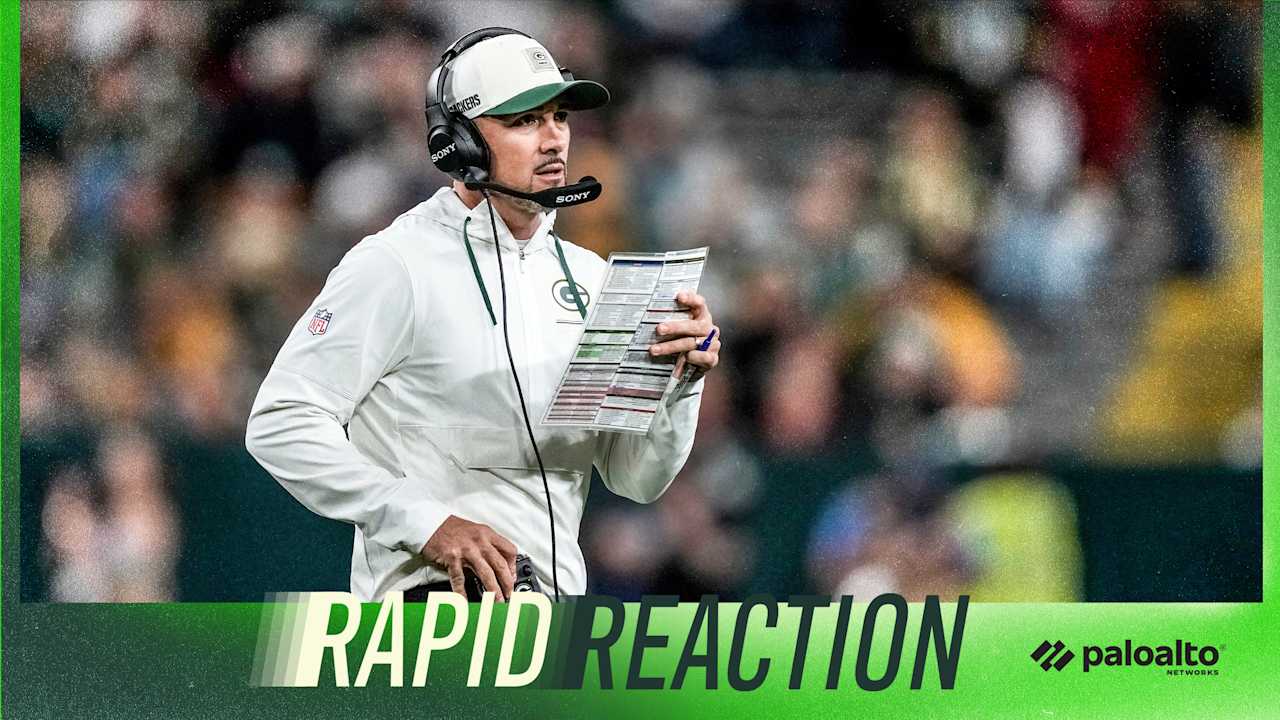
Coaching Profile & Tendencies
Play-calling tendencies carry over from season to season when the play-caller stays the same — and become unreliable the moment he changes. That's the whole reason this module exists: before you trust any Packers projection, you need to know whose fingerprints are on the offense and how stable they are. For the Packers the answer is stable: Matt LaFleur called this offense last season too — his eighth year on its call sheet — so last year's tendencies still mean something.
Head coach · Eighth season as caller here · Primary play-caller
Matt LaFleur
Shanahan / McVay tree
LaFleur remains Green Bay's offensive play-caller in 2026. Adam Stenavich continues in a non-play-calling coordinator/support role.
- Washington QB coach alongside Kyle Shanahan and Sean McVay2010-13
- Falcons QB coach, then Rams OC under McVay2015-17
- Titans OC — first play-calling job2018
- Packers head coach & offensive play-caller2019-26
Tendency reliability
Same play-caller as last season — his eighth season calling this offense. Last year's tendencies are a valid baseline for projecting it.
Play-caller ledgerLaFleur — 3 of 3 games in 2026 · 7 prior seasons as caller here
| Tendency | 2025 (LaFleur) | 2026 (LaFleur) | Change | NFL avg. |
|---|---|---|---|---|
| Pass rate (all downs) | 55.7% | 73% | +17.3 — 1st in NFL | 60% |
| Pass rate over expectedsituation-adjusted | −4.4% | +2.5% | +6.9 — 6th in NFL | 0% |
| Neutral pacesec/play, neutral game state | 34.3s | 32.1s | faster | 33s |
| Early-down pass rate1st & 2nd down | 50.3% | 66.7% | +16.4 — 1st in NFL | 55% |
| No-huddle rate | 8.8% | 11.1% | +2.3 — 4th in NFL | 6% |
| Play-action rateshare of dropbacks, FTN charting | 25.5% | 14.4% | −11.1 | 24% |
| Motion at snapFTN charting | 55.2% | 53.3% | −1.9 | 58% |
| Shotgun rate | 63.1% | 67.8% | +4.7 — 8th in NFL | 59% |
| Red-zone pass rate | 49% | 62% | +13 — 8th in NFL | 56% |
| 4th-down go rateopponent territory, 2 yds or less | 82% | 100% | +18 — 1st in NFL | 75% |
1004th-down go
Drives stay alive.
The go rate on short 4th downs jumped from 82% to 100%. Extended drives convert field-goal range into red-zone trips — touchdowns instead of three points.
73.3pass %
More dropbacks.
Pass rate rose from 55.7% to 73.3%. More pass attempts means more target volume for the receivers and backs who catch it — the simplest kind of fantasy raise.
66.7early-down pass %
Passing on the downs that are a choice.
Early-down pass rate climbed from 50.3% to 66.7%. First and second down are where a play-caller shows intent — this is a real lean toward the pass game, not late-down necessity.
Offensive coordinator
Adam Stenavich
Green Bay's OC since 2022 after rising from offensive line and run-game roles; supports offensive planning and coordination but has no documented primary game-day play-calling experience
Has not been a primary NFL play-caller, so there is no competing track record to muddy the read: the tendencies on this page are LaFleur's.
Defensive coordinator
Jonathan Gannon
New, personnel-driven Gannon system for 2026: 3-4 base principles with significant nickel/three-safety usage, extensive coverage disguise and varied pressure looks, emphasizing speed, physicality and takeaways
Through Week 4 the defense allows 0.06 EPA per play (22nd in the NFL). A middle-of-the-pack unit so far — game script here is week-to-week, so check the spread before leaning on it.
Staff continuity
Year 8
LaFleur's eighth season calling the Packers offense
A continuing install: same caller, same system, eighth year. That makes the 2025 column of the table above a legitimate baseline rather than another team's data.
Career dossier
| Stop | Offense | The fingerprint he left |
|---|---|---|
| Titans · OC2018 | 19.4 ppgbest finish 27th in NFL | The Titans years: a league-typical WR/TE/RB target split in 2018; the lead back handled 53% of backfield weighted opportunities. |
| Packers · HC2019-26 | 24.4 ppgthrough Week 4, 24th in NFL | The current stop: WRs took 70% of targets (league 59%) in 2026; the lead back handled 49% of backfield weighted opportunities. |
| Positional fantasy finishes under LaFleur | QB | RB1 | WR1 | TE1 |
|---|---|---|---|---|
| Packers 2022HC | QB13 · Rodgers | RB9 · Jones | WR34 | TE20 · Tonyan |
| Packers 2023HC | QB5 · Love | RB37 | WR25 | TE29 |
| Packers 2024HC | QB17 · Love | RB6 · Jacobs | WR29 | TE10 · Kraft |
| Packers 2025HC | QB15 · Love | RB13 · Jacobs | WR37 | TE24 · Kraft |
| Packers · 2026pace through Week 4 | QB16 · Love | RB43 | WR5 · Watson | TE28 |
Positional finishes are season-long PPR ranks from nflverse scoring data. LaFleur's offenses have put up repeated top-ten positional seasons — the system has paid fantasy investors before.
How he distributes the ball
Target split by position across LaFleur's play-calling seasons since 2016, vs. league average.
Filled bar = LaFleur offenses · thin marker = league average
The lean: wide receivers run 4 points above league average under LaFleur (63% vs 59%). Position splits this stable are scheme, and scheme is what carries week to week.
How he manages a backfield
Lead back's share of backfield weighted opportunities, by season called.
No clean trend: the lead back's share of backfield weighted opportunities (carries + 2×targets) has moved around season to season. Treat the current split as the read and revisit it weekly.
Play-calling by score state
Pass rate when leading, close, and trailing, 2026 through Week 4.
A 32-point pass-rate swing between leading and trailing. Ahead, the backfield eats; behind, the targets spike — check the spread before you set a flex. Through Week 4 some of these buckets are thin (play counts shown), so treat the splits as early reads.
The fantasy bottom line: eighth season of the same play-caller makes this one of the more projectable offenses in the league: 4th-down go rate above league average (100% vs 75%), and pass rate above league average (73.3% vs 60%). The target tree leans WR, and the lead back holds 49% of the backfield's weighted opportunities. Every number on this page is computed from nflverse play-by-play and FTN charting — when it changes, the page changes.
Packers Team Stats 2026
2026 regular season to date.
Points/G (Points scored per game)
18.7
24th of 32 — Middle tier down 8 places from last season
Pass Yds/G (Net passing yards per game)
266.7
T-4th of 32 — Top tier up 13 places from last season
Rush Yds/G (Rushing yards per game)
48.7
32nd of 32 — Bottom tier down 17 places from last season
Total Yds/G (Total net yards per game)
315.3
17th of 32 — Middle tier down 2 places from last season
Offense & Defense
2026 regular season to date · 3 games.
Ranked against all 32 teams. On defense 1st means fewest allowed, not most.
Offense
What they did
- Points/G — Points scored per game18.724th of 32 — Middle tier down 8 places from last season
- Total Yds/G — Total net yards gained per game315.317th of 32 — Middle tier down 2 places from last season
- Yds/Play — Net yards gained per offensive play5.2615th of 32 — Middle tier down 5 places from last season
- Pass Yds/G — Net passing yards gained per game266.7T-4th of 32 — Top tier up 13 places from last season
- Rush Yds/G — Rushing yards gained per game48.732nd of 32 — Bottom tier down 17 places from last season
- Yds/Pass Att — Yards gained per pass attempt6.8022nd of 32 — Middle tier down 18 places from last season
- Yds/Carry — Yards gained per rushing attempt3.0032nd of 32 — Bottom tier down 8 places from last season
- Passer Rtg — Passer rating produced by this offense83.522nd of 32 — Middle tier down 17 places from last season
- 3rd Down — Third downs converted27.8%32nd of 32 — Bottom tier down 30 places from last season
Defense
What they allowed
- Points/G — Points allowed per game30.3T-29th of 32 — Bottom tier down 18 places from last season
- Total Yds/G — Total net yards allowed per game340.721st of 32 — Middle tier down 9 places from last season
- Yds/Play — Net yards allowed per play5.1412th of 32 — Middle tier down 3 places from last season
- Pass Yds/G — Net passing yards allowed per game202.010th of 32 — Middle tier up 1 place from last season
- Rush Yds/G — Rushing yards allowed per game138.728th of 32 — Bottom tier down 10 places from last season
- Yds/Pass Att — Yards allowed per pass attempt7.2719th of 32 — Middle tier down 13 places from last season
- Yds/Carry — Yards allowed per rushing attempt4.0816th of 32 — Middle tier down 4 places from last season
- Passer Rtg — Passer rating allowed to opposing quarterbacks97.221st of 32 — Middle tier down 1 place from last season
- 3rd Down — Third downs allowed to convert50.0%29th of 32 — Bottom tier down 15 places from last season
Situational & Ball Security
Third and fourth down, the pass rush at both ends of it, and what each side does with the football.
4th Down (Fourth downs converted)
33.3%
T-21st of 32 — Middle tier down 3 places from last season
1st Downs/G (First downs gained per game)
17.7
24th of 32 — Middle tier down 10 places from last season
Sacks Allowed (Sacks given up by this offense)
8
T-20th of 32 — Middle tier down 13 places from last season
Sacks (Sacks recorded by this defense)
7
T-12th of 32 — Middle tier up 8 places from last season
Takeaways (Turnovers forced by this defense)
2
T-24th of 32 — Middle tier up 2 places from last season
Giveaways (Turnovers committed by this offense)
4
T-16th of 32 — Middle tier down 13 places from last season
TO Margin (Turnover differential for the season)
-2
T-24th of 32 — Middle tier down 12 places from last season
Penalty Yds/G (Penalty yards conceded per game)
92.0
32nd of 32 — Bottom tier down 20 places from last season
Volume & Play Mix
Opportunity, not quality: how many snaps there are to go round and how they are divided. Ranks here are most to least, with no better end.
Plays/G (Offensive plays run per game)
60.0
T-17th of 32
Pass Att/G (Pass attempts per game)
41.3
2nd of 32
Carries/G (Rushing attempts per game)
16.0
32nd of 32
Pass TD (Passing touchdowns scored)
6
T-12th of 32 — Middle tier
Rush TD (Rushing touchdowns scored)
0
T-31st of 32 — Bottom tier
Opp Plays/G (Plays this defense faces per game)
66.3
T-5th of 32
Own play mix
Pass 73.3%Run 26.7%
How this offense splits its snaps.
Play mix faced
Pass 48.7%Run 51.3%
How opponents attack this defense.
Season History
Every season back to 2022, each number ranked against the 32 teams of that year.
| Season | Pts/G — Points scored per game | Yds/G — Total net yards gained per game | Yds/Play — Net yards gained per offensive play | Pts All — Points allowed per game | Yds All — Total net yards allowed per game | TO +/- — Turnover differential for the season |
|---|---|---|---|---|---|---|
| 2026Current3 games | 18.724th of 32 | 315.317th of 32 | 5.2615th of 32 | 30.3T-29th of 32 | 340.721st of 32 | -2T-24th of 32 |
| 202517 games | 23.016th of 32 | 332.615th of 32 | 5.6010th of 32 | 21.211th of 32 | 311.8 — best of the last 5 seasons12th of 32 | +1T-12th of 32 |
| 202417 games | 27.1 — best of the last 5 seasons8th of 32 | 370.8 — best of the last 5 seasons5th of 32 | 6.14 — best of the last 5 seasons5th of 32 | 19.9 — best of the last 5 seasons6th of 32 | 315.66th of 32 | +12 — best of the last 5 seasonsT-3rd of 32 |
| 202317 games | 22.512th of 32 | 345.511th of 32 | 5.588th of 32 | 20.610th of 32 | 335.117th of 32 | 0T-16th of 32 |
| 202217 games | 21.814th of 32 | 337.917th of 32 | 5.4714th of 32 | 21.8T-17th of 32 | 336.517th of 32 | +2T-12th of 32 |
Latest Packers News


Inbox: Teams don't stay the same
Read report
Officially on injured reserve
Read report
Limited to 18 total yards in loss
Read report
Modest production with four catches
Read report
Officially ruled out for Week 3
Read report


View 50 more Packers stories
Earl Dotson 'did it the textbook way'
Read report
Inbox: The Packers got what they needed
Read report
Packers sign G Kevin Zeitler
Read report
Mike's Mid-Week Chat | Sept. 30, 2026
Read report
Inbox: Just make it work
Read report
Packers face another road test at Tampa
Read report
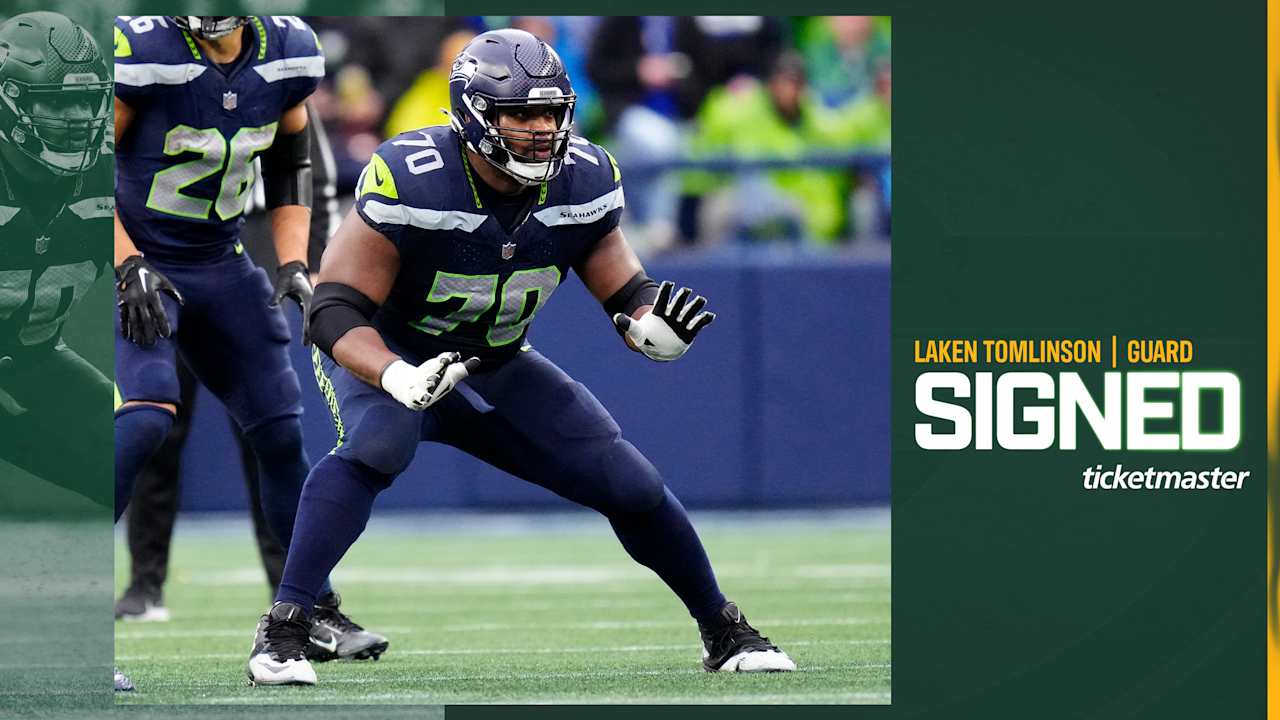
Packers sign G Laken Tomlinson
Read report
Inbox: Let's see what a new week brings
Read report
Inbox: Everyone needs to step up everywhere
Read report
Inbox: This team's in a tough spot
Read report
Packers fall to Falcons, 35-14
Read report
Live Chat: Packers vs. Falcons | Week 3
Read report
Inbox: Welcome home, Packers fans
Read report
Mike's Mid-Week Chat | Sept. 23, 2026
Read report
Back in Green Bay, still without timeline
Read report
Spectator for practice Tuesday
Read report








Packers Fantasy Depth Chart
Offensive skill positions only. Order as listed on the team's depth chart.
QB2 players listed
RB4 players listed
WR5 players listed
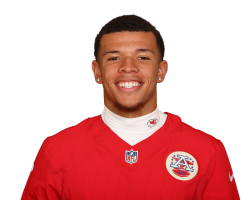

TE3 players listed

2026 Packers Schedule
Next game
Week 4Away at BuccaneersTampa Bay Buccaneers
- Week 5DivHome
 vs BearsChicago Bears
 - Week 6Home
 vs CowboysDallas Cowboys
- W1at
 Minnesota VikingsSep 13Lost 22 to 39View matchup
 - W2at
 New York JetsSep 20Won 20 to 17View matchup
 - W3vs
 Atlanta FalconsSep 24Lost 14 to 35View matchup
 - W4atTampa Bay BuccaneersOct 41:00 PM ETView matchup
- W5vsChicago BearsOct 111:00 PM ETView matchup
- W6vsDallas CowboysOct 188:20 PM ETView matchup
- W7at
 Detroit LionsOct 254:25 PM ETView matchup
 - W8vs
 Carolina PanthersOct 298:15 PM ETView matchup
 - W9at
 New England PatriotsNov 84:25 PM ETView matchup
 - W10vsMinnesota VikingsNov 151:00 PM ETView matchup
- W11Bye week
- W12at
 Los Angeles RamsNov 258:00 PM ETView matchup
 - W13at
 New Orleans SaintsDec 61:00 PM ETView matchup
 - W14vs
 Buffalo BillsDec 138:20 PM ETView matchup
 - W15vs
 Miami DolphinsDec 201:00 PM ETView matchup
 - W16atChicago BearsDec 251:00 PM ETView matchup
- W17vs
 Houston TexansJan 48:15 PM ETView matchup
 - W18vsDetroit LionsJan 10TBDView matchup
Explore StatChasers
- Fantasy Football ToolsThe #1 ranked fantasy football toolset.Open
- Advanced Player StatsDeeper numbers on every player in the league.Open
- Strength of ScheduleMatchup difficulty by fantasy position, including the playoff weeks.Open
- Fantasy Points AllowedHow Green Bay's defense performs against QB, RB, WR and TE.Open
Common questions
Who are the best Green Bay Packers players to draft in fantasy football in 2026?
Josh Jacobs and Jordan Love are the top fantasy options for the Packers in 2026. Josh Jacobs projects as an RB1 on touchdowns. Jordan Love projects as a streaming QB1.
Is Jordan Love a QB1 in fantasy football in 2026?
Yes. In 2026, Love projects as a streaming QB1. A 101.2 rating and twenty-three touchdowns, on an offence that runs 59.4 plays a game.
What is Christian Watson's fantasy outlook with the Packers?
In 2026, Watson projects as a WR3 with WR1 weeks. 17.5 yards a catch and six touchdowns in ten games.
Who is the Green Bay Packers starting running back in 2026?
Josh Jacobs leads the Packers backfield in 2026 and projects as an RB1 on touchdowns.
Who is the Packers WR2 behind Christian Watson?
Behind Christian Watson, Matthew Golden projects as a bench upside. Forty-four targets and no touchdowns, in an offence that needed him to produce.
Is Tucker Kraft a good fantasy tight end in 2026?
In 2026, Kraft projects as a top-five TE if healthy. Six touchdowns and 489 yards in eight games — a full-season TE1 pace.
Who is the Green Bay Packers fantasy football sleeper for 2026?
Jayden Reed is the Packers sleeper to watch in 2026. Twenty-two targets in seven games, and an 86% catch rate on them.
Is the Green Bay Packers offense good for fantasy football in 2026?
Josh Jacobs and Jordan Love headline the Packers in 2026. An efficient offence that does not run enough plays to make anyone a weekly must-start except Josh Jacobs, and his value rests on thirteen touchdowns rather than on 4.0 yards a carry. Tucker Kraft is the buy here — a top-five tight-end rate that the market will discount because of eight games.
Common questions
Who leads the Green Bay Packers in target share?
Matthew Golden leads the Green Bay Packers with a 24.2% target share through Week 4, down 6.0 points since Week 1. Christian Watson is second at 23.4%.
Common questions
How does Matt LaFleur's play-calling affect Packers fantasy players?
Matt LaFleur is calling the Packers offense for the eighth straight season, so last year's tendencies remain predictive. Through Week 4 2026, the offense shows 4th-down go rate above league average (100% vs 75%) and pass rate above league average (73.3% vs 60%). The lead back handles 49% of backfield weighted opportunities, and the target split leans toward wide receivers (63% vs a 59% league average). All numbers are derived from nflverse play-by-play data.
Common questions
2026 regular season to date · 3 games.
How many points per game are the Green Bay Packers averaging in 2026?
The Packers are averaging 18.7 points per game through 3 games of the 2026 season, 24th in the NFL. They scored 23.0 per game in 2025. Only 3 games have been played, so these figures and ranks will still move a lot.
How many yards per game are the Packers averaging in 2026?
Green Bay is averaging 315.3 total yards per game through 3 games of the 2026 season, 17th in the NFL — 266.7 passing and 48.7 rushing.
How does the Packers offense rank in the NFL in 2026?
Through 3 games of the 2026 season, the Packers offense ranks 24th in points per game (18.7) and 15th in yards per play (5.26). Only 3 games have been played, so these figures and ranks will still move a lot.
How good is the Packers defense in 2026?
Green Bay has allowed 30.3 points and 340.7 total yards per game through 3 games of the 2026 season. That is tied for the 29th-fewest points allowed in the NFL. Opponents are averaging 5.14 yards a play, the 12th-fewest allowed. Only 3 games have been played, so these figures and ranks will still move a lot.
Are the Packers better at passing or running the ball in 2026?
Green Bay has averaged 266.7 passing yards and 48.7 rushing yards per game through 3 games of the 2026 season. That is 6.80 yards per pass attempt compared with 3.00 per carry.
How often do the Packers pass the ball?
73.3% of Green Bay's offensive plays have been passes and 26.7% runs through 3 games of the 2026 season. They run 60.0 plays a game, tied for the 17th-most in the league.
What is the Green Bay Packers turnover margin in 2026?
The Packers have a -2 turnover margin through 3 games of the 2026 season. They have committed 4 giveaways and forced 2 takeaways.
How do the 2026 Packers compare with the 2025 team?
Green Bay is averaging 18.7 points and 315.3 total yards per game through 3 games of the 2026 season. In 2025 the Packers averaged 23.0 points and 332.6 total yards. Only 3 games have been played, so these figures and ranks will still move a lot.
Common questions
Who is the Green Bay Packers starting quarterback?
Jordan Love is the Packers' starting quarterback. Tyrod Taylor is listed behind Jordan Love on the fantasy depth chart.
Who is the Green Bay Packers starting running back?
MarShawn Lloyd leads the Packers running back depth chart, followed by Kaleb Johnson and Chris Brooks. Josh Jacobs is out.
Who is the Packers WR1?
Christian Watson is listed as the Packers' WR1 on the current fantasy depth chart with Jayden Reed on injured reserve. Matthew Golden, Skyy Moore and J. Michael Sturdivant follow Christian Watson in the wide receiver rotation.
What is the Green Bay Packers wide receiver depth chart?
Green Bay's fantasy wide receiver depth chart currently lists Christian Watson as WR1, Matthew Golden as WR2, Skyy Moore as WR3 and J. Michael Sturdivant as WR4. Jayden Reed is on injured reserve.
Who is the Green Bay Packers starting tight end?
Tucker Kraft is the Packers' starting tight end, with Jonnu Smith listed behind Tucker Kraft at TE2. Luke Musgrave is on the PUP list.
Who is the Green Bay Packers backup quarterback?
Tyrod Taylor is the backup quarterback behind Jordan Love on the current Packers fantasy depth chart.
How often is the Packers depth chart updated?
The Packers fantasy depth chart is updated as roster moves, injuries and role changes affect the team's offensive hierarchy.
Common questions
Who do the Green Bay Packers play next?
The Packers' next game is Week 4 against the Tampa Bay Buccaneers at Raymond James Stadium. Kickoff is scheduled for Sunday, October 4 at 1:00 PM ET. The game is on FOX.
What is the Green Bay Packers schedule for 2026?
The Packers play 17 regular-season games in 2026, opening in Week 1 against the Minnesota Vikings at U.S. Bank Stadium and finishing in Week 18 against the Detroit Lions at Lambeau Field. Every week's date, opponent, venue, network and result is listed in the schedule above.
When is the Green Bay Packers bye week in 2026?
The Packers are on bye in Week 11 of the 2026 season, between their Week 10 game against the Minnesota Vikings and their Week 12 game against the Los Angeles Rams. The bye is listed in the schedule above as its own week, with no fixture against it.
How many home games do the Green Bay Packers have in 2026?
Green Bay has 9 home games in 2026, all of them at Lambeau Field. Each one is marked HOME in the schedule above.
Who do the Packers play in the NFC North?
The Packers play 6 division games in 2026, home and away against the Minnesota Vikings, Chicago Bears and Detroit Lions. Division games are marked DIV in the schedule above.
When do the Packers play the Vikings?
Green Bay lost to the Minnesota Vikings 22-39 in Week 1 at U.S. Bank Stadium. They meet again in Week 10 at Lambeau Field on Sunday, November 15 at 1:00 PM ET.
When do the Packers play the Bears?
The Packers face the Chicago Bears in Week 5 at Lambeau Field on Sunday, October 11 at 1:00 PM ET and Week 16 at Soldier Field on Friday, December 25 at 1:00 PM ET.
When do the Packers play the Lions?
The Packers face the Detroit Lions in Week 7 at Ford Field on Sunday, October 25 at 4:25 PM ET and Week 18 at Lambeau Field on Sunday, January 10.
What channel are Green Bay Packers games on in 2026?
2026 Packers games are scheduled on FOX, Prime Video, NBC, Netflix, CBS and ESPN. FOX carries the most with 8 games. The network for each week is shown in the schedule above; 1 game has no broadcast window assigned yet and shows none.
Where can I see Green Bay Packers scores and results?
Every completed game shows its final score in the schedule above, and upcoming games show the date, venue and network instead. The Packers are 1-2 through 3 games in 2026, most recently lost to the Atlanta Falcons 14-35 in Week 3.