
AFC North · 2026 Season
Baltimore Ravens
Baltimore Ravens fantasy football hub
Baltimore Ravens












New play-caller: Declan Doyle is calling plays for the first season here, so last year's tendencies are an unreliable guide — see the Coaching tab before trusting season-over-season projections.
Baltimore Ravens Fantasy Football Outlook & Stats 2026
Jesse Minter takes over an offence that finished 2nd in rushing and 27th in passing, and ran the fewest plays of anyone outside the bottom three. Derrick Henry turned 307 carries into 1,595 yards and sixteen touchdowns; Lamar Jackson missed four games and the passing game never replaced him. Zay Flowers is the only receiver here who commanded a defence.
- Head coach
- Jesse Minter (first season)
- Rushing
- 156.6 yds/g 2nd in the NFL
- Passing
- 192.8 yds/g 27th in the NFL
- Scoring
- 24.9 pts/g 11th in the NFL
- TD split
- 23 pass / 23 rush
Core fantasy pieces
307 carries, 5.2 a pop and sixteen scores — the volume never came down.
- 1,595 rush yds
- 16 TD
- 5.2 yds/carry
This is the most valuable workload in fantasy football: a 300-carry back on the league's second-best rushing offence, in a scheme that ran twenty-three touchdowns into the end zone on the ground. He did it across all seventeen games without a per-carry decline. The reason he is not the first pick is the only reason — nobody has carried this load at this age and repeated it, and Baltimore has no incentive to find out gently.
A 103.8 rating and 5.2 yards a carry, in thirteen games rather than seventeen.
- 2,549 pass yds
- 21 TD, 7 INT
- 349 rush yds
Per game he threw for 196 yards with 1.6 touchdowns and ran for another 27 — a top-three fantasy rate at the position, and the 21-to-7 ratio says the efficiency is entirely intact. He simply was not there for four of them. In a run-first offence that throws it 27th-most, his fantasy value is disproportionately his legs, and the legs are what the missed games were about.
118 targets and 1,211 yards on a team that threw for 192.8 a game.
- 86 rec, 1,211 yds
- 118 targets
- 14.1 yds/rec
He is not the leading receiver on this team, he is the passing game. Eighty-six catches at 14.1 a go, on an offence ranked 27th in passing yards, means his target share is enormous and his efficiency is carrying it rather than the volume. Five touchdowns is the one soft number, and it is a symptom of Henry owning everything inside the ten. Everything else about the profile is a locked-in WR1.

Secondary options
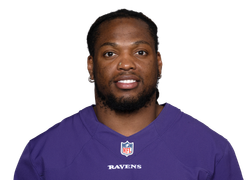
The yardage has gone and the red-zone role has not.
- 48 rec, 422 yds
- 5 TD
- 8.8 yds/rec
Forty-eight catches for 422 yards is 8.8 a reception, a number that says he is being used as a short-area and goal-line target rather than a seam threat. The five touchdowns are the whole case, and they are real — this offence scores, and he is still the tight end it looks for when the field shortens. Roster him as a floor-less TE2 whose good weeks are entirely about where the drive ended.
Thirty-eight targets, nineteen catches, and no clear reason it changes.
- 19 rec, 224 yds
- 38 targets
- 13 games
A 50% catch rate on 38 looks is a marginal role executed badly, and it happened in a season where the WR2 job was genuinely open. Baltimore's passing volume is the ceiling on anyone who is not Flowers, and there is nothing in this line suggesting he is next in the queue. He is a bye-week name, not a bench stash.
Six-foot-four, drafted to be the thing this offence does not have when the field shortens.
- 3rd-round rookie
- No NFL snaps
- Behind Flowers and Bateman
A third-round pick out of USC whose measurables are most of the profile: ten-and-a-half-inch hands, one of the longest wingspans in the class, and a coaching staff that has said out loud it intends to use the size in scoring situations. Baltimore split twenty-three passing touchdowns across a receiving corps in which only Zay Flowers commanded a defence, so the job he is being asked to do is a real one. The route work is ahead of the yards after catch and an 8.6% drop rate in college is the part that needs a year — with Bateman signed through 2029 and Elijah Sarratt to climb past, this is a stash whose case is next season.
The receiving back behind a 307-carry workhorse who is 32 years old.
- 21 rec, 169 yds
- 5.2 yds/carry
- 10 games
Twenty-one catches on 27 targets is a defined third-down role, and 5.2 a carry on his eighteen attempts matches what Henry averaged on 307 of them. That combination is the point: he already has the passing-down job, so an injury in front of him hands him a full workload rather than half of one. The most valuable handcuff on any roster whose starter carries this much.




Bottom lineHenry and Flowers are the two most reliably used players on a team that does not spread the ball around, and that concentration is the appeal at every position here. The risk is uniform: this offence is 29th in pace, so there is one fewer chance per game for anyone outside the top three to matter.
Usage & Opportunity Report
Updated through Week 4 · refreshed every Tuesday
Fantasy production follows opportunity, not the other way around — so this report tracks who's on the field and who the ball is going to, before the box score catches up. The essentials: target share (share of team pass attempts), snap share, and red-zone touches. The premium layer, in each player's expandable profile: first-read share (how often the play is designed for him), air-yards share (30%+ is the alpha-receiver threshold), and expected fantasy points (xFP) vs. fantasy points over expected (FPOE) — xFP is stable, repeatable volume; FPOE is efficiency that regresses. Route share (the % of dropbacks a player runs a route on — the stat that matters most for tight ends), targets per route run (TPRR) and yards per route run (YPRR — the best receiver efficiency stat there is) join the profiles when the league's route data is published. Since 2017, receivers at a 20%+ target share average 15.3 fantasy points per game; the 10–20% group averages 9.8. That cliff is why this table exists.
- Pass rate over expected−8.0%27thRuns more than game situations call for — a cap on the pass-catchers' volume and a floor under Henry
- Red-zone pass rate33%31stRun-first inside the 20 — Henry's 14 green-zone carries eat the receivers' TDs
- Neutral pace35.8s31st fastestSeconds per play in neutral situations — a slow offense shrinks the pie
- Plays per game57.724thOffensive plays a game — fewer snaps to go around, so shares matter more
- Team xFP / game86.717thTotal expected fantasy points this offense creates
The Target Tree
All 74 Ravens pass attempts through Week 4
- Mark Andrews 24.3%
- Rashod Bateman 17.6%
- Zay Flowers 16.2%
- Chris Moore 8.1%
- Derrick Henry 6.8%
- Wester/Hill/Hibner 13.5%
- Everyone else 12.2%
- No target (throwaways, spikes, batted) 1.4%
The Backfield Split
Who owns which situations — the RB stat that actually predicts the box score.
- Derrick Henry 80.0%
- Justice Hill 20.0%
Share of the backs' carries + targets in each situation. Snap-by-snap splits need the league's participation data, which is published after the season.
- 25.3Henry weighted opps/game — RB6 in the NFL
- 19Henry high-value touches (in-10 carries + targets)
- 6.3Hill weighted opps/game
- +4.8Henry wOpp/g vs. last season — role grew, not just efficiency
Why Henry's floor holds in PPR: He keeps 63% of the backs' third-down work as well as the early downs, so his catches don't depend on game script — a 28-catch pace. No one on this depth chart takes the hurry-up snaps from him.
The Hill math if Henry misses time: Hill backs up the early-down role (the valuable ones). A Henry absence projects Hill to ~100% of weighted opportunities — about 31.6 a game, a top-12 weekly RB by volume — and why he's a STASH, not a cut.
Run Direction — carries & yards per carry by gap
- 5.310 attLeft end
- 5.217 attLeft tackle
- 3.631 attMiddle
- 6.89 attRight tackle
- 5.618 attRight end
Designed runs only; "Middle" includes runs behind either guard.
The right side is the run game's engine: 6.8 yards per carry behind right tackle and 5.6 off right end — 32% of all designed runs go that way. Interior volume (31 attempts) does the clock work at 3.6; the right edge does the damage. When the line's right side sits out practice, that's a usage note, not just an injury note.
Where Jackson Attacks
Share of pass attempts & yards per attempt by field zone — through Week 4
- 14%18.0 YPADeep left
- 7%9.8 YPADeep middle
- 0%no attemptsDeep right
Line of scrimmage · deep = 20+ air yards
- 20%9.0 YPAShort left
- 27%10.5 YPAShort middle · Andrews
- 32%7.1 YPAShort right
The deep left is the efficiency engine (18 YPA). Jackson keeps 80% of his throws under 20 air yards, with the deep left his most explosive zone (18 YPA on 10 attempts). Gold = highest-YPA high-volume zone.
| Profile | Player | Opportunity (WOPR) | Target share | Snap share | RZ touches | Read |
|---|---|---|---|---|---|---|
| Derrick HenryRB1, 82% of RB touchesRB6 in weighted opps/game, NFL | —touch share 82% | 6.8%steady | 58%+13 vs W1 | 20 ▲6 · 5 · 9 — leads team | Set & forget | |
The locked-in workhorse. A 100% share of the backs' red-zone work is the RB stat that tracks fantasy points best, and 14 green-zone carries put him at the goal line. He's scoring +4.5 points a game over expected — some of that is efficiency that regresses, but the 20.5 xFP floor holds. Bars show percentile vs. all NFL RBs. | ||||||
| Zay FlowersWR2WR51 in target share, NFL | 0.38flex range | 16.2%+5.0 vs W1 | 22%steady | 2 ▲0 · – · 2 | Flex | |
The role is arriving before the box score does. His target share has run 25% → 30% over the last 3 games. Volume that is growing this fast gets repriced the week it scores. He's scoring +8.8 points a game over expected — some of that is efficiency that regresses, but the 11.9 xFP floor holds. Bars show percentile vs. all NFL WRs. | ||||||
| Mark AndrewsTE1TE3 in target share, NFL | 0.48elite for TE | 24.3%steady | 65%−20 vs W1 | 11 · 0 · 0 | Set & forget | |
Volume you can set in the lineup. A 24.3% target share and 9.7 expected points a game, with a 25.5% first-read share; a 17.1% air-yards share decides how much of that turns into yards. Production is running −1.3 against expected, so this is volume, not a hot streak. Bars show percentile vs. all NFL TEs. | ||||||
| Rashod BatemanWR1WR40 in target share, NFL | 0.42flex range | 17.6%+10.8 vs W1 | 86%+10 vs W1 | 2 ▲0 · 1 · 1 | Starter | |
A starter's share without the alpha tag. A 17.6% target share and 8.6 expected points a game, with a 23.5% first-read share; a 22.7% air-yards share decides how much of that turns into yards. Production is running +0.6 over expected, so this is volume, not a hot streak. Bars show percentile vs. all NFL WRs. | ||||||
| Chris MooreWR3WR84 in target share, NFL | 0.27below startable | 8.1%−3.3 vs W1 | 47%+15 vs W1 | 1 ▲0 · 0 · 1 | Volatile | |
The deep-decoy profile. A 27.5-yard aDOT sits past the depth where weekly production turns boom/bust, and a 8.1% target share says he isn't earning volume when he's out there; a 7.8% first-read share means the plays are rarely designed for him. Best-ball ceiling, seasonal-league headache. Bars show percentile vs. all NFL WRs. | ||||||
| Justice HillRB2 · handcuff, 18% of RB touchesRB62 in weighted opps/game, NFL | —touch share 18% | 4.1%−4.2 vs W1 | 42%−13 vs W1 | 00 · 0 · 0 | Stash | |
Contingent value, quantified. The 18% touch share is standalone-flex-in-a-pinch at best; the real number is what it becomes if Henry misses time — see The Backfield Split above. Bars show percentile vs. all NFL RBs. | ||||||
| Lamar JacksonQB1QB10 in xFP/game, NFL | —every dropback | —the passer | 100%steady | 5 ▲1 · 0 · 4 | Starter | |
A pocket passer's profile. 2 green-zone carries and a 10.2% scramble rate: his points have to come through the air, so his weekly range follows the pass volume (QB10 in expected points). He's scoring +2.0 points a game over expected — some of that is efficiency that regresses, but the 18.8 xFP floor holds. Bars show percentile vs. all NFL QBs. | ||||||
How to read this table
- Set & forget 20%+ target share or locked bell-cow role — start everywhere
- Starter 17–19% target share or a lead back's full workload — weekly lineup play
- Flex 15–16% share or a committee lead — matchup-dependent
- Volatile under 15% — deep leagues only
- Stash the role behind the role
- WOPR: 1.5 × target share + 0.7 × air-yards share
- + button: opens the full advanced profile — first-read share, air-yards share, xFP/FPOE — with percentile bars vs. the league
Buy low
Zay Flowers
The role is arriving before the box score does. Trade for him this week — not after the two-touchdown game makes it obvious to your league.
- +4snap share pts since W1
- +5.0target share pts since W1
Watch
Chris Moore
Under 10% target share on a flat snap count. One more quiet week and he's droppable in 12-team leagues; an injury above him is the fastest path back.
- 5.0%W3 target share
- 1RZ touches since W1
Usage trends are one of the core inputs behind our player pricing — Redraft Command re-runs every player's value as these shares move, so a riser like Flowers gets repriced before your leaguemates notice.
Data: nflverse play-by-play · nflverse snap counts (PFR) · FTN Data charting via nflverse (first-read share) · ffopportunity expected points (xFP). Regular season, through Week 4.
Coaching Profile & Tendencies
Play-calling tendencies carry over from season to season when the play-caller stays the same — and become unreliable the moment he changes. That's the whole reason this module exists: before you trust any Ravens projection, you need to know whose fingerprints are on the offense and how stable they are. For the Ravens the answer is: new fingerprints. Declan Doyle is calling this offense for the first time in 2026 — so the 2026 sample, not last year's, is the signal.
Offensive coordinator · First season as caller here · Primary play-caller
Declan Doyle
Sean Payton lineage / Ben Johnson influence
Baltimore hired Doyle with play-calling responsibility after Ben Johnson handled those duties while Doyle was Chicago's OC in 2025. Doyle is calling from the booth and 2026 is his first primary game-day play-calling job, at 29.
- Saints offensive assistant under Sean Payton2019-22
- Broncos TE coach2023-24
- Bears OC (Ben Johnson called plays)2025
- Ravens OC & first-time play-caller2026
Tendency reliability
New play-caller (Todd Monken called plays here in 2025). Last season's tendencies describe a different coach's offense — project from this season's sample, small as it is.
Play-caller ledgerDoyle — 3 of 3 games in 2026 · first season
| Tendency | 2025 (prev. staff) | 2026 (Doyle) | Change | NFL avg. |
|---|---|---|---|---|
| Pass rate (all downs) | 52.5% | 51% | −1.5 | 60% |
| Pass rate over expectedsituation-adjusted | −8.8% | −8.0% | +0.8 | 0% |
| Neutral pacesec/play, neutral game state | 34.7s | 35.8s | slower | 33s |
| Early-down pass rate1st & 2nd down | 45.5% | 45.8% | steady | 55% |
| No-huddle rate | 2.9% | 4% | +1.1 | 6% |
| Play-action rateshare of dropbacks, FTN charting | 22.4% | 34.1% | +11.7 — 4th in NFL | 24% |
| Motion at snapFTN charting | 54% | 64.2% | +10.2 — 8th in NFL | 58% |
| Shotgun rate | 65% | 53.2% | −11.8 | 59% |
| Red-zone pass rate | 43% | 33% | −10 | 56% |
| 4th-down go rateopponent territory, 2 yds or less | 89% | — | — | 75% |
53.2shotgun
More under center.
Shotgun rate fell from 65% to 53.2% — more under-center snaps, which usually travels with a heavier run game and play-action rather than quick game.
34.1play-action
More play-action.
Play-action rate rose from 22.4% to 34.1% of dropbacks. Play-action throws travel farther and produce more yards per attempt league-wide — a boost to downfield receiver efficiency.
64.2motion
More motion at the snap.
Motion at the snap rose from 54% to 64.2% of charted plays. Motion buys free releases and defined reads — it tends to concentrate targets on the players the scheme is built around.
Offensive coordinator · Delegation watch
Declan Doyle
Primary play-caller — see the card above
The call sheet runs through the coordinator here: Declan Doyle has the play-calling duties while head coach Jesse Minter runs the game. The profile on this page is his.
Defensive coordinator
Anthony Weaver
Minter calls the defensive plays in his multiple, disguise-heavy system. Weaver serves as the non-play-calling defensive coordinator, bringing extensive front-seven/D-line expertise while contributing to the entire defensive plan
Through Week 4 the defense allows 0.01 EPA per play (17th in the NFL). A middle-of-the-pack unit so far — game script here is week-to-week, so check the spread before leaning on it.
Staff continuity
New install
Doyle's first season calling the Ravens offense
First-year installs carry the highest tendency risk in football: terminology, staff and quarterback relationships are all new at once. Weight what this staff is doing now over anything carried forward from 2025.
Career dossier
| Stop | Offense | The fingerprint he left |
|---|---|---|
| Ravens · OC2026 | 30.7 ppgthrough Week 4, 4th in NFL | The current stop: TEs took 33% of targets (league 23%) in 2026; the lead back handled 80% of backfield weighted opportunities. |
| Positional fantasy finishes under Doyle | QB | RB1 | WR1 | TE1 |
|---|---|---|---|---|
| Ravens · 2026pace through Week 4 | QB10 · Jackson | RB4 · Henry | WR21 · Flowers | TE20 · Andrews |
Doyle has no prior NFL play-calling seasons, so read the history as background and the 2026 pace row as the live read. Positional finishes are season-long PPR ranks from nflverse scoring data.
How he distributes the ball
Target split by position this season — Doyle has no earlier NFL play-calling seasons to average in.
Filled bar = Doyle offenses · thin marker = league average
The lean: tight ends run 10 points above league average under Doyle (33% vs 23%). Position splits this stable are scheme, and scheme is what carries week to week.
How he manages a backfield
Lead back's share of backfield weighted opportunities, by season (* = previous staff).
Starred seasons were a previous staff's — context, not this caller's record. The trend is concentration: the lead back's share of backfield weighted opportunities (carries + 2×targets) has held or grown season over season. A clear RB1 role is the safest volume in fantasy — this backfield has one.
Play-calling by score state
Pass rate when leading, close, and trailing, 2026 through Week 4.
A 2-point pass-rate swing between leading and trailing. Ahead, the backfield eats; behind, the targets spike — check the spread before you set a flex. Through Week 4 some of these buckets are thin (play counts shown), so treat the splits as early reads.
The fantasy bottom line: a new play-caller means 2025 data is context at best — what you can bank on is what Doyle is showing now: red-zone pass rate below league average (33% vs 56%), and play-action rate above league average (34.1% vs 24%). The target tree leans TE, and the lead back holds 80% of the backfield's weighted opportunities. Every number on this page is computed from nflverse play-by-play and FTN charting — when it changes, the page changes.
Ravens Team Stats 2026
2026 regular season to date.
Points/G (Points scored per game)
30.7
4th of 32 — Top tier up 7 places from last season
Pass Yds/G (Net passing yards per game)
231.3
14th of 32 — Middle tier up 13 places from last season
Rush Yds/G (Rushing yards per game)
167.3
3rd of 32 — Top tier down 1 place from last season
Total Yds/G (Total net yards per game)
398.7
6th of 32 — Top tier up 10 places from last season
Offense & Defense
2026 regular season to date · 3 games.
Ranked against all 32 teams. On defense 1st means fewest allowed, not most.
Offense
What they did
- Points/G — Points scored per game30.74th of 32 — Top tier up 7 places from last season
- Total Yds/G — Total net yards gained per game398.76th of 32 — Top tier up 10 places from last season
- Yds/Play — Net yards gained per offensive play6.722nd of 32 — Top tier up 5 places from last season
- Pass Yds/G — Net passing yards gained per game231.314th of 32 — Middle tier up 13 places from last season
- Rush Yds/G — Rushing yards gained per game167.33rd of 32 — Top tier down 1 place from last season
- Yds/Pass Att — Yards gained per pass attempt9.801st of 32 — Top tier up 6 places from last season
- Yds/Carry — Yards gained per rushing attempt5.20T-2nd of 32 — Top tier down 1 place from last season
- Passer Rtg — Passer rating produced by this offense113.14th of 32 — Top tier up 5 places from last season
- 3rd Down — Third downs converted37.0%20th of 32 — Middle tier down 7 places from last season
Defense
What they allowed
- Points/G — Points allowed per game26.0T-21st of 32 — Middle tier down 3 places from last season
- Total Yds/G — Total net yards allowed per game321.313th of 32 — Middle tier up 11 places from last season
- Yds/Play — Net yards allowed per play5.1311th of 32 — Middle tier up 10 places from last season
- Pass Yds/G — Net passing yards allowed per game216.317th of 32 — Middle tier up 13 places from last season
- Rush Yds/G — Rushing yards allowed per game105.014th of 32 — Middle tier down 4 places from last season
- Yds/Pass Att — Yards allowed per pass attempt6.619th of 32 — Middle tier up 7 places from last season
- Yds/Carry — Yards allowed per rushing attempt4.0917th of 32 — Middle tier down 6 places from last season
- Passer Rtg — Passer rating allowed to opposing quarterbacks91.516th of 32 — Middle tier down 3 places from last season
- 3rd Down — Third downs allowed to convert42.1%19th of 32 — Middle tier down 8 places from last season
Situational & Ball Security
Third and fourth down, the pass rush at both ends of it, and what each side does with the football.
4th Down (Fourth downs converted)
0.0%
T-27th of 32 — Bottom tier down 17 places from last season
1st Downs/G (First downs gained per game)
21.7
T-10th of 32 — Middle tier up 13 places from last season
Sacks Allowed (Sacks given up by this offense)
5
T-7th of 32 — Top tier up 14 places from last season
Sacks (Sacks recorded by this defense)
6
T-20th of 32 — Middle tier up 8 places from last season
Takeaways (Turnovers forced by this defense)
3
T-16th of 32 — Middle tier down 1 place from last season
Giveaways (Turnovers committed by this offense)
2
T-5th of 32 — Top tier up 16 places from last season
TO Margin (Turnover differential for the season)
+1
T-13th of 32 — Middle tier up 6 places from last season
Penalty Yds/G (Penalty yards conceded per game)
66.0
22nd of 32 — Middle tier down 16 places from last season
Volume & Play Mix
Opportunity, not quality: how many snaps there are to go round and how they are divided. Ranks here are most to least, with no better end.
Plays/G (Offensive plays run per game)
59.3
T-20th of 32
Pass Att/G (Pass attempts per game)
25.3
31st of 32
Carries/G (Rushing attempts per game)
32.3
3rd of 32
Pass TD (Passing touchdowns scored)
4
T-18th of 32 — Middle tier
Rush TD (Rushing touchdowns scored)
7
T-2nd of 32 — Top tier
Opp Plays/G (Plays this defense faces per game)
62.7
15th of 32
Own play mix
Pass 45.5%Run 54.5%
How this offense splits its snaps.
Play mix faced
Pass 59.0%Run 41.0%
How opponents attack this defense.
Season History
Every season back to 2022, each number ranked against the 32 teams of that year.
| Season | Pts/G — Points scored per game | Yds/G — Total net yards gained per game | Yds/Play — Net yards gained per offensive play | Pts All — Points allowed per game | Yds All — Total net yards allowed per game | TO +/- — Turnover differential for the season |
|---|---|---|---|---|---|---|
| 2026Current3 games | 30.7 — best of the last 5 seasons4th of 32 | 398.76th of 32 | 6.722nd of 32 | 26.0T-21st of 32 | 321.313th of 32 | +1T-13th of 32 |
| 202517 games | 24.911th of 32 | 332.216th of 32 | 5.807th of 32 | 23.418th of 32 | 354.524th of 32 | -3T-19th of 32 |
| 202417 games | 30.53rd of 32 | 424.9 — best of the last 5 seasons1st of 32 | 6.85 — best of the last 5 seasons1st of 32 | 21.29th of 32 | 324.210th of 32 | +6T-10th of 32 |
| 202317 games | 28.44th of 32 | 370.46th of 32 | 5.854th of 32 | 16.5 — best of the last 5 seasons1st of 32 | 301.4 — best of the last 5 seasons6th of 32 | +12 — best of the last 5 seasonsT-1st of 32 |
| 202217 games | 20.619th of 32 | 338.816th of 32 | 5.4812th of 32 | 18.53rd of 32 | 324.3T-9th of 32 | +4T-9th of 32 |
Latest Ravens News

Listed as questionable for Week 4
Read report

Slated for full workload Week 4
Read report
Likely to be limited, if active
Read report
Looks good pregame, still iffy for Week 3
Read report


View 50 more Ravens stories
Mailbag: Who Will Play at Center?
Read report
Ravens Waive Linebacker Carl Jones Jr.
Read report
Status remains murky for Week 3
Read report
Could be limited if active
Read report
Five Things to Know About the Dallas Cowboys
Read report
Pundit Picks: Ravens Favored to Beat Cowboys
Read report
Not involved in Wednesday's practice
Read report














Ravens Fantasy Depth Chart
Offensive skill positions only. Order as listed on the team's depth chart.
QB3 players listed
 Lamar Jackson
 Tyler Huntley
- Skylar Thompson

RB3 players listed

WR5 players listed
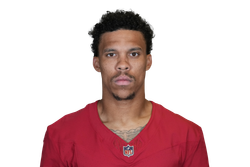

TE2 players listed

2026 Ravens Schedule
Next game
Week 4Home vs TitansTennessee Titans
- Week 5Away
 at FalconsAtlanta Falcons
 - Week 6DivAway
 at BrownsCleveland Browns
- W1at
 Indianapolis ColtsSep 13Won 41 to 23View matchup
 - W2vs
 New Orleans SaintsSep 20Lost 17 to 24View matchup
 - W3at
 Dallas CowboysSep 27Won 34 to 31View matchup
 - W4vsTennessee TitansOct 41:00 PM ETView matchup
- W5atAtlanta FalconsOct 118:20 PM ETView matchup
- W6atCleveland BrownsOct 181:00 PM ETView matchup
- W7vs
 Cincinnati BengalsOct 251:00 PM ETView matchup
 - W8at
 Buffalo BillsNov 11:00 PM ETView matchup
 - W9vs
 Jacksonville JaguarsNov 58:15 PM ETView matchup
 - W10vs
 Los Angeles ChargersNov 168:15 PM ETView matchup
 - W11at
 Carolina PanthersNov 221:00 PM ETView matchup
 - W12at
 Houston TexansNov 291:00 PM ETView matchup
 - W13Bye week
- W14vs
 Tampa Bay BuccaneersDec 131:00 PM ETView matchup
 - W15at
 Pittsburgh SteelersDec 201:00 PM ETView matchup
 - W16vsCleveland BrownsDec 271:00 PM ETView matchup
- W17atCincinnati BengalsDec 318:15 PM ETView matchup
- W18vsPittsburgh SteelersJan 10TBDView matchup
Explore StatChasers
- Fantasy Football ToolsThe #1 ranked fantasy football toolset.Open
- Advanced Player StatsDeeper numbers on every player in the league.Open
- Strength of ScheduleMatchup difficulty by fantasy position, including the playoff weeks.Open
- Fantasy Points AllowedHow Baltimore's defense performs against QB, RB, WR and TE.Open
Common questions
Who are the best Baltimore Ravens players to draft in fantasy football in 2026?
Derrick Henry and Lamar Jackson are the top fantasy options for the Ravens in 2026. Derrick Henry projects as an RB1, with an age asterisk. Lamar Jackson projects as an elite QB1 when upright.
Is Lamar Jackson a QB1 in fantasy football in 2026?
Yes. In 2026, Jackson projects as an elite QB1 when upright. A 103.8 rating and 5.2 yards a carry, in thirteen games rather than seventeen.
What is Zay Flowers's fantasy outlook with the Ravens?
In 2026, Flowers projects as a WR1. 118 targets and 1,211 yards on a team that threw for 192.8 a game.
Who is the Baltimore Ravens starting running back in 2026?
Derrick Henry leads the Ravens backfield in 2026 and projects as an RB1, with an age asterisk. Justice Hill is the other half of the backfield, a handcuff with pass-game value.
Is Justice Hill worth drafting in fantasy football in 2026?
Behind Derrick Henry, Hill projects as a handcuff with pass-game value. The receiving back behind a 307-carry workhorse who is 32 years old.
Who is the Ravens WR2 behind Zay Flowers?
Behind Zay Flowers, Rashod Bateman projects as a bench flier. Thirty-eight targets, nineteen catches, and no clear reason it changes.
Is Mark Andrews a good fantasy tight end in 2026?
In 2026, Andrews projects as a touchdown-dependent TE2. The yardage has gone and the red-zone role has not.
Is the Baltimore Ravens offense good for fantasy football in 2026?
Derrick Henry and Lamar Jackson headline the Ravens in 2026. Henry and Flowers are the two most reliably used players on a team that does not spread the ball around, and that concentration is the appeal at every position here. The risk is uniform: this offence is 29th in pace, so there is one fewer chance per game for anyone outside the top three to matter.
Common questions
Who leads the Baltimore Ravens in target share?
Mark Andrews leads the Baltimore Ravens with a 24.3% target share through Week 4, holding steady since Week 1. Rashod Bateman is second at 17.6%.
Common questions
How does Declan Doyle's play-calling affect Ravens fantasy players?
Declan Doyle is a first-year play-caller for the Ravens, so last season's tendencies carry little predictive weight. Through Week 4 2026, the offense shows red-zone pass rate below league average (33% vs 56%) and play-action rate above league average (34.1% vs 24%). The lead back handles 80% of backfield weighted opportunities, and the target split leans toward tight ends (33% vs a 23% league average). All numbers are derived from nflverse play-by-play data.
Common questions
2026 regular season to date · 3 games.
How many points per game are the Baltimore Ravens averaging in 2026?
The Ravens are averaging 30.7 points per game through 3 games of the 2026 season, 4th in the NFL. They scored 24.9 per game in 2025. Only 3 games have been played, so these figures and ranks will still move a lot.
How many yards per game are the Ravens averaging in 2026?
Baltimore is averaging 398.7 total yards per game through 3 games of the 2026 season, 6th in the NFL — 231.3 passing and 167.3 rushing.
How does the Ravens offense rank in the NFL in 2026?
Through 3 games of the 2026 season, the Ravens offense ranks 4th in points per game (30.7) and 2nd in yards per play (6.72). Only 3 games have been played, so these figures and ranks will still move a lot.
How good is the Ravens defense in 2026?
Baltimore has allowed 26.0 points and 321.3 total yards per game through 3 games of the 2026 season. That is tied for the 21st-fewest points allowed in the NFL. Opponents are averaging 5.13 yards a play, the 11th-fewest allowed. Only 3 games have been played, so these figures and ranks will still move a lot.
Are the Ravens better at passing or running the ball in 2026?
Baltimore has averaged 231.3 passing yards and 167.3 rushing yards per game through 3 games of the 2026 season. That is 9.80 yards per pass attempt compared with 5.20 per carry.
How often do the Ravens pass the ball?
45.5% of Baltimore's offensive plays have been passes and 54.5% runs through 3 games of the 2026 season. They run 59.3 plays a game, tied for the 20th-most in the league.
What is the Baltimore Ravens turnover margin in 2026?
The Ravens have a +1 turnover margin through 3 games of the 2026 season. They have committed 2 giveaways and forced 3 takeaways.
How do the 2026 Ravens compare with the 2025 team?
Baltimore is averaging 30.7 points and 398.7 total yards per game through 3 games of the 2026 season. In 2025 the Ravens averaged 24.9 points and 332.2 total yards. Only 3 games have been played, so these figures and ranks will still move a lot.
Common questions
Who is the Baltimore Ravens starting quarterback?
Lamar Jackson is the Ravens' starting quarterback. Tyler Huntley is listed behind Lamar Jackson on the fantasy depth chart. Skylar Thompson is on injured reserve.
Who is the Baltimore Ravens starting running back?
Derrick Henry leads the Ravens running back depth chart, followed by Justice Hill and Rasheen Ali.
Who is the Ravens WR1?
Zay Flowers is listed as the Ravens' WR1 on the current fantasy depth chart with Ja'Kobi Lane on injured reserve. Rashod Bateman, Chris Moore and Devontez Walker follow Zay Flowers in the wide receiver rotation.
What is the Baltimore Ravens wide receiver depth chart?
Baltimore's fantasy wide receiver depth chart currently lists Zay Flowers as WR1, Rashod Bateman as WR2, Chris Moore as WR3 and Devontez Walker as WR4. Ja'Kobi Lane is on injured reserve.
Who is the Baltimore Ravens starting tight end?
Mark Andrews is the Ravens' starting tight end, with Matt Hibner listed behind Mark Andrews at TE2.
Who is the Baltimore Ravens backup quarterback?
Tyler Huntley is the backup quarterback behind Lamar Jackson on the current Ravens fantasy depth chart.
How often is the Ravens depth chart updated?
The Ravens fantasy depth chart is updated as roster moves, injuries and role changes affect the team's offensive hierarchy.
Common questions
Who do the Baltimore Ravens play next?
The Ravens' next game is Week 4 against the Tennessee Titans at M&T Bank Stadium. Kickoff is scheduled for Sunday, October 4 at 1:00 PM ET. The game is on CBS.
What is the Baltimore Ravens schedule for 2026?
The Ravens play 17 regular-season games in 2026, opening in Week 1 against the Indianapolis Colts at Lucas Oil Stadium and finishing in Week 18 against the Pittsburgh Steelers at M&T Bank Stadium. Every week's date, opponent, venue, network and result is listed in the schedule above.
When is the Baltimore Ravens bye week in 2026?
The Ravens are on bye in Week 13 of the 2026 season, between their Week 12 game against the Houston Texans and their Week 14 game against the Tampa Bay Buccaneers. The bye is listed in the schedule above as its own week, with no fixture against it.
How many home games do the Baltimore Ravens have in 2026?
Baltimore has 8 home games in 2026, all of them at M&T Bank Stadium. Each one is marked HOME in the schedule above.
Who do the Ravens play in the AFC North?
The Ravens play 6 division games in 2026, home and away against the Cleveland Browns, Cincinnati Bengals and Pittsburgh Steelers. Division games are marked DIV in the schedule above.
When do the Ravens play the Browns?
The Ravens face the Cleveland Browns in Week 6 at Huntington Bank Field on Sunday, October 18 at 1:00 PM ET and Week 16 at M&T Bank Stadium on Sunday, December 27 at 1:00 PM ET.
When do the Ravens play the Bengals?
The Ravens face the Cincinnati Bengals in Week 7 at M&T Bank Stadium on Sunday, October 25 at 1:00 PM ET and Week 17 at Paycor Stadium on Thursday, December 31 at 8:15 PM ET.
When do the Ravens play the Steelers?
The Ravens face the Pittsburgh Steelers in Week 15 at Acrisure Stadium on Sunday, December 20 at 1:00 PM ET and Week 18 at M&T Bank Stadium on Sunday, January 10.
What channel are Baltimore Ravens games on in 2026?
2026 Ravens games are scheduled on CBS, FOX, Prime Video, NBC and ESPN. CBS carries the most with 9 games. The network for each week is shown in the schedule above; 1 game has no broadcast window assigned yet and shows none.
Where can I see Baltimore Ravens scores and results?
Every completed game shows its final score in the schedule above, and upcoming games show the date, venue and network instead. The Ravens are 2-1 through 3 games in 2026, most recently beat the Dallas Cowboys 34-31 in Week 3.